


Japan Unveils Defence Strategy Focused on Drones, AI and Domestic Arms Industry
The CSR Journal Magazine

Japan’s government has highlighted the need to adapt its defence strategy in response to evolving methods of warfare, particularly through the use of drones and artificial intelligence. This statement was made during the announcement of a comprehensive 598-page defence document approved by the Cabinet. The strategy draws lessons from ongoing conflicts in Ukraine and the Middle East, while accusing China of being the foremost strategic challenge. Japan also expresses concerns regarding military actions from Russia and North Korea.

In recent years, Japan has significantly increased its military expenditure and capabilities, introducing long-range cruise missiles as a deterrent against Chinese military movements. The new defence paper outlines alarming trends in the Pacific, such as the increasing presence of Chinese warships and their heightened activity.

The paper reflects the urgency for Japan to embrace new combat technologies. With many nations pursuing the development of drones, Japan’s government has declared a priority on advancing its own drone capabilities, particularly for coastal defence alongside long-range missiles.

Initiatives for Domestic Drone Development Launched

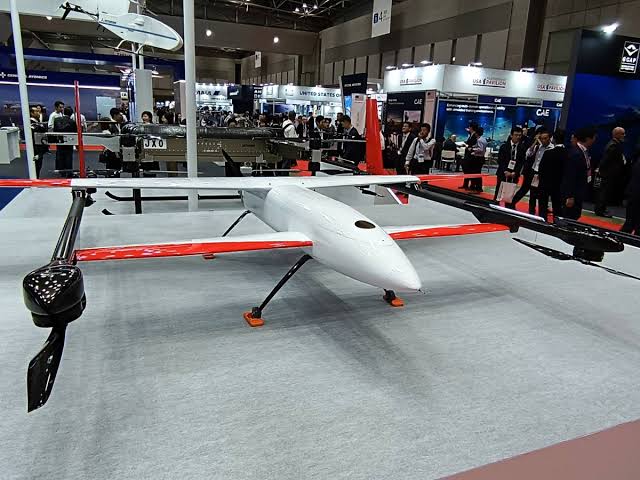
Japan’s Acquisition, Technology and Logistics Agency has begun selecting domestic drone manufacturers. From thirty-eight applicants, four companies were chosen to participate in an expedited development programme. Their prototypes are expected to undergo testing with Japan’s navy in early August, following which a final selection will be made. Furthermore, Toshiba announced plans to collaborate with the startup Pro Drone to jointly develop combat drones.

Experts suggest that uncrewed weapon systems could counteract the declining number of service members in Japan, attributed to an ageing population. However, challenges remain, particularly given that the commercial drone sector is predominantly filled with Chinese imports, complicating the push for fully domestic developments.

Additionally, Japan has enhanced its military presence on the south-western islands, driven by apprehensions regarding possible conflict in Taiwan, which China claims as its own. The defence document underscores the necessity to address these concerns and outlines the establishment of a new unit within the Defence Ministry to focus on Japan’s strategic posture in the Pacific.

Concerns Over Regional Military Activities

The defence paper raises alarms about China’s lack of transparency regarding its military expenditure, alongside a rapid upgrade of its nuclear and missile capabilities. It also reported incidents where Chinese aircraft reportedly locked their radars on Japanese planes during naval drills near south-western Japan, perceived as a potential precursor to missile launches.

In June, the sighting of two Chinese aircraft carriers near Iwo Jima marked a significant escalation of Beijing’s military posture, which has prompted a heightened sense of insecurity in Tokyo. The report highlights Japan’s wariness of China’s military operations expanding beyond its own borders and into disputed regions of the East China Sea.

The defence paper further addresses concerns regarding military collaboration between China and Russia, including coordinated bomber missions and naval operations in proximity to Japan, labelling it a serious national security issue. The document also outlines North Korea’s rapid missile advancements and its military connections with Russia, alongside its support for the ongoing conflict in Ukraine, as increasingly severe threats.

Efforts to Strengthen Military Capability and Industrial Base

Japan’s government is taking steps to bolster its arms production capabilities and technological innovations, essential for reinforcing its military strength. Funding allocations for startups and scientific research have increased, seeking to stimulate local defence industry growth. Despite Japan’s historical reluctance to engage with lethal weapons, many emerging startups are now showing interest in developing dual-use technologies.

The recent lifting of restrictions on exporting lethal weapons aims to further bolster Japan’s underdeveloped defence sector. Defence Minister Shinjiro Koizumi emphasised that technology sharing and collaborative military production would fortify Japan’s defence capabilities and enhance ties with international defence partners. Japan has already secured significant agreements, including the joint development of upgraded Mogami-class frigates with Australia and a similar arrangement with New Zealand, in addition to plans for selling retired destroyers to the Philippines.

Overall, the defence paper outlines Japan’s strategic initiative to modernise its military through advanced technologies, focusing heavily on the development of drones and enhanced arms production to address escalating security threats from China, Russia, and North Korea.

Long or Short, get news the way you like. No ads. No redirections. Download Newspin and Stay Alert, The CSR Journal Mobile app, for fast, crisp, clean updates!

App Store –  https://apps.apple.com/in/app/newspin/id6746449540 

Google Play Store – https://play.google.com/store/apps/details?id=com.inventifweb.newspin&pcampaignid=web_share

Latest News

Popular Videos
