


Introduction to E85 in India’s Energy Strategy
The CSR Journal Magazine

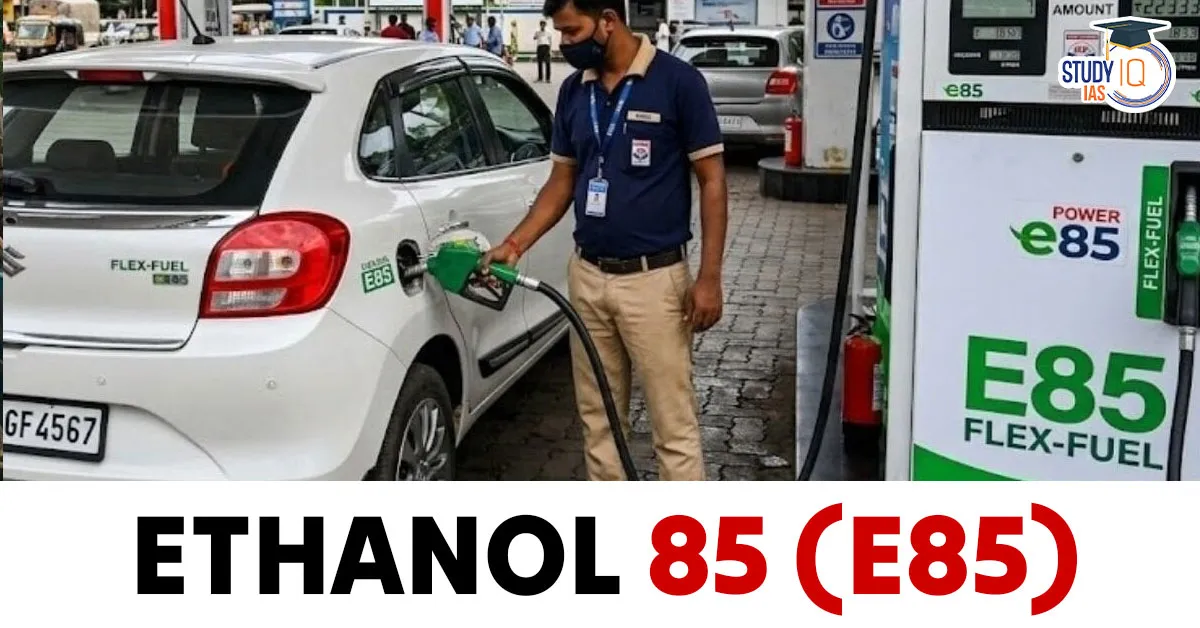
India is making significant strides towards cleaner energy by positioning ethanol blending at the forefront of its energy framework. The forthcoming regulations for E85, a blend comprising up to 85 per cent ethanol and 15 per cent petrol, represent a critical component of the nation’s biofuel strategy. This initiative, which originated in 2016, has gained immediate importance due to rising global oil prices exacerbated by ongoing geopolitical tensions in the Middle East.

A senior government official has indicated that draft regulations for the introduction of Ethanol 85 (E85) will be released shortly. As various regions of the country have already successfully achieved E20 blending targets, the focus is now shifting towards implementing higher blends, notably E85. However, questions arise regarding why India is not pursuing a complete transition to 100 per cent ethanol fuel.

Scientific and Engineering Considerations of Ethanol

The preference for E85 instead of E100 is grounded in scientific, engineering, and economic realities. Ethanol exhibits different chemical properties compared to petrol, with a lower energy density—about 30 to 35 per cent less per litre. This reduced energy density implies that vehicles powered solely by ethanol would cover shorter distances on equivalent amounts of fuel.

Moreover, while ethanol possesses a higher octane rating that allows for more efficient combustion, this advantage is optimally realised only in vehicles specifically designed to utilise ethanol as a primary fuel source. Consequently, the issue of compatibility arises prominently as India’s vehicle fleet predominantly operates on petrol, leading to challenges in transitioning to E100 without extensive modifications.

In order to accommodate 100% ethanol, cars would need flex-fuel engines that are adept at managing higher ethanol concentrations. Ethanol’s corrosive nature poses additional concerns, as it can damage rubber components, plastics, and certain metals found in traditional fuel systems. Furthermore, ethanol demands higher fuel flow rates and necessitates adjustments in air-fuel calibration, which would require considerable redesign of existing automotive engines.

Feasibility and Strategic Advantages of E85

E85 offers a viable alternative, blending 85 per cent ethanol with petrol, allowing India to decrease its reliance on crude oil while mitigating the substantial technical hurdles associated with pure ethanol. Flex-fuel vehicles can efficiently operate on E85 with minimal modifications in contrast to E100, positioning E85 as a more achievable objective in the near term.

Supply issues also significantly influence the feasibility of implementing E100 nationwide. Ethanol production in India primarily relies on sugarcane and maize, and scaling up to the demands of E100 would require extensive land and water resources. Given that sugarcane is a water-intensive crop, concerns about sustainability and its competition with food production arise. The current distillery capacity is inadequate to fully replace petrol, making E85 a practical stepping stone toward increasing ethanol utilisation without excessively impacting agricultural sectors or supply chains.

From an energy independence perspective, E85 enhances India’s resilience against global crude oil price fluctuations and geopolitical uncertainties, as a substantial portion of the country’s crude oil is imported. By increasing the ethanol blend, India not only improves its energy security but also contributes to reduced emissions due to ethanol’s cleaner combustion properties, resulting in decreased carbon monoxide and particulate pollution.

Experts suggest that E85 should be viewed as a transitional solution rather than an endpoint. This strategy facilitates a gradual adaptation of vehicles, infrastructure, and agricultural practices to accommodate a higher percentage of ethanol in fuel, thus avoiding the upheaval that would accompany an abrupt shift to E100.

Long or Short, get news the way you like. No ads. No redirections. Download Newspin and Stay Alert, The CSR Journal Mobile app, for fast, crisp, clean updates!

App Store –  https://apps.apple.com/in/app/newspin/id6746449540 

Google Play Store – https://play.google.com/store/apps/details?id=com.inventifweb.newspin&pcampaignid=web_share

Latest News

Popular Videos
