


India-UK FTA Takes Effect Today: What Changes For Consumers, Exporters And Professionals
The CSR Journal Magazine

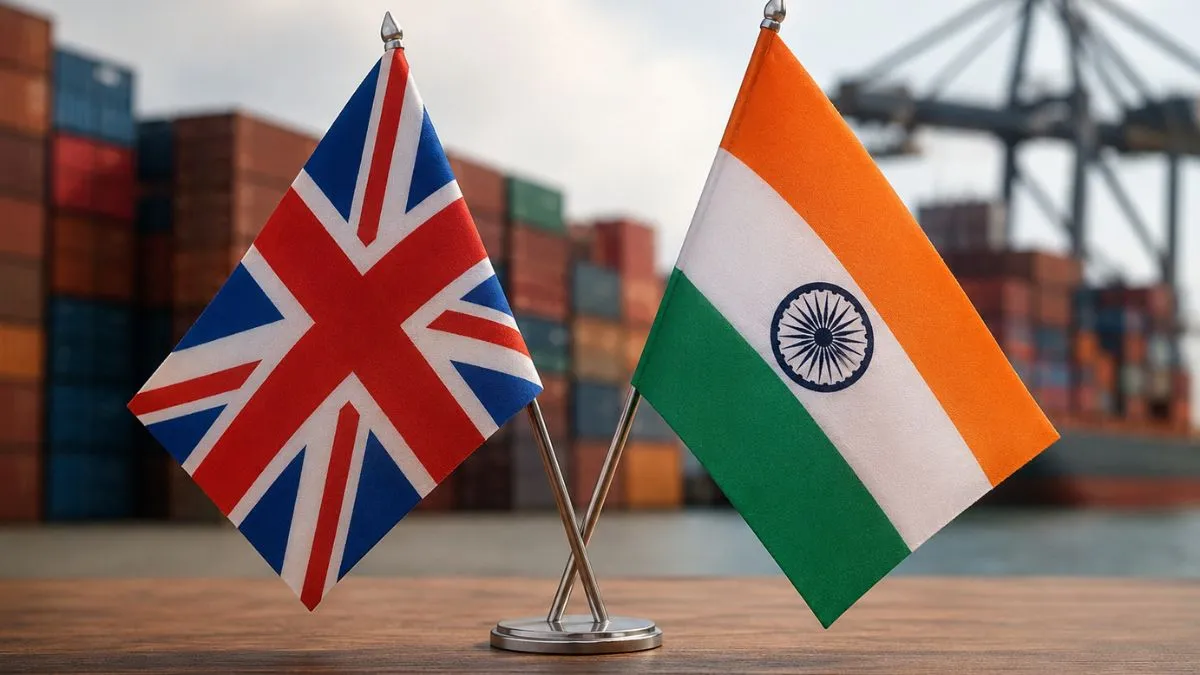
India’s long-awaited free trade agreement with the United Kingdom came into force on Tuesday, marking one of the country’s biggest trade reforms in recent years. Officially known as the India-UK Comprehensive Economic and Trade Agreement (CETA), the pact aims to expand bilateral trade by lowering tariffs, improving market access and facilitating the movement of professionals.

Signed in July 2025 after 14 rounds of negotiations, the agreement provides Indian exporters with zero-duty access to nearly 99 per cent of tariff lines in the UK. In return, India will gradually reduce or eliminate duties on 90 per cent of tariff lines for British goods. The agreement spans 30 chapters covering goods, services, digital trade, intellectual property, innovation, financial services, government procurement and professional mobility.

Lower Duties On Scotch Whisky, Cars And Consumer Goods

One of the most visible changes for Indian consumers will be the phased reduction in import duties on British products.

Import duty on Scotch whisky will fall immediately from 150 per cent to 75 per cent and will be reduced further to 40 per cent over the next 10 years. Similar tariff concessions will apply to gin. While prices are not expected to fall overnight, premium British spirits could become more affordable over time depending on how importers and retailers pass on the duty reductions.

Import duties on fully built British cars, currently as high as 110 per cent, will also be reduced gradually to 10 per cent over a 10-year period under a quota-based system. Electric and hybrid vehicles will receive preferential access through quotas intended to protect India’s domestic automobile industry.

Tariffs on a range of British consumer products, including chocolates, biscuits, cosmetics, soft drinks and packaged food items, will also be reduced progressively under the agreement.

Indian Exporters Gain Wider Access To UK Market

The agreement is expected to deliver its biggest economic gains through expanded opportunities for Indian exporters.

The UK has agreed to eliminate import duties on nearly 99 per cent of tariff lines, covering almost the entire value of India’s exports. The move is expected to improve the competitiveness of Indian businesses in one of their largest overseas markets.

Several export-oriented sectors are expected to benefit immediately, including textiles and garments, marine products, leather goods, footwear, sports goods, toys, gems and jewellery, engineering goods, auto parts, engines and organic chemicals.

Many of these industries are labour-intensive and employ millions of people across the country, making the agreement significant for manufacturing and export growth.

Indian Professionals To Benefit From Social Security Changes

The Double Contributions Convention also comes into effect alongside the trade agreement.

Under the arrangement, eligible Indian professionals working temporarily in the UK will no longer be required to contribute simultaneously to the social security systems of both countries. Instead, their contributions can continue to be credited to their provident fund accounts in India.

Commerce Minister Piyush Goyal had earlier said eligible professionals could save nearly 25 per cent of their salaries that would otherwise have gone towards UK social security contributions, while continuing to earn interest on their provident fund balances.

Sensitive Sectors Kept Outside Tariff Concessions

India has excluded several sensitive agricultural products from tariff reductions to safeguard domestic farmers.

These include dairy products, apples, cheese, sugar, milled rice, pork, chicken and eggs, all of which will continue to attract existing import duties.

Agreement Covers Services, Innovation And Digital Trade

Unlike earlier trade agreements that focused primarily on goods, the India-UK pact extends to a broad range of sectors through its 30 chapters.

The agreement includes provisions on digital trade, telecommunications, financial services, intellectual property, innovation, small and medium enterprises (SMEs), sustainability, transparency, government procurement, rules of origin, the temporary movement of professionals and trade and gender equality.

It also features a dedicated innovation chapter aimed at strengthening research collaboration, technology commercialisation and resilient supply chains.

Bilateral Trade Expected To Expand

The agreement comes as trade between the two countries continues to grow.

According to Commerce Ministry data, merchandise trade between India and the UK increased to $25.13 billion in FY26 from $23.13 billion in FY25.

India’s exports to the UK stood at $13.44 billion during FY26, while imports from the UK rose by more than 36 per cent to $11.68 billion. As a result, India’s trade surplus with the UK narrowed to $1.76 billion from $5.97 billion a year earlier.

The UK estimates the agreement could increase bilateral trade by nearly £25.5 billion annually over the long term. Its exports to India are projected to rise by almost 60 per cent, while imports from India could increase by about 25 per cent by 2040.

MSMEs Expected To Gain From Improved Market Access

Industry experts believe the agreement could provide a significant boost to India’s micro, small and medium enterprises by lowering trade barriers and improving access to the UK market.

Kaushal Sampat, President at Vayana, said the agreement represented an important step in India’s global trade strategy.

“The India-UK Comprehensive Economic and Trade Agreement marks a pivotal milestone in India’s global trade journey. While the UK is already India’s fifth-largest merchandise export destination, it accounts for only around 1% of India’s merchandise imports, indicating significant headroom for a more balanced and diversified trade relationship,” he said.

Sampat added, “By lowering tariff barriers, improving market access, and simplifying cross-border trade, the agreement is expected to unlock new opportunities for Indian exporters, particularly MSMEs. As trade volumes increase, ensuring timely access to working capital will be equally important to help businesses scale confidently and compete effectively in the UK market.”

The India-UK agreement is the sixth major trade pact signed by the Modi government after agreements with Mauritius, the UAE, Australia, the European Free Trade Association (EFTA) and Oman. While consumers are expected to benefit gradually from lower prices on selected British imports, the agreement’s most significant impact is likely to be on Indian exporters, manufacturers and professionals through wider market access and reduced trade barriers.

Long or Short, get news the way you like. No ads. No redirections. Download Newspin and Stay Alert, The CSR Journal Mobile app, for fast, crisp, clean updates!

App Store –  https://apps.apple.com/in/app/newspin/id6746449540 

Google Play Store – https://play.google.com/store/apps/details?id=com.inventifweb.newspin&pcampaignid=web_share

Latest News

Popular Videos
