


India Launches First Daily Hydrogen-Powered Train Service Between Jind and Sonipat
The CSR Journal Magazine

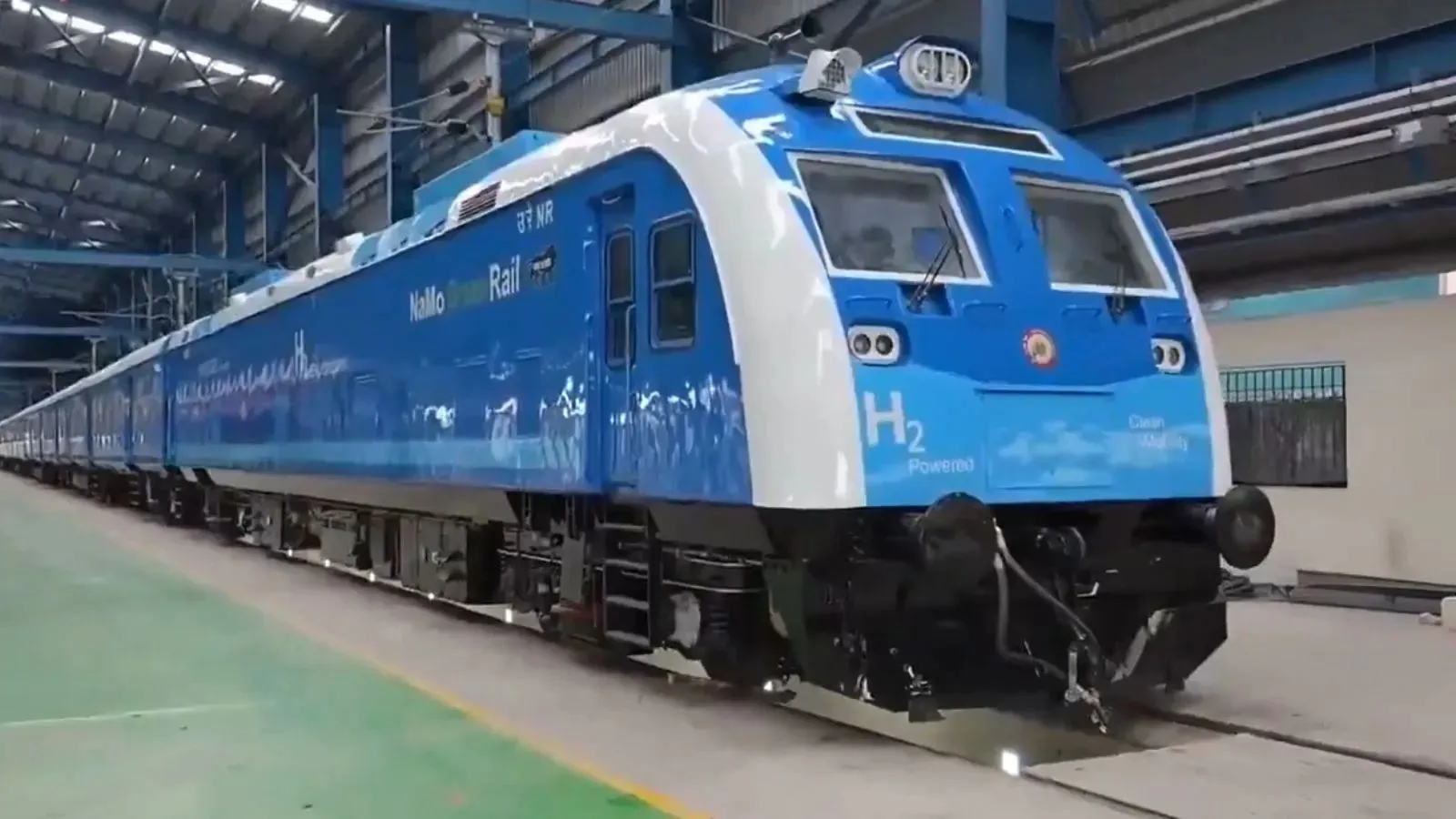
The Ministry of Railways has announced the launch of India’s first daily hydrogen-powered train service, connecting Jind and Sonipat. This initiative marks a significant step towards cleaner rail transport in the country. The train service, identified as numbers 74010 and 74009, will make commercial stops at various stations along the route.

Details of the Train Service and Its Operations

The new service will operate with scheduled stops at Jind City, Pandu Pindara, Lalit Khera, Bhambeva, Ishapur Kheri, Butana, Khandrai, Gohana, Rabhra, Lath, Mohana, Haryana, and Barwasni. This train will feature a Hydrogen Fuel Cell-based trainset, designed to run at a maximum speed of 75 kmph utilizing a 1200 KW hydrogen fuel cell propulsion system.

A trial run of the hydrogen-powered train was completed in June, specifically assessing emergency braking distance and train oscillation among other critical parameters. This trial demonstrates the operational readiness of the innovative technology being introduced.

In May, approval was given by Indian Railways for the introduction of the hydrogen train on the Jind-Sonipat section of Northern Railway. According to the Ministry of Railways, the train service is planned to initiate operations soon, reflecting a commitment to improving energy-efficient rail transport.

Significance of Hydrogen Technology in Rail Transport

The Ministry’s introduction of hydrogen fuel cell technology aims to reduce dependence on conventional fossil fuels. The technology operates by generating electricity through a chemical reaction using hydrogen, emitting only water vapour as a by-product. Thus, this innovative approach promises a cleaner alternative for the rail transport sector.

India’s move towards hydrogen-powered trains places it alongside nations such as Germany, Japan, China, and the United States, which are also exploring similar technologies. The use of hydrogen in public transport is seen as a critical advancement in developing sustainable transportation solutions across the globe.

For the successful implementation of this new service, an indigenous hydrogen storage and refuelling facility has been established at Jind. The Petroleum and Explosives Safety Organisation (PESO) has granted the necessary licence for the safe storage and dispensing of compressed hydrogen gas at this location.

Safety Measures and Operational Readiness

The Ministry of Railways has assured that comprehensive safety measures are in place for the operation of the hydrogen train service. A hydrogen compression system has been installed to facilitate the refuelling process, alongside critical spares and technical support to ensure reliability in operations.

Regular inspections and cleaning are mandated for safety sensors, including hydrogen leak detectors and flame detectors, which are integral to the hydrogen production, storage, and dispensing facility. This thorough approach aims to maintain safety standards throughout the service’s operations.

Additionally, Indian Railways has developed operation and maintenance manuals for both the hydrogen trainset and the hydrogen plant. These have been approved by the Research Designs and Standards Organisation (RDSO) and include established protocols for safety audits and standard operating procedures aimed at optimising maintenance at the facility based in Shakurbasti.

Long or Short, get news the way you like. No ads. No redirections. Download Newspin and Stay Alert, The CSR Journal Mobile app, for fast, crisp, clean updates!

App Store –  https://apps.apple.com/in/app/newspin/id6746449540 

Google Play Store – https://play.google.com/store/apps/details?id=com.inventifweb.newspin&pcampaignid=web_share

Latest News

Popular Videos
