


India Achieves Hydrogen Production From Nuclear Heat
The CSR Journal Magazine

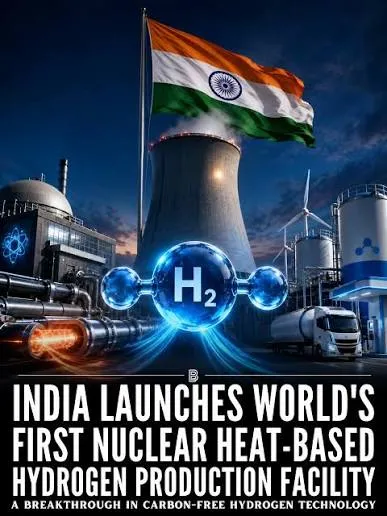
India has recently accomplished a remarkable feat by producing hydrogen using heat generated from a nuclear reactor instead of conventional electricity. This pioneering achievement was realised at the Indira Gandhi Centre for Atomic Research in Kalpakkam, Tamil Nadu, during an inauguration on June 26, 2026, by the Department of Atomic Energy. The facility is touted as the world’s first hydrogen production plant that operates solely on nuclear heat.

This innovative plant serves as a technology demonstrator, illustrating the viability of this approach rather than being designed for mass fuel production. It signifies a substantial leap in clean energy technology, marking a new chapter in nuclear capabilities.

The facility’s ability to transform water into hydrogen, which combusts to produce only water vapour without any carbon emissions, represents a significant advancement in sustainable fuel technology. The ongoing research aims to expand the understanding of this process and its potential applications.

Revolutionary Process Behind Hydrogen Production

The production method employed at Kalpakkam diverges sharply from the traditional electrolysis process, which relies on substantial electricity input to separate water into hydrogen and oxygen. Instead, the facility utilises the copper-chlorine cycle, a method that significantly reduces energy consumption by leveraging heat from nuclear reactions.

This thermochemical process operates at temperatures between 450 and 550 degrees Celsius, which is well within the operational capacity of a nuclear reactor. Unlike other thermochemical cycles that require much higher temperatures, the copper-chlorine cycle efficiently utilises reactor heat to facilitate the chemical reactions necessary for hydrogen production.

The approach also includes an innovative recycling system for copper and chlorine compounds, allowing them to be reused continually. Though a small amount of electricity is still necessary, its consumption is minimal compared to traditional methods, enhancing overall energy efficiency.

Technical Innovations and Future Implications

The Fast Breeder Test Reactor, which has been operational since the mid-1980s, provides the necessary heat for this pioneering project. This reactor employs liquid sodium as a coolant, ensuring efficient heat transfer. It has played a crucial role in advancing India’s nuclear technology and is now also contributing to the production of hydrogen fuel.

The implications of producing hydrogen through nuclear sources are substantial, especially in decarbonising hard-to-abate industries such as steel, fertilisers, and oil refining. Unlike solar or wind energy, which rely on variable environmental conditions, nuclear reactors operate continuously, providing a consistent heat source.

This breakthrough redefines the utility of nuclear power, extending its potential benefits beyond electricity generation. The work being undertaken in Kalpakkam serves as a stepping stone towards a future where nuclear energy plays a pivotal role in the global transition to cleaner fuel sources.

Long or Short, get news the way you like. No ads. No redirections. Download Newspin and Stay Alert, The CSR Journal Mobile app, for fast, crisp, clean updates!

App Store –  https://apps.apple.com/in/app/newspin/id6746449540 

Google Play Store – https://play.google.com/store/apps/details?id=com.inventifweb.newspin&pcampaignid=web_share

Latest News

Popular Videos
