


IIT Guwahati Researchers Develop Two-Stage Process for CO₂ Capture and Biofuel Production
The CSR Journal Magazine

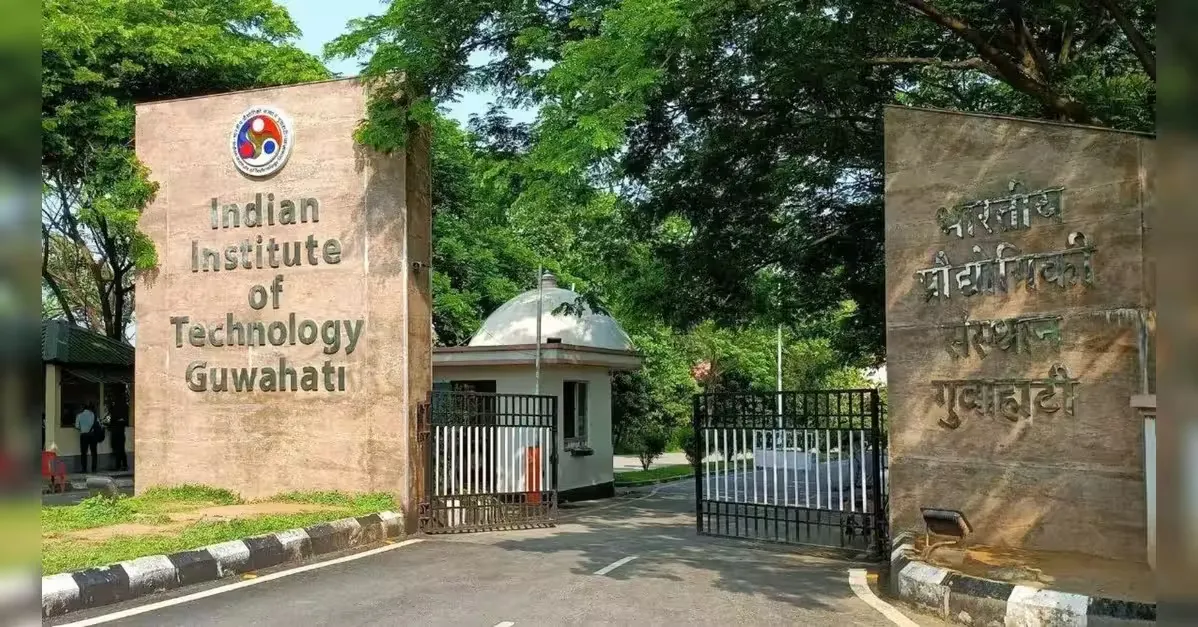
The research team at the Indian Institute of Technology (IIT) Guwahati has introduced a novel two-stage cultivation process aimed at improving carbon dioxide (CO₂) capture and microalgal biomass production. This approach not only facilitates effective self-harvesting but also enhances bioenergy generation. Microalgae, known for their ability to absorb CO₂, generate biomass that can be converted into renewable fuels, including biodiesel.

Previous studies highlighted the adverse effects of prolonged exposure to high concentrations of CO₂, which can hinder nutrient availability and photosynthetic efficiency. In response, Professor Kaustubha Mohanty, head of the research team, collaborated with research scholar Deepesh Singh Chauhan to devise a strategy to overcome these challenges.

In the initial stage of their two-stage process, the researchers cultivated microalgae in an environment with 15% CO₂, which promoted rapid growth due to increased carbon availability. However, this led to acidification and a subsequent decline in algae growth rates. The second stage involved reducing the CO₂ concentration to 5%, supplemented with calcium and phosphorus to stabilise the conditions and improve biomass aggregation.

Significant Outcomes and Research Findings

The research findings, detailed in the esteemed journal Renewable Energy, were validated through experiments conducted in a 2-litre bubble-column photobioreactor. The results demonstrated noteworthy improvements: 25.7% higher biomass production, 35.4% increased CO₂ fixation, and a remarkable 1.86 times boost in lipid productivity. Overall, there was a 37.65% rise in total intracellular bioenergy efficiency, leading to a higher energy value of the resultant biomass.

In discussing the implications of this research, Professor Mohanty noted that it opens new avenues for more efficient industrial CO₂ capture applications. He suggested that industrial flue gases could serve as a continuous CO₂ source, thus making the process commercially viable. Moreover, the findings aim to reduce the energy expenditures associated with downstream separation, which is a significant financial burden for microalgal biorefineries.

Notably, the developed method also facilitated the auto-sedimentation of microalgal biomass. The incorporation of calcium encouraged cell aggregation, resulting in compact flocks that enhanced biomass recovery efficiency to an impressive 98.46%. This effectively addresses key logistical challenges in the biomass harvesting process.

Biofuel Compliance and Future Implications

The biodiesel produced from this innovative microalgal approach has been found to meet the standards set by India, the United States, and Europe. This compliance further underscores the potential industrial applicability of the derived biofuel, reinforcing the relevance of this research.

Deepesh Singh Chauhan emphasised the process’s unique triple-action capability, integrating CO₂ capture, microalgal biomass production, and renewable bioenergy generation within a singular framework. This underscores the versatility and effectiveness of the two-stage nutrient-assisted CO₂ modulation strategy.

In conclusion, this research provides a promising avenue towards advancing microalgal biorefineries. By effectively addressing the dual challenges of sustaining efficient carbon fixation during extended cultivation and reducing the energy consumption needed for biomass harvesting, IIT Guwahati’s two-stage cultivation process holds considerable potential for the future of sustainable energy solutions.

Long or Short, get news the way you like. No ads. No redirections. Download Newspin and Stay Alert, The CSR Journal Mobile app, for fast, crisp, clean updates!

App Store –  https://apps.apple.com/in/app/newspin/id6746449540 

Google Play Store – https://play.google.com/store/apps/details?id=com.inventifweb.newspin&pcampaignid=web_share

Latest News

Popular Videos
