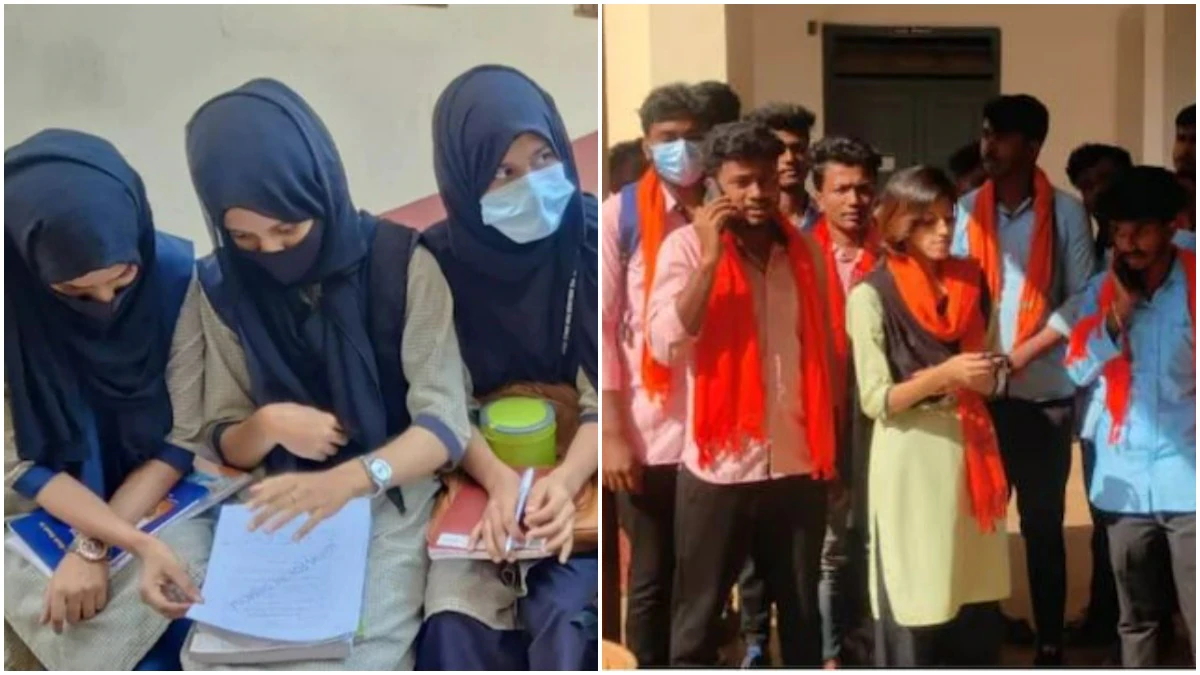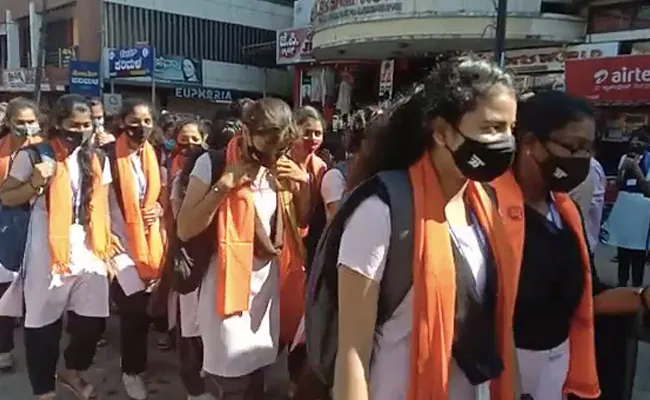

The initiation of the ‘saffron shawl’ campaign by several Hindu organisations marks a significant protest against the Karnataka government’s recent decision to permit the wearing of religious symbols, including the hijab, in educational institutions. The Sri Rama Sena and other groups began distributing saffron shawls to students as part of a state-wide effort to oppose the government’s directive. This drive officially commenced on Sunday, with activists actively distributing shawls in Hubballi and other areas of the state.
Political Implications of the Campaign
Leaders of the campaigning organisations expressed that their actions are aimed at conveying dissent against the government’s new policy allowing the hijab in educational settings. They described the government’s decision as an act of appeasement politics and raised concerns that it might exacerbate religious tensions within educational environments. The launch of the ‘saffron shawl’ campaign is seen as a means of reigniting the contentious debate over religious attire that has led to considerable controversy in Karnataka over the past few years.
The protests initiated by these organisations have occurred shortly after the Karnataka government issued an order allowing students to wear various religious symbols, including hijabs, sacred threads, and rudraksha beads. This new order effectively overturned the previous directive issued by the BJP government in 2022, which had prohibited the hijab in government-run educational institutions, thus reigniting a complex political discourse.
Adding to the controversy, caretaker Chief Minister Siddaramaiah clarified that saffron shawls would not be accommodated under the new regulations. He reiterated that existing practices, including the wearing of turban, rudraksha beads, and hijabs, will continue without restriction. This declaration has further incensed the BJP, with criticism aimed at the Congress-led government’s approach, accusing it of engaging in appeasement and prioritising vote-bank politics.