


Firing Incident on Indian Ships in Hormuz Exposes Power Dynamics in Iran
The CSR Journal Magazine

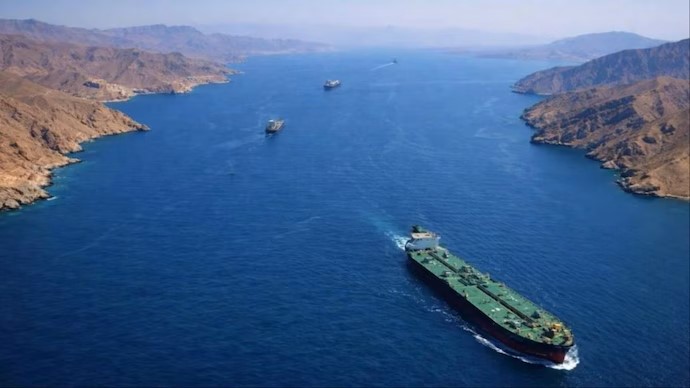
The recent firing on two Indian-flagged vessels in the Strait of Hormuz has unveiled significant rifts within Iran’s political framework. The incidents occurred on Saturday, where conflicting statements about the status of the Strait raised questions regarding the authority within Iran. A senior Iranian official claimed that ships could navigate through the Strait, provided they coordinated with the Islamic Revolutionary Guard Corps (IRGC). Conversely, Foreign Minister Abbas Araghchi announced that the passage was open following a ceasefire agreement related to the Israel-Hezbollah conflict.

In response to the firing on Indian vessels, the Indian government summoned Iranian Ambassador Mohammad Fathali to file an official protest. Officials from New Delhi conveyed their serious concerns regarding the incident, indicating a notable diplomatic strain between the two nations. The circumstances surrounding the firing have led to speculation about the interplay of confusion and internal politics influencing the IRGC’s actions.

The situation reveals internal discord, where while the civilian government signalled normalisation of shipping routes, the IRGC appears to maintain control over the Strait. This divergence highlights ongoing tensions and uncertainty in Iranian governance.

Confusion Over the Status of the Strait of Hormuz

The apparent divide between the IRGC and Iran’s civilian leadership has been exacerbated since the onset of the current conflict. This was particularly evident on the day of the firing when differing interpretations emerged about the status of the Strait of Hormuz. Iran’s semi-state Tasnim news agency issued a critical response to Araghchi’s comments, labelling them incomplete and suggesting that they sparked confusion regarding shipping operations. The IRGC retains a significant influence over the passage, despite the civilian assertions regarding its openness.

Amidst this chaos, analysts noted that these divisions within Iran’s power structure are not new. The IRGC has historically filed its own directives contrary to the civilian government’s statements, or those made by industry leaders. Hours after reassurance messages, Iranian news outlets suggested that any maritime traffic would still require coordination with the IRGC, which underscored the uncertainties surrounding navigation through this crucial maritime route.

The conflicting statements have amplified the precariousness of commercial shipping in this strategic waterway, vital for global oil transport. Approximately twenty per cent of the world’s oil and gas trade moves through the Strait of Hormuz, which significantly impacts economies, especially in India where a sizeable portion of gas imports occurs via this route.

The Broader Implications of IRGC-Civilian Leadership Tensions

Since the onset of the Middle Eastern conflict, tensions have notably intensified between the IRGC and Iran’s civilian leadership. The escalation has led to the IRGC favouring aggressive posturing, with its actions being described as detrimental to the nation’s economic stability. Calls from officials, including President Masoud Pezeshkian, have sought a shift towards diplomacy, advocating for a peaceful resolution amid rising aggressions from the IRGC.

It has been recognised by international commentators, including those from academic circles, that Iran’s political landscape now illustrates a complex hybrid of authority, where control is fragmented across multiple power centres. The IRGC’s insistence on maintaining military oversight over the Strait, despite the civilian leadership’s attempts to normalise shipping, indicates a struggle for dominance within Iran’s governance.

The repercussions of this ongoing conflict extend beyond immediate shipping concerns, delving into questions of national control and international perceptions. As the powers within Iran continue to clash, the ambiguity surrounding the Strait of Hormuz suggests that it will remain a focal point of tension in both regional and global contexts.

Long or Short, get news the way you like. No ads. No redirections. Download Newspin and Stay Alert, The CSR Journal Mobile app, for fast, crisp, clean updates!

App Store –  https://apps.apple.com/in/app/newspin/id6746449540 

Google Play Store – https://play.google.com/store/apps/details?id=com.inventifweb.newspin&pcampaignid=web_share

Latest News

Popular Videos
