


Europe’s Tallest Hindu Temple Opens in Berlin, Strengthening India-Germany Cultural Ties
The CSR Journal Magazine

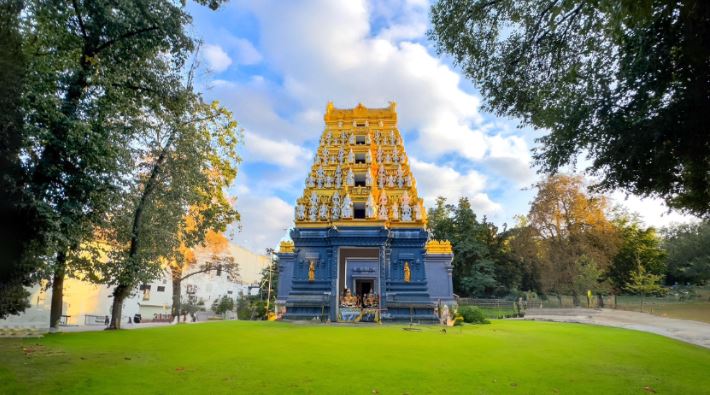
The newly inaugurated Sri Ganesha Temple in Neukölln, Berlin, has been acknowledged as the tallest Hindu temple in Europe, according to German Ambassador to India, Philipp Ackermann. Opened on June 8, this temple serves as a landmark for the Indian community in Germany and exemplifies the growing cultural ties between the two nations. The ambassador has emphasised the importance of this temple as a symbol of the vibrant Indian presence in Germany.

During his recent visit to the temple, Ackermann met numerous individuals from the Indian community, many of whom have pursued higher education in Germany and found successful employment. He expressed pride in the architectural beauty of the temple, which is designed in the Tamil style, featuring a notable Gopuram that surpasses the height of any other Hindu temple in Europe.

Indian Student Success Stories

Ambassador Ackermann pointed out the nearly 60,000 Indian students currently studying in Germany, highlighting that selecting appropriate courses and institutions leads to strong job prospects. He stated, “I think what I see is that the 60,000 students of Indian origin or from India in Germany… run a fair chance to get a good job.” This underlines the opportunities available for Indian students in German higher education, especially in fields where there is high demand.

Many community members who visited the temple shared their success stories, noting the benefits of the education they received in Germany. The interactions at the temple exemplified the close-knit nature of the Indian diaspora in Berlin and showcased how education abroad can yield significant professional advantages.

In addition to education, Ackermann praised the cooperation between India and Germany regarding skilled labour migration, stating, “We have had a very successful cooperation with the Indian government on mobility.” This collaboration aims to facilitate ethical and legal migration of skilled workers, particularly in sectors such as nursing, caregiving, apprenticeships, and engineering.

Historical and Cultural Context of the Temple

The Sri Ganesha Temple is a significant addition to Berlin’s cultural landscape. Founded on September 24, 2005, the temple underwent twenty-one years of construction and was entirely funded by donations and community efforts. It received its official consecration on June 7, 2026, which marked a long-awaited culmination of the project. The temple’s 17-metre high tower commands attention against the backdrop of the Hasenheide park, contributing to the area’s architectural diversity.

The temple is designed to be inclusive, welcoming individuals from various Hindu traditions, including Vaishnava, Shaiva, Shakta, and Smarta paths. It also invites the general public, such as local families, students, and mixed-faith couples, fostering an environment of community engagement and intercultural dialogue. The temple operates daily, offering Aarti ceremonies in the morning and evening, and aims to serve as a gathering place for diverse groups.

The construction of the temple’s Gopuram tower began in 2015, using black granite from Tamil Nadu, crafted by skilled Indian artisans who contributed to the temple’s authenticity and cultural significance. The temple, alongside the smaller Sri-Mayurapathy-Murugan Temple, which opened in 2014, plays a crucial role in enriching Berlin’s multicultural fabric, celebrating the city’s diverse heritage.

Long or Short, get news the way you like. No ads. No redirections. Download Newspin and Stay Alert, The CSR Journal Mobile app, for fast, crisp, clean updates!

App Store –  https://apps.apple.com/in/app/newspin/id6746449540 

Google Play Store – https://play.google.com/store/apps/details?id=com.inventifweb.newspin&pcampaignid=web_share

Latest News

Popular Videos
