


European Allies Address NATO Gaps Following US Military Reductions
The CSR Journal Magazine

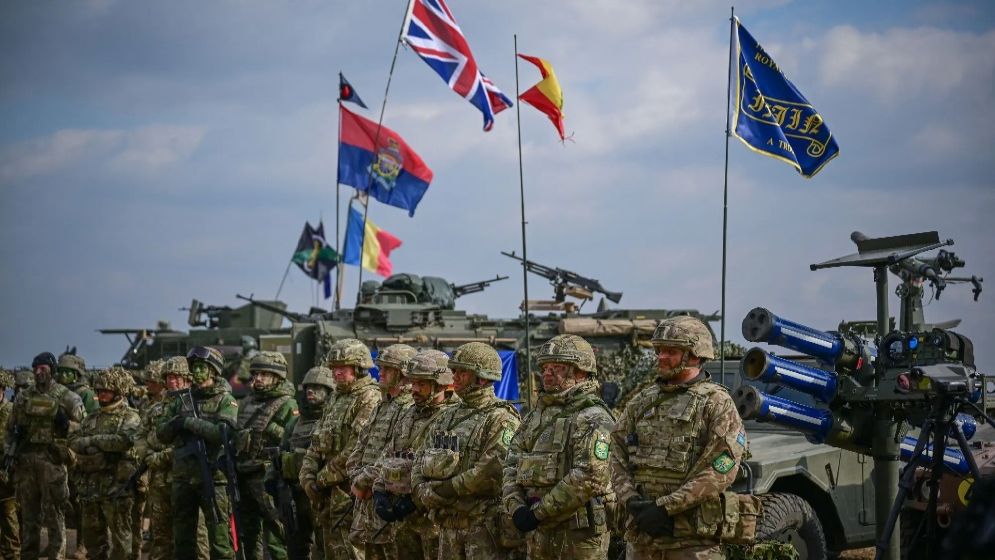
NATO’s top commander has indicated that European allies have largely compensated for the deficiencies resulting from the United States’ recent decision to cut back on certain military contributions. This evaluation comes as leaders prepare for a summit on July 7-8, 2026, in Turkey, a meeting expected to focus heavily on force planning. US General Alex Grynkewich stated that European nations swiftly mobilised their resources after the US signalled its reduced commitments on June 3. This includes the withdrawal of an aircraft carrier, support vessels, aerial refuelling aircraft, and numerous fighter jets.

Transition to European Support Structures

General Grynkewich noted that considerable effort has already been invested in developing contingency plans to safeguard Europe in the event of an attack. The NATO Force Model serves as the essential framework for deploying forces from its 32 member nations during peace, crisis, or wartime. This model delineates the military resources available to commanders during the critical initial six months of any conflict. Grynkewich remarked, “In a matter of weeks, European allies have largely filled the gaps left by US reductions to the NATO Force Model.”

In areas where European nations lack equivalent capabilities, alternative solutions are reportedly being sought, although details were not specified. The Pentagon’s announcement regarding its military scale-backs has raised concerns among its allies, many of whom were unaware of the impending changes. It was conveyed that the US would divert its focus to potential threats outside of Europe, particularly those posed by China in the Indo-Pacific region.

In response to the shift, European allies and Canada conducted assessments of their military inventories to determine what support could be provided should any member state find itself under threat. For instance, the United Kingdom has enhanced its readiness by placing a second aircraft carrier and F-35 fighter jets on heightened alert for potential emergency deployment.

Collective Security and NATO’s Future Strategy

NATO Secretary-General Mark Rutte has attempted to mitigate concerns regarding the implications of the US military reductions. He has asserted that, should a conflict erupt, the United States would be inclined to refocus its resources toward Europe, similar to its actions during the Iran conflict. Rutte stated, “This is not about where forces and assets are currently located. It’s about who would do what if our defence plans were activated. So, let’s say in case of an Article 5 situation.”

Article 5 of the NATO treaty embodies the collective security commitment among member states, dictating that an assault on one member is considered an attack on all. However, it does not impose an obligation for members to provide military assistance. As NATO continues its assessment of readiness strategies, officials maintain that European nations have effectively moved to address the majority of the gaps left by the US strategic adjustments.

The developments underscore the evolving dynamics within NATO and highlight the alliance’s ongoing commitment to ensuring collective security despite challenges in military contributions. With rising tensions in various global regions, NATO’s emphasis on cohesive strategies remains pivotal for the effectiveness of its collective defence initiatives.

Long or Short, get news the way you like. No ads. No redirections. Download Newspin and Stay Alert, The CSR Journal Mobile app, for fast, crisp, clean updates!

App Store –  https://apps.apple.com/in/app/newspin/id6746449540 

Google Play Store – https://play.google.com/store/apps/details?id=com.inventifweb.newspin&pcampaignid=web_share

Latest News

Popular Videos
