


Euclid Space Telescope Captures Stunning Image of Milky Way’s Heart
The CSR Journal Magazine

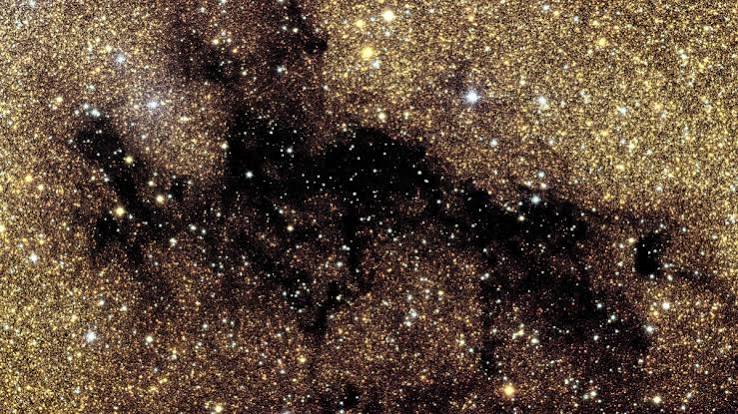
The European Space Agency’s Euclid space telescope has, for the first time, focused its powerful capabilities on the Milky Way, resulting in one of the most expansive and detailed images of our galaxy’s heart, known as Akash Ganga in India. This impressive mosaic showcases over 60 million stars, dense molecular clouds, vibrant nebulae, and ancient star clusters clustered within the central bulge of the galaxy. Although Euclid’s primary mission is to investigate the dark universe by mapping billions of galaxies, scientists adjusted its focus to explore the crowded centre of the Milky Way, yielding significant data for future planetary discoveries.

The striking image was captured on March 23, 2025, during a targeted 26-hour observing campaign. Euclid compiled nine separate observations, creating a vast mosaic that encompasses an area of sky exceeding the size of nine full Moons. This detailed view has the potential to revolutionise the search for planets beyond our Solar System, enabling researchers to gain insights previously unattainable.

Despite the intense concentration of stars within the galactic bulge, Euclid’s visible-light camera successfully discerned individual stars with exceptional clarity. The European Space Agency remarked that this observation exemplifies Euclid’s strengths, merging an extensive field of view with remarkable resolution. Euclid’s imaging capabilities are comparable to those of the Hubble Space Telescope while being able to cover an area 270 times larger in one orientation.

Significance of the Galactic Bulge

The galactic bulge represents one of the most densely populated stellar environments in the Milky Way, making it an ideal setting for employing the gravitational microlensing technique. This method is a highly effective means of identifying distant exoplanets. Gravitational microlensing occurs when a star situated in front of a distant star magnifies its light due to gravitational effects. If the foreground star contains a planet, its gravitational influence creates minor distortions in the light, revealing the planet’s existence.

Over the last two decades, astronomers have detected nearly 300 exoplanets using this microlensing method, predominantly within the galactic centre. Euclid’s image already showcases 51 known planetary systems, offering researchers an invaluable reference point for prospective discoveries.

Though Euclid studied this region for only one day, a duration considered too brief to uncover new microlensing events, the data remains valuable for future missions, particularly NASA’s Nancy Grace Roman Space Telescope. This mission aims to continuously observe the same area for weeks, promising profound insights.

Future Implications for Exoplanet Discovery

The combination of Euclid’s high-resolution images and future observations from the Roman Space Telescope will enable astronomers to meticulously track the movement of stars, confirming exoplanet existence and measuring their masses with enhanced accuracy. Such precision will be critical in understanding celestial dynamics in this densely populated stellar environment.

Researchers express particular enthusiasm regarding the ability of microlensing to detect cold, icy planets situated far from their stars, as many existing planet-hunting methods tend to overlook these distant worlds in favour of larger, hotter planets. The collaboration between the data produced by Euclid and future observations promises to unlock new findings and expand our understanding of exoplanetary systems.

In summary, the Euclid space telescope’s recent observations mark a significant advancement in the field of astronomy, providing not only breathtaking imagery of the Milky Way’s heart but also pivotal data that could enhance the search for life beyond our Solar System.

Long or Short, get news the way you like. No ads. No redirections. Download Newspin and Stay Alert, The CSR Journal Mobile app, for fast, crisp, clean updates!

App Store –  https://apps.apple.com/in/app/newspin/id6746449540 

Google Play Store – https://play.google.com/store/apps/details?id=com.inventifweb.newspin&pcampaignid=web_share

Latest News

Popular Videos
