


Emergency Enters NCERT’s Class 9 Curriculum After 51 Years
The CSR Journal Magazine

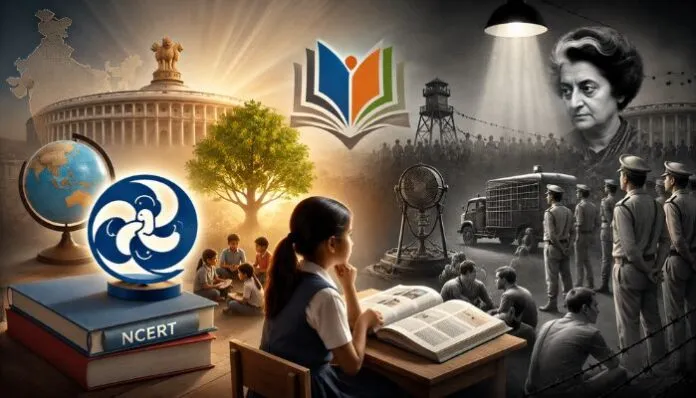
In a significant development, the National Council of Educational Research and Training (NCERT) has incorporated the topic of the National Emergency, which lasted from 1975 to 1977, into the Class 9 Social Science curriculum. This marks the first time that this historical event has been included in the Grade 9 syllabus as part of the ongoing revisions under the National Education Policy (NEP) 2020.

Details of the New Textbook

The newly released textbook features the topic prominently in Chapter 6, within the section titled “Key Features of Social Science.” This instructional material, known as “Understanding Society India and Beyond” for Grade 9 Part 1, aims to provide students with a comprehensive understanding of Indian society, including significant political events.

Previously, the subject of the Emergency was solely part of the curriculum for Class 12 Political Science students, where it was taught in greater detail. This change allows younger students to engage with this pivotal period of Indian history earlier in their education, thereby broadening their understanding of the social and political fabric of the country.

The introduction of such topics at an earlier educational stage aligns with educational reforms aimed at offering a more inclusive and expansive understanding of India’s historical context. The focus on the Emergency period intends to raise awareness among students about the complexities of democratic governance and civil rights.

Background of the National Emergency

The National Emergency of 1975, declared by then-Prime Minister Indira Gandhi, led to significant political and social repercussions in India. It was characterised by the suspension of fundamental rights and widespread political repression, factors that are crucial for students to understand as part of their civic education.

This year marks 51 years since the Emergency was imposed, underscoring the relevance of revisiting this chapter of Indian history. By reintroducing the topic into the Grade 9 syllabus, NCERT aims to foster discussions among students about democracy, governance, and the importance of civil liberties.

Such initiatives may also encourage critical thinking and informed citizenship among students, equipping them with the necessary skills to analyse contemporary issues in the context of historical events. The broader curriculum overhaul is part of ongoing efforts to improve educational standards and relevancy across all levels of schooling in India.

Implications for Education

The NCERT’s decision to include this topic in the class 9 syllabus can be seen as a step towards a more progressive educational framework that responds to the needs of contemporary society. It reflects a commitment to ensuring that students are aware of historical injustices and the significance of safeguarding democratic values.

Moreover, the educational framework under NEP 2020 encourages a multi-disciplinary approach, allowing students to delve into subjects that intersect with history, political science, and society as a whole. This integration is expected to motivate teachers to engage students in deeper discussions about the implications of the Emergency on modern India.

As educational institutions adapt to these changes, teachers will require training and resources to effectively convey the importance of such historical events, ensuring that learners can critically engage with the content. Ultimately, this revision signifies a proactive approach to enriching the academic experience of students across the country.

Long or Short, get news the way you like. No ads. No redirections. Download Newspin and Stay Alert, The CSR Journal Mobile app, for fast, crisp, clean updates!

App Store –  https://apps.apple.com/in/app/newspin/id6746449540 

Google Play Store – https://play.google.com/store/apps/details?id=com.inventifweb.newspin&pcampaignid=web_share

Latest News

Popular Videos
