


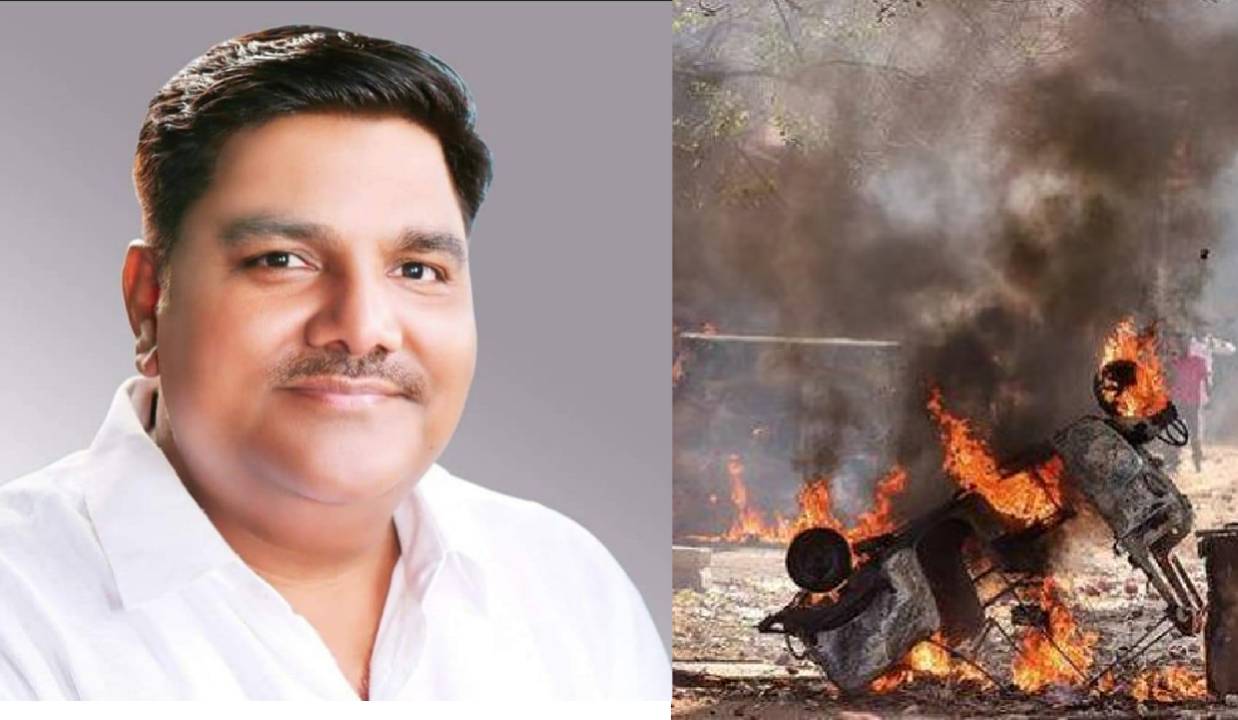

Delhi Court Convicts Tahir Hussain in 2020 Riots Murder Case

The CSR Journal Magazine

A Delhi court has found former AAP councillor Tahir Hussain guilty, along with several co-accused, in the murder of Intelligence Bureau staffer Ankit Sharma during the 2020 Northeast Delhi riots. The court determined that the prosecution established its case beyond reasonable doubt after reviewing 91 witnesses and a substantial amount of documentary, medical, forensic, and electronic evidence. The ruling was made by Additional Session Judge Parveen Singh at the Karkardooma Court.

The case involved the tragic death of Ankit Sharma, aged 26, who went missing on February 25, 2020, amidst communal disturbances in Northeast Delhi. His body was discovered the subsequent day in a drain near Chand Bagh Pulia, showing multiple stab wounds. The prosecution alleged that Sharma was attacked by a hostile mob, which led to his brutal assault and murder before his body was disposed of.

In building its case, the prosecution drew on various forms of evidence, including eyewitness statements, medical assessments, post-mortem reports, forensic analyses, and electronic records. The prosecution’s evaluation included mobile phone data and CCTV footage to outline the events surrounding the incident.

Eyewitness Testimonies and Evidence Presented

During the proceedings, the prosecution called 91 witnesses, encompassing relatives of the victim, law enforcement, forensic specialists, medical professionals, and those who witnessed the event. Notably, eyewitness testimonies were provided by individuals named Akash and Bharat, who reported seeing Sharma being attacked and identified Hussain as a participant inciting the mob.

Additional testimony was offered by police officials, including HC Rahul and HC Praveen, who confirmed the presence of the accused during the incident. The prosecution also included input from medical experts and investigating officers, bolstering the chain of events presented in court.

Conversely, the defence challenged the reliability of the witness accounts, asserting that many had altered their statements over time. The defence also outlined issues with delays in recorded statements and disagreements concerning the sequence of events and Hussain’s alleged involvement. Witness testimonies from individuals such as Vikalp Kochar, Gyanendra Kochar, and Pradeep Verma indicated there was insufficient evidence to specifically connect Hussain to the attack.

Judgment and Implications of the Case

In its assessment, the court dismissed the defence’s arguments, concluding that the prosecution had adequately proven its case. The judge noted that the evidence, when considered collectively, was convincing and sufficient to warrant conviction. This judgement is significant as it comes over six years after the Northeast Delhi riots, which resulted in more than 50 fatalities and hundreds of injuries.

The judgment now sets the stage for further proceedings regarding sentencing, with the convicted individuals having the right to appeal the verdict before the Delhi High Court. The case carries weight not only for those directly involved but also for potential implications concerning public sentiments and the justice process following the riots.

This conviction underscores the complexities surrounding cases linked to communal violence and highlights the rigorous standards applied in judicial assessments of such matters within the Indian legal system.

Long or Short, get news the way you like. No ads. No redirections. Download Newspin and Stay Alert, The CSR Journal Mobile app, for fast, crisp, clean updates!

App Store –  https://apps.apple.com/in/app/newspin/id6746449540 

Google Play Store – https://play.google.com/store/apps/details?id=com.inventifweb.newspin&pcampaignid=web_share

Latest News

Popular Videos