


Debate Surrounds Existence of Caste System in China
The CSR Journal Magazine

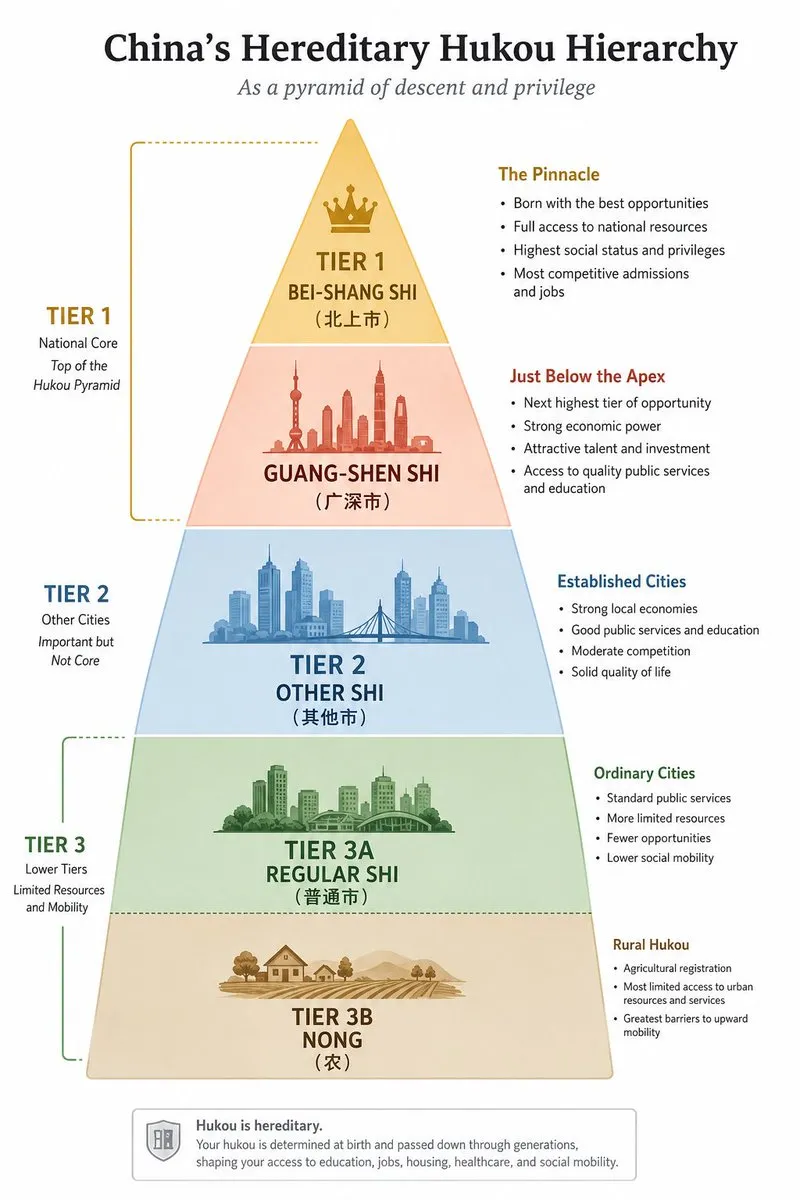
The question of whether China possesses a caste system has ignited considerable discussion online, particularly among Indian users. This conversation has drawn parallels between China’s social structure and a caste-like system, pointing to how an individual’s opportunities may often be predestined by their place of birth. Many users have highlighted the hukou household registration system, claiming it enforces a rigid hierarchy that impacts access to education, healthcare, and economic mobility.

Posts on X (formerly known as Twitter) have proliferated, with numerous individuals equating hukou to a caste system, alleging that societal elites exploit those situated lower within this hierarchy. Nevertheless, some experts caution against such comparisons, asserting that the hukou system represents an administrative framework devoid of the deeply entrenched social stratification representative of caste. Critics argue that this interpretation stems from an Indian perspective, influenced by their own historical context of social categorisation.

Historical Context: Ancient Social Structures in China

When discussing a potential caste system in China, it is vital to understand the distinction between ancient social hierarchies and the modern hukou system. The former, known as Shi-Nong-Gong-Shang, was a classification system that divided individuals into four occupational categories: scholars (Shi), farmers (Nong), artisans (Gong), and merchants (Shang). Established during the late Zhou dynasty and refined in later centuries, this system was based more on occupational roles and ideological considerations rather than strict hereditary divisions.

Historical records indicate that during the Han dynasty, a social structure emerged where scholars were esteemed as moral guardians, while farmers were recognised for their essential contributions to society. Artisans and merchants occupied lower tiers due to cultural scepticism surrounding profit-making. However, scholars point out that while this hierarchy existed, it was not absolute, as social mobility allowed individuals, such as the offspring of merchants, to ascend in status through education and success in imperial examinations.

The Hukou System: Modern Classifications in China

In contrast, the hukou system, introduced in the 1950s, categorises citizens as either urban or rural based on their registered place of residency. Often likened to an internal passport, it significantly influences access to vital public services, such as education and healthcare. The introduction of this system effectively inhibited free movement from rural to urban areas, creating distinct societal classes with unequal access to resources.

Author Aravindan Neelakandan has described the hukou regime as a form of institutionalised social segregation, where one’s status is determined at birth, thus perpetuating existing inequalities. Criticisms extend to the policies enacted during Mao Zedong’s era, which some argue reinforced these divisions rather than alleviating them. The rural population has notably endured limitations in education, healthcare, and employment opportunities, reflecting a persistent urban-rural divide.

Scholarly literature, including a recent paper from a prominent academic at the Chinese University of Hong Kong, refers to the repercussions of the hukou classification as an “urban caste system.” This term highlights the disparities and barriers that distinguish urban residents from rural migrants, illustrating the systemic inequalities ingrained within the social fabric of modern China.

Contemporary Perspectives on Social Stratification

Despite the comparisons made primarily by Indian commentators, many individuals in China dispute the idea that their systems equate to a caste system. Notably, academics argue that the distinctions among social classifications in China are based on function and administrative categorizations rather than the hereditary nature defining caste in other cultures. This perspective suggests a fundamental misunderstanding by those unfamiliar with Chinese societal constructs.

Further, recent policy reforms initiated by the Chinese government aim to reduce inequalities between rural and urban populations, allowing for greater accessibility to urban registrations, especially in smaller cities. As of the end of 2025, approximately 358 million individuals were classified as part of China’s “floating population,” indicating significant movements away from rural origins.

The ongoing discourse surrounding whether China has a caste system also invites examination of broader definitions of caste itself. Critics point to similarities in social mobility restrictions, while proponents of the Chinese model maintain that it does not fit the traditional definitions associated with caste systems elsewhere. The complexity of these discussions underscores the nuanced social landscape that characterises modern China.

Long or Short, get news the way you like. No ads. No redirections. Download Newspin and Stay Alert, The CSR Journal Mobile app, for fast, crisp, clean updates!

App Store –  https://apps.apple.com/in/app/newspin/id6746449540 

Google Play Store – https://play.google.com/store/apps/details?id=com.inventifweb.newspin&pcampaignid=web_share

Latest News

Popular Videos
