


Colombia Earthquake Claims 181 Lives As Rescue Efforts Accelerate
The CSR Journal Magazine

A devastating 7.4-magnitude earthquake struck western Colombia on Monday, resulting in the loss of 181 lives, as confirmed by President Abelardo de la Espriella. The earthquake also injured approximately 2,595 individuals, with 195 reported missing. Civilian assessments indicate that the number of missing persons may reach as high as 3,800.

The earthquake’s impact has been particularly severe in the cities of Cali, Pereira, Manizales, and Quibdo. However, local leaders express concern over the lack of information emerging from rural regions, where fears of additional casualties persist. Authorities have noted that at least 1,136 homes were destroyed, with many others suffering extensive damage.

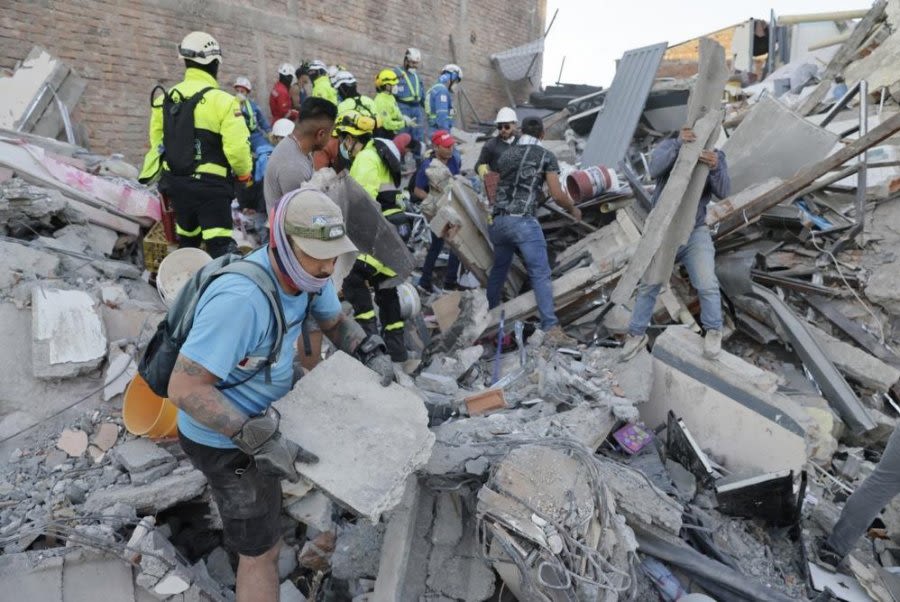
In Pereira, rescue teams, soldiers, and residents tirelessly search through the rubble, hoping to locate survivors. Family members continue to race against time while dealing with their own heartbreak. Among them, Jairo Vargas drove 220 kilometres from Medellin, certain that his brother was trapped beneath the ruins of a collapsed building.

Challenges in Rescue Operations

The earthquake poses a significant challenge for President de la Espriella, who assumed office just days prior. The situation is especially critical in Choco, an impoverished region near the epicentre, where many communities can only be accessed by boat or through dense jungle. Sterling Palacios, a local leader, indicated that the capital of Choco and surrounding villages have faced catastrophic destruction, displacing many residents.

Palacios reported that homes have been levelled and that numerous aftershocks have forced many to seek refuge in the streets. “We are still trying to grasp the extent of the devastation,” he stated, emphasising that affected areas may need weeks to assess the full impact of the disaster.

In response, de la Espriella ordered the mobilisation of military and police forces, alongside engineers and rescue teams, to expedite support in the hardest-hit areas. However, Palacios highlighted that responses have been largely focused on the capital, leaving remote towns vulnerable and unreachable due to ongoing conflicts in the area.

Community Response and Continued Concerns

In the aftermath of the earthquake, families have turned to social media to report missing relatives. Dana Carolina Zamora shared a photograph of her uncle, Miguel Ángel Zamora, who disappeared after the quake struck. Living in a rural area near San José del Palmar, his home was reportedly one of many structures devastated by the earthquake.

Zamora expressed concern over communication barriers that may hinder contact with her uncle. She noted that around 80 per cent of El Cairo, the town where he lived, was damaged. “We hope for the best, but we haven’t heard anything,” she remarked.

The earthquake follows a series of tremors in neighbouring Venezuela, which already resulted in significant casualties. In Pereira, residents are still assessing damages; local authorities confirmed that at least 58 buildings collapsed in the city. Amidst these challenges, municipal governments implemented curfews to prevent looting and maintain public safety during the ongoing crisis.

The United States State Department announced an allocation of USD 15.5 million for immediate disaster relief, encompassing shelter and food supplies. Local government officials consistently highlight the need for continued support as communities begin to navigate the long-term recovery process. As recovery efforts persist, full damage assessments remain difficult, particularly in rural and remote areas where information is scarce.

Long or Short, get news the way you like. No ads. No redirections. Download Newspin and Stay Alert, The CSR Journal Mobile app, for fast, crisp, clean updates!

App Store –  https://apps.apple.com/in/app/newspin/id6746449540 

Google Play Store – https://play.google.com/store/apps/details?id=com.inventifweb.newspin&pcampaignid=web_share

Latest News

Popular Videos
