


Bitter Legacy of Conflict Among the Naga, Kuki, and Meitei Communities
The CSR Journal Magazine

The ongoing strife in Manipur can be traced back to ancient stories that tell of three brothers, symbolising the Naga, Kuki, and Meitei communities. This narrative has been recounted through generations, reflecting a shared history among these groups. Each community, while distinct, is interlinked through a cultural narrative that claims common origins, but today, these ties are overshadowed by violence.

Researchers often highlight that the Nagas and Kukis belong to the Tibeto-Burman linguistic family, suggesting a shared lineage linking back to migrations from the highlands of China and the eastern Himalayas. However, due to differing historical timings of arrival in Manipur, the relationship between these groups has become fractured.

The Nagas have long-established ties to the region, tracing their origins to a mythic site called Makhel, marking their ancestral claims. In contrast, the Kukis reportedly entered Manipur later, particularly through significant migrations in the 18th and 19th centuries, necessitated by pressures from more dominant groups in Myanmar. The Meitei kings played a strategic role in settling Kukis along vulnerable borders, utilising their presence as a buffer against invasions.

Cultural Divergence and Traditions

Both communities have vibrant and distinct cultures shaped by their historical experiences. Naga society, historically centred around the morung, functioned as a multifaceted institution serving educational, military, and governance purposes. The morung symbolised a bastion of Naga traditions, embodying a lifestyle intertwined with customs that included headhunting as a rite of passage.

On the other hand, Kuki society revolved around a chief-led structure, where authority concentrated on the haosa, or clan leader. The Kukis engaged in shifting cultivation, punctuated by seasonal festivals celebrating the harvest. These cultural frameworks continued to influence identities and practices even after the arrival of colonial powers disrupted traditional norms.

Neither identity was self-designated; both the terms “Naga” and “Kuki” were labels assigned by outsiders. British colonial administration further entrenched divisions, categorising tribes into rigid classifications that obscured the interrelations of the communities. This categorisation ultimately contributed to the rivalries that persist today.

Ongoing Violence and Modern Implications

The past decades have witnessed cycles of violence, particularly since the 1990s, which were marked by aspirations for territorial claims from both the Nagas and Kukis. The formation of the NSCN led the Nagas to seek a greater homeland, while Kukis also began demanding recognition for their territorial rights, creating overlapping claims that escalated into violence.

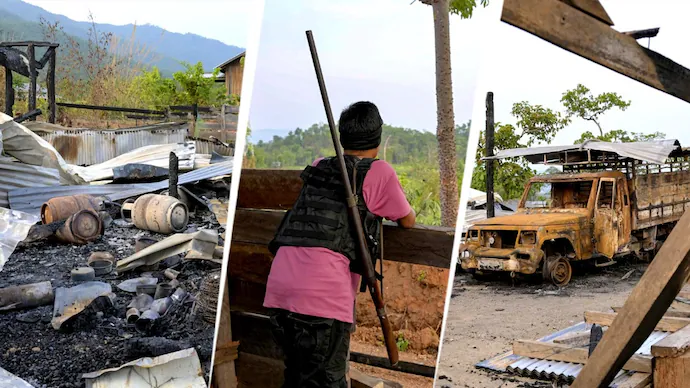
In recent years, particularly from May 2023 onwards, violence erupted between the Meitei and Kuki communities, leading to significant casualties and displacement. Although initially observing the conflict, Naga groups have recently become involved, igniting tensions further, marking a new chapter in local hostilities.

Current conflicts are exacerbated by contestations over land, resources, and control of trade routes, all echoing historical grievances. Additionally, internal disputes among Naga factions complicate the scenario, signalling that the conflict involves not just inter-community rivalry but also intra-community power struggles. This complexity poses significant challenges for achieving lasting peace in the region.

Long or Short, get news the way you like. No ads. No redirections. Download Newspin and Stay Alert, The CSR Journal Mobile app, for fast, crisp, clean updates!

App Store –  https://apps.apple.com/in/app/newspin/id6746449540 

Google Play Store – https://play.google.com/store/apps/details?id=com.inventifweb.newspin&pcampaignid=web_share

Latest News

Popular Videos
