


Astronaut Shubhanshu Shukla Discusses Human Body’s Internal Navigation System
The CSR Journal Magazine

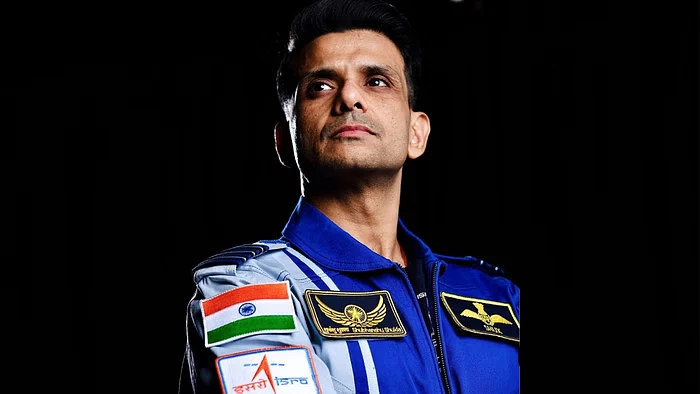
Astronaut Shubhanshu Shukla has recently highlighted the fascinating aspect of the human body’s internal navigation system, which acts similarly to a GPS. He noted that this system can become disoriented in the weightless environment of space. During his training for the Axiom-4 mission, Shukla revealed the significance of neurovestibular fitness in preparing astronauts for their responsibilities in orbit.

On Earth, the brain interprets orientation by integrating inputs from three distinct systems: vision, the vestibular system within the inner ear, and proprioception. These frameworks collectively assist individuals in achieving balance and movement, and in instinctively knowing their orientation relative to gravity.

However, the constraints of space negate gravity, which serves as a reliable reference point. Consequently, astronauts must undergo rigorous training to deal with the uncertainty of orientation in microgravity. This training involves exercises designed to deliberately confuse the sensory systems to prepare the body for these challenges.

Training Techniques for Astronauts

To help astronauts adjust to the peculiarities of space travel, trainers utilise various methods to challenge their balance and orientation mechanisms. One such exercise involves astronauts performing balance tests with their vision obscured, thus compelling the brain to depend solely on feedback from the inner ear and body senses.

An additional training approach employs virtual reality technology to expose astronauts to conflicting sensory information. In these scenarios, visual input does not match what the body and inner ear perceive, testing the adaptability and resilience of the brain.

Moving platforms present further challenges by unexpectedly shifting their position, forcing trainees to rapidly adapt. This exercise is essential as it mimics the unpredictable conditions astronauts may face aboard spacecraft, where traditional references are absent.

The Revolving Chair Exercise

Among the various training techniques, the revolving chair exercise is noted for its unique impact on the vestibular system. The inner ear contains small semicircular canals filled with fluid, which are responsible for detecting rotational movements. When a person spins, this fluid does not immediately stop, resulting in the sensation that the body is still in motion even after the rotation ceases.

According to Shukla, while the eyes confirm that movement has halted, the inner ear may create conflicting signals that can confuse the brain. Over time, the brain learns to recalibrate these signals, a crucial skill for astronauts as they must operate effectively without a definite sense of up or down in space.

This training underscores the remarkable capability of the human body to adapt to new environments. Shukla conveyed that this ability to reorient oneself is vital when astronauts must perform tasks in a dynamic and unfamiliar setting. As India progresses towards its future human spaceflight missions, including Gaganyaan, such neurovestibular training will remain essential for ensuring the safety and efficiency of its astronauts in orbit.

Long or Short, get news the way you like. No ads. No redirections. Download Newspin and Stay Alert, The CSR Journal Mobile app, for fast, crisp, clean updates!

App Store –  https://apps.apple.com/in/app/newspin/id6746449540 

Google Play Store – https://play.google.com/store/apps/details?id=com.inventifweb.newspin&pcampaignid=web_share

Latest News

Popular Videos
