


Madras High Court Requests Responses on AIADMK’s Mekedatu Dam Plea
The CSR Journal Magazine

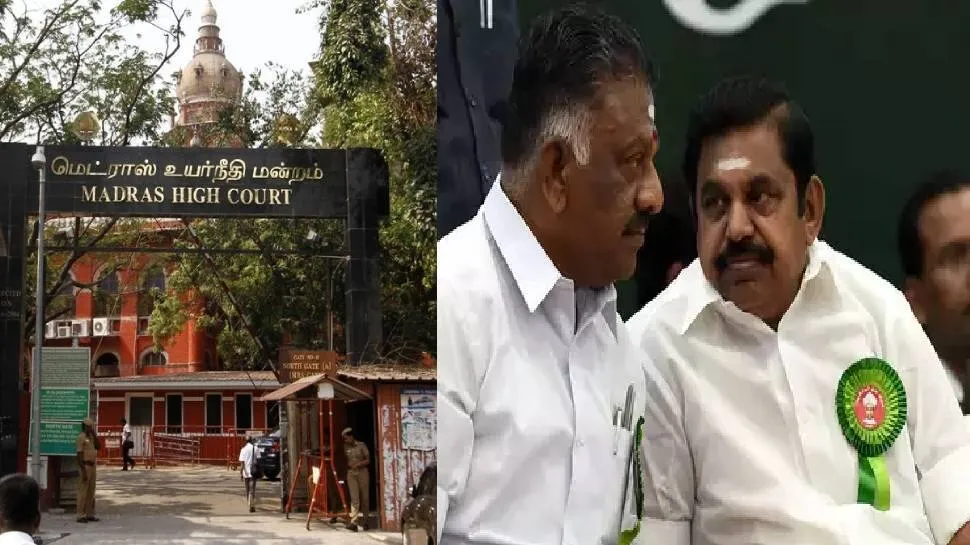
The Madras High Court has instructed the Chief Secretary of Tamil Nadu, the Secretary of the Legislative Assembly, and the Union Ministry of Jal Shakti to submit their responses within a period of two weeks regarding a petition filed by the AIADMK. This petition challenges an amendment passed by the Tamil Nadu Legislative Assembly, which called for the establishment of a tribunal to address the Mekedatu dam issue.

On June 19, the Tamil Nadu Legislative Assembly passed a resolution expressing opposition to the Karnataka government’s proposal to construct the Mekedatu dam across the Cauvery River. The amendment specifically urged the formation of a tribunal to handle the matter.

The AIADMK, along with the PMK and the Communist Party of India (CPI), opposed this amendment. Following this, AIADMK Whip Agri Krishnamurthy filed a petition in the Madras High Court, asserting that the amendment was not included in the copy of the resolution distributed to MLAs on June 18, prior to the special resolution’s passing. The petition further claimed that the amendment was adopted without any discussion.

Legal Proceedings and Allegations

During the hearing, a Division Bench consisting of Chief Justice Sushrut Arvind Dharmadhikari and Justice G. Arul Murugan questioned the manner in which the amendment was presented. The petition alleged that the resolution was submitted to the Union Government with the impression that it had received unanimous approval, despite not being adopted by all members.

In his correspondence to Prime Minister Narendra Modi, Tamil Nadu Chief Minister C. Joseph Vijay highlighted concerns regarding the proposed Mekedatu project and urged the Centre to protect the interests of the lower riparian states. He insisted that any decision regarding the project must align with the Cauvery Water Disputes Tribunal (CWDT) Award and the Supreme Court’s ruling on the related water dispute.

In his letter, Vijay noted comments made by the Minister of State for Jal Shakti in the Rajya Sabha regarding the Mekedatu project. The minister’s response indicated that the Supreme Court’s judgment from February 16, 2018, did not explicitly require Karnataka to procure consent from lower riparian states before constructing a dam across the Cauvery River. Vijay described this reply as “disappointing”, suggesting that it overlooked existing legal precedents concerning such consent.

Chief Minister’s Concerns Over Legal Precedents

The Chief Minister referenced the Constitution Bench judgment in the case of State of Karnataka vs State of Andhra Pradesh, related to the Alamatti project. In that ruling, the Supreme Court determined that Karnataka could not pursue construction activities without the consent of the lower riparian state, emphasising that such consent was imperative.

Additionally, Vijay cited the CWDT Award, which contains provisions that each state must manage waters within its jurisdiction in a manner consistent with the tribunal’s directives. He argued that any initiative likely to affect the regulated flow of the Cauvery River needs to be thoroughly examined in relation to compliance with the Award’s terms.

The case has drawn significant attention, as it highlights ongoing tensions between Tamil Nadu and Karnataka over water rights and resource management. The court’s directive for responses from both the state and central authorities is expected to shape the proceedings related to the Mekedatu dam issue moving forward.

Long or Short, get news the way you like. No ads. No redirections. Download Newspin and Stay Alert, The CSR Journal Mobile app, for fast, crisp, clean updates!

App Store –  https://apps.apple.com/in/app/newspin/id6746449540 

Google Play Store – https://play.google.com/store/apps/details?id=com.inventifweb.newspin&pcampaignid=web_share

Latest News

Popular Videos
