


Why Assam Experiences Flooding Despite Record Low Monsoon Rainfall
The CSR Journal Magazine

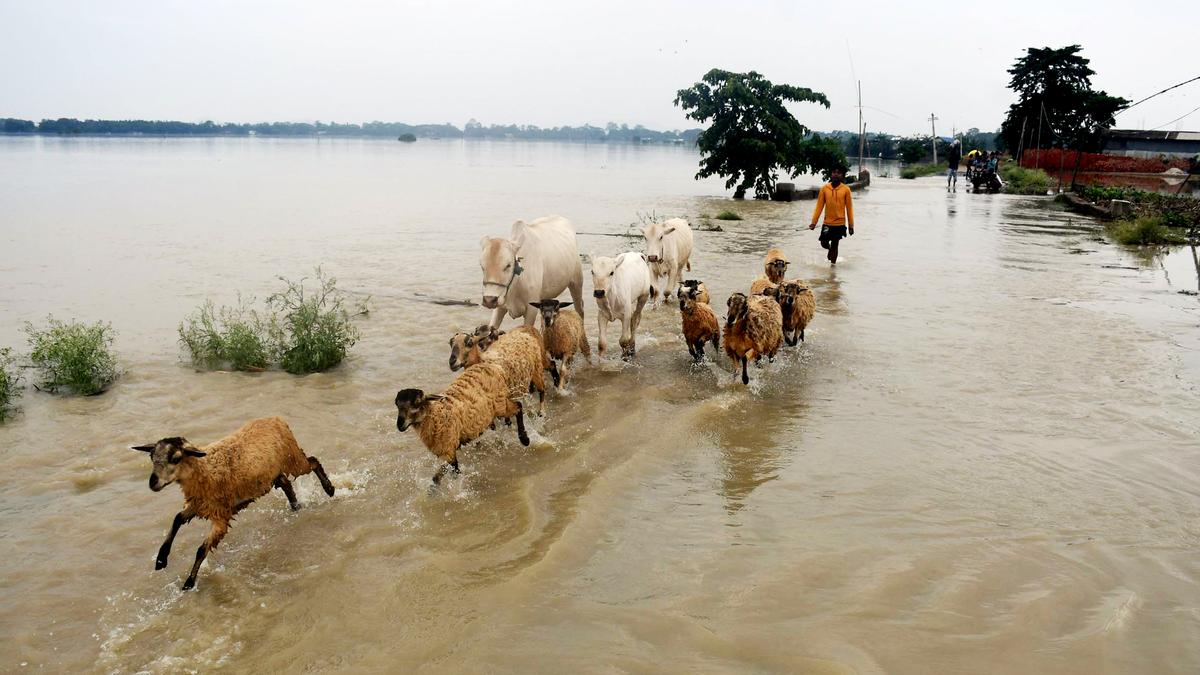
Assam is currently dealing with severe flooding, resulting in the unfortunate drowning of seven individuals in Sivasagar district on July 28, 2026. This brings the state’s total fatalities for the season to 78. Alongside this, around 32,477 people sought refuge overnight in relief camps set up by local authorities. The unusually high toll contrasts sharply with the meteorological data that shows Assam has received 30 per cent less rainfall than the seasonal average.

The India Meteorological Department details that from June 1 to July 28, 2026, Assam recorded 19,913 mm of rain against a normal of 28,487 mm. Out of the 33 districts reporting rainfall statistics, 23 experienced precipitation levels at least 20 per cent below the expected figures. However, a sudden deluge hit on July 19 and 20, leading to immediate flooding.

During those two days, Assam experienced its most intense rainfall of the season, with the Dhansiri River in Numaligarh crossing its danger mark rapidly and remaining above it for over 210 hours. Such abrupt rainfall patterns pose significant challenges for flood management across the Brahmaputra valley, as authorities need to adapt to this new norm.

Details of Rainfall and River Responses

The rainfall data indicates that on average, 28 and 40.3 mm occurred over the two critical days, with Golaghat district receiving 161 mm, the highest recorded rainfall. Rivers’ levels responded promptly to the rain, with the Dhansiri at Numaligarh reaching 79.67 m on July 20, 1.25 m above the danger threshold. Simultaneously, the Brahmaputra River at Neamatighat also crossed its danger limit for 46 hours.

As of July 28, the floods had impacted 622 villages across 21 revenue circles in seven districts, according to Assam’s disaster management authority. Charaideo emerged as the most affected, with 1,42,756 individuals displaced, followed by Sivasagar with 97,074 and Jorhat with 57,371 affected residents.

Over 45,342 hectares of agricultural land, crucial during the transplanting phase of sali paddy, were submerged. Sivasagar reported the loss of 22,276 hectares, while Charaideo recorded 16,652 hectares. A review of rainfall in these districts indicates that six out of the seven are experiencing significant deficits, with Nagaon facing a 60 per cent shortfall.

Analysis of Flood Risk and External Factors

Complicating the flooding scenario is the fact that rainfall patterns in Assam do not always correlate with local river levels. Evidence suggests that the Dhansiri at Numaligarh closely tracks rainfall in Assam on the same day, whereas gauges along the upper Brahmaputra react more to rainfall that falls in Arunachal Pradesh, upstream. For example, Dibrugarh and Neamatighat demonstrate this pattern.

This disparity highlights that Assam’s flood risk also depends on precipitation occurring elsewhere. For instance, Nagaon experienced severe flooding despite being 60 per cent short in seasonal rainfall, indicating that upstream rain contributed to the flooding.

Furthermore, the recent intense rainfall raises questions about whether such concentrated rain events will become a regular occurrence in Assam during the monsoon. A thorough analysis is required to determine if rainfall distribution patterns are changing over the decades.

Government Response and Future Implications

On July 28, the state officials reported that while the death toll reached 75, the total affected population decreased to 3.32 lakh as floodwaters receded. Chief Minister Himanta Biswa Sarma announced an additional Rs 5 lakh from the Chief Minister’s Relief Fund for the bereaved families, increasing the total compensation to Rs 9 lakh. Each of more than one lakh severely affected households will receive Rs 15,000.

Despite water levels declining below danger thresholds, recovery from the floods remains a pressing issue with over 32,000 people still residing in relief camps. The recent flooding incidents underscore the inadequacy of current seasonal infrastructure, which struggles to cope with the abrupt rain patterns. The impact of a seemingly dry monsoon on the population’s well-being continues to raise significant concerns for disaster management authorities.

Long or Short, get news the way you like. No ads. No redirections. Download Newspin and Stay Alert, The CSR Journal Mobile app, for fast, crisp, clean updates!

App Store –  https://apps.apple.com/in/app/newspin/id6746449540 

Google Play Store – https://play.google.com/store/apps/details?id=com.inventifweb.newspin&pcampaignid=web_share

Latest News

Popular Videos
