


Ancient ‘Machine Gun’ Traces Found in Pompeii
The CSR Journal Magazine

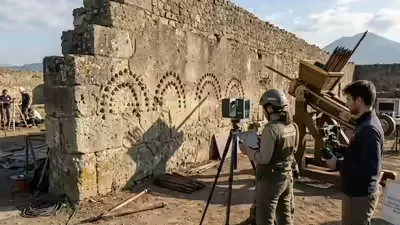
The recent findings in Pompeii have unveiled evidence of a legendary weapon, often referred to as an ancient ‘machine gun’. This remarkable discovery has captured the attention of historians and archaeologists alike, as it sheds light on the advanced technology that existed during the Roman Empire. The details of this weapon are primarily based on excavations in the archaeological site, which is renowned for its well-preserved artefacts from antiquity.

Reports indicate that the weapon functions similarly to what modern-day enthusiasts would imagine when thinking of a multi-shot firearm. Analysis of the remnants reveals an intricate design, with various components that suggest a sophisticated mechanism for rapid firing. This complexity challenges previously held notions regarding the technological capabilities of ancient Rome.

Additionally, archaeologists have unearthed multiple fragments related to the weapon, providing insights into its construction and potential usage during warfare. These fragments are said to include metal parts and indications of mounting systems that would have made the weapon efficient in combat scenarios.

Historical Context of the Weapon

The discovery has sparked discussions about the strategic advantages that such a weapon could have provided during military engagements in ancient times. Historically, the Roman army was known for its innovative arsenal, which included various forms of artillery and ranged weapons. This newly found artefact may suggest that the Romans were experimenting with multi-shot capabilities long before similar technology appeared in later centuries.

Experts have pointed out that the excavation site of Pompeii, notably buried under volcanic ash from the eruption of Mount Vesuvius in 79 AD, serves as a time capsule, preserving various facets of daily life and technological advancements. The presence of this alleged weapon indicates that the Romans may have been more advanced in military technology than previously understood.

Further analysis of the artefact is anticipated, which will hopefully provide a clearer picture of its historical significance. Findings like these are essential not only for understanding the evolution of warfare but also for how societies adapted their technologies in response to conflict.

Future Excavations and Research

As the investigation of Pompeii continues, researchers have expressed optimism about uncovering more secrets that lie within the ancient city. This recent discovery may lead to more focused excavations aimed at locating additional components related to the ‘machine gun’. Such efforts could potentially yield further insights into Roman military innovations.

Academic institutions and archaeological organisations are reportedly gearing up for collaborative ventures, intending to delve deeper into this chapter of history. Scholars specialising in ancient military technology are particularly interested in piecing together how this weapon might have influenced Roman tactics and strategies.

Excavations in other parts of the Roman Empire are also expected to receive renewed attention, with researchers eager to see whether similar artefacts can be discovered elsewhere. This could help to form a broader understanding of the technological advancements across different Roman territories, enriching the narrative of ancient warfare.

Long or Short, get news the way you like. No ads. No redirections. Download Newspin and Stay Alert, The CSR Journal Mobile app, for fast, crisp, clean updates!

App Store –  https://apps.apple.com/in/app/newspin/id6746449540 

Google Play Store – https://play.google.com/store/apps/details?id=com.inventifweb.newspin&pcampaignid=web_share

Latest News

Popular Videos
