


Egypt’s Lost Golden City of Luxor Unearthed After Millennia
The CSR Journal Magazine

The recent excavation in Luxor has unveiled what is being referred to as the Lost Golden City, a site that has remained concealed beneath the sands of Egypt for approximately 3,000 years. This remarkable finding has provided archaeologists with a rare glimpse into ancient Egyptian life during the reign of pharaoh Amenhotep III, who ruled from 1391 to 1353 BC.

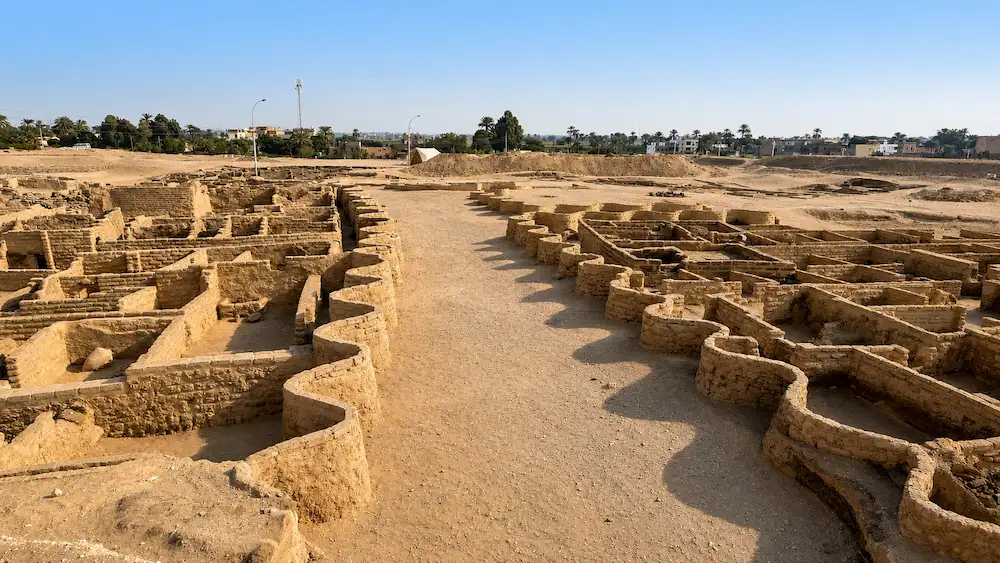
The lost city was discovered in September 2020 near the Valley of the Kings and has since been the focus of extensive archaeological investigations. The settlement is believed to have served as a bustling urban centre where various aspects of daily life, including commerce and administration, flourished. The city was partly constructed in sun-dried mud bricks, making it remarkably well-preserved for its age.

Insights Into Ancient Egyptian Life

Excavators have reportedly uncovered a variety of structures, including residential areas, streets, and a vast array of tools used for everyday activities. The findings suggest that the city experienced a thriving economy, as artefacts indicate the presence of workshops and facilities dedicated to various crafts, such as pottery and metallurgy. Such discoveries are expected to provide crucial information on the socio-economic structure of ancient Egyptian society.

Among the notable discoveries are remnants of walls, rings, and pottery which demonstrate an advanced level of craftsmanship. The artefacts found in the area reveal a range of artistic styles, suggesting that the inhabitants had access to diverse materials and influences. Furthermore, the presence of decorative artefacts signifies the cultural richness of the period.

Researchers have also identified several burial sites within the vicinity of the excavated area, with funerary practices offering further insight into religious beliefs and societal norms. The artefacts found alongside these burial sites indicate varying social statuses and elaborate funerary customs that were likely practised by the ancient Egyptians.

Significance of the Find

The unearthing of the Lost Golden City is considered one of the most significant archaeological discoveries in recent history. Experts believe that it could redefine aspects of ancient Egyptian history and provide a clearer understanding of the timeline of significant events during the era of Amenhotep III. Scholars are particularly interested in how this city connects with other known archaeological sites, such as the Valley of the Kings.

The Egyptian Ministry of Antiquities has expressed its commitment to preserving the site and continuing research. Future excavations could provide additional layers of understanding about the ancient urban landscape and its inhabitants. The government has begun to promote the site as a valuable resource for both tourism and education, aiming to attract international interest while ensuring preservation efforts remain at the forefront.

Overall, the discovery of Egypt’s Lost Golden City stands as a testament to the enduring mysteries of ancient civilisations. It offers a unique opportunity for historians and archaeologists to dive deeper into a past that has long laid hidden. As excavations continue, the hope remains that more secrets of this magnificent city will be revealed to the world.

Long or Short, get news the way you like. No ads. No redirections. Download Newspin and Stay Alert, The CSR Journal Mobile app, for fast, crisp, clean updates!

App Store –  https://apps.apple.com/in/app/newspin/id6746449540 

Google Play Store – https://play.google.com/store/apps/details?id=com.inventifweb.newspin&pcampaignid=web_share

Latest News

Popular Videos
