


AI Bots Now Surpass Humans in Internet Traffic, Cloudflare CEO Reveals
The CSR Journal Magazine

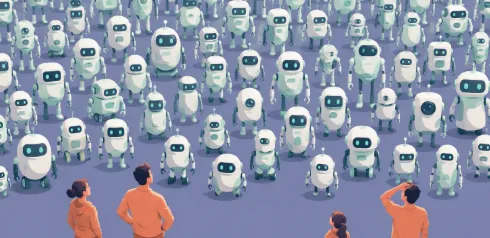
The recent announcement from Cloudflare marks a significant turning point in internet usage, with AI bots now constituting the majority of web traffic. According to data provided by Cloudflare, as of April 27, 2026, AI bots accounted for 57 per cent of all internet traffic, leaving human users at 43 per cent. This revelation, based on Cloudflare’s traffic monitoring radar, highlights the rapid evolution of online activity.

Matthew Prince, CEO of Cloudflare, expressed surprise at the speed with which this shift occurred. Initially predicting a change by the end of 2027, he acknowledged that the rise of what he termed “agentic traffic” has dramatically accelerated. In a post on social media platform X, he remarked, “Welp, that happened faster than I predicted.” This statement underscores the unexpected nature of this milestone in internet history.

Response to this revelation came from various tech leaders, including Elon Musk, who shared his astonishment in a brief reply on X, stating “Wow.” This indicates a considerable interest in the implications of this data within the technology sector.

Understanding the Rise of AI Bot Traffic

While the data presents a striking picture of AI bot prevalence, it does not necessarily imply the existence of billions of bots actively browsing the internet. During an earlier prediction in March, Prince noted that AI activity was on an upward trend, but he elaborated on the nature of bot interactions compared to human behaviour. He pointed out that an AI agent can access thousands of sites to fulfil a single request, whereas a human typically visits only a handful.

For example, when someone is searching for a digital camera, they might explore five websites, but an AI agent could traverse up to a thousand times that number. This behaviour creates significant traffic, contributing to the perception that bots now dominate web activity. Before this surge, bot traffic was estimated to represent approximately 20 per cent of overall web activity, primarily from search engine crawlers.

This transformation is closely linked to the capabilities of AI agents that have advanced beyond mere conversational tools. These agents are now able to perform tasks such as gathering information and completing online work autonomously, which accumulates to form real traffic online.

Human Activity Still Significant Across the Web

Despite the notable presence of bots in navigating web pages, humans still significantly contribute to total online activity. Current estimates suggest that human users account for approximately 65 per cent of all web engagement, particularly when considering activities beyond HTML requests, such as using applications or consuming media.

This distinction implies that while AI bots may increasingly dominate the landscape of webpage navigation and data retrieval, humans continue to engage actively with the internet in different contexts. Thus, while bots are enhancing their role in reading and processing content, human users maintain a presence in interactive and consumption-related activities.

The emergence of a dual landscape, where bots and humans have distinct roles, raises intriguing questions about the future dynamics of internet traffic. As advancements continue in AI technology, the balance between these two types of users may evolve further, thereby reshaping the online experience.

Long or Short, get news the way you like. No ads. No redirections. Download Newspin and Stay Alert, The CSR Journal Mobile app, for fast, crisp, clean updates!

App Store –  https://apps.apple.com/in/app/newspin/id6746449540 

Google Play Store – https://play.google.com/store/apps/details?id=com.inventifweb.newspin&pcampaignid=web_share

Latest News

Popular Videos
