


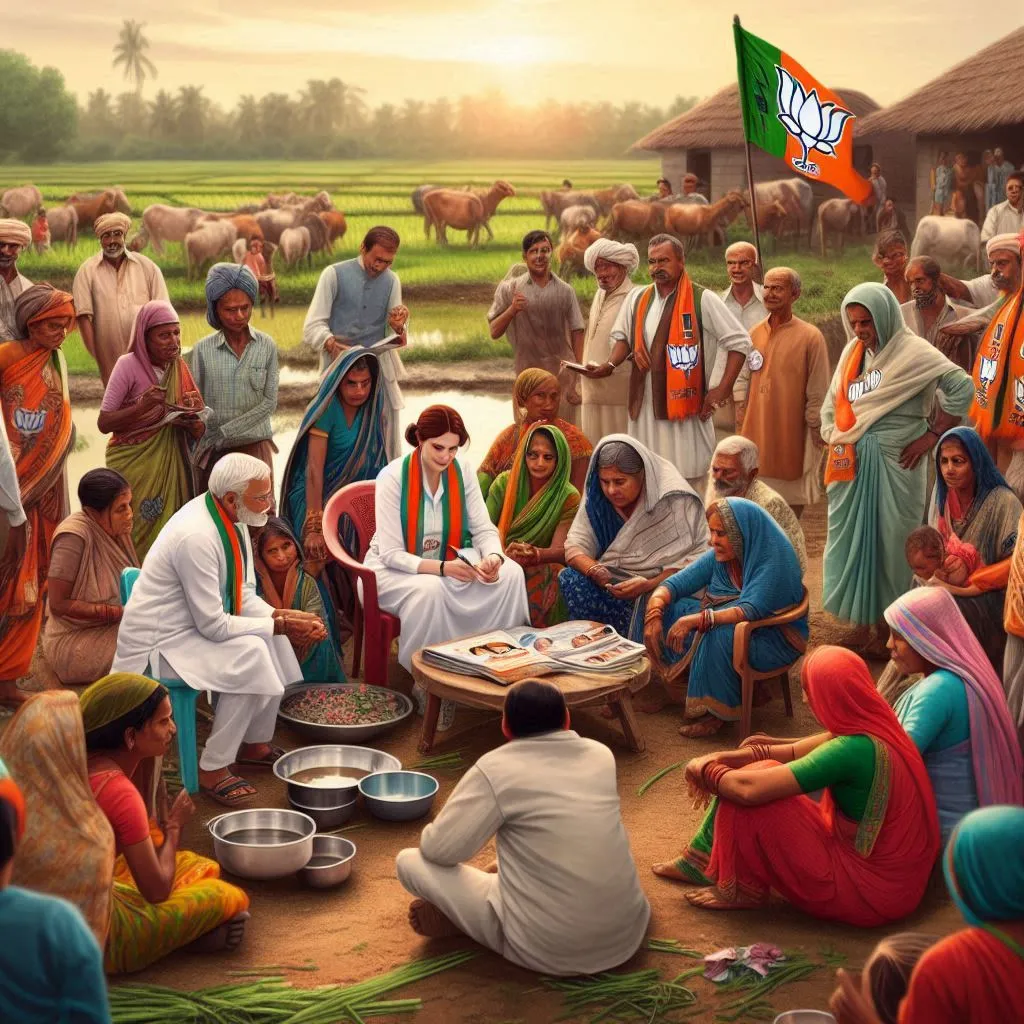

In recent years, Indian politics has witnessed a significant shift in how Hindu identity is mobilized. What began as a movement largely associated with certain social groups has expanded to include a wide range of communities, including those from historically marginalized backgrounds. This phenomenon, often called “Subaltern Hindutva”, represents the integration of lower castes, Other Backward Classes (OBCs), Dalits, and similar groups into a broader Hindu nationalist framework. It poses a direct challenge to parties that position themselves as secular or focused primarily on economic and social justice issues.
As someone who has worked with political consultancy agencies in the past, I have seen firsthand how campaigns navigate voter aspirations. In one assignment involving state-level strategy sessions, we analyzed why traditional vote banks were fragmenting. Economic promises alone often fell short when identity provided a stronger sense of belonging.
This article examines ‘Subaltern Hindutva’ through political science, sociological, and psychological perspectives. It simplifies the actions and gestures that define New India, offers data and facts, presents argumentative thoughts, and raises open questions.
The goal is not controversy but to draw lessons for non-BJP parties on how the BJP has succeeded in prioritizing religion and cultural identity over purely economic conditions or day-to-day issues.
Understanding Subaltern Hindutva
Subaltern Hindutva refers to the way Hindu nationalist ideology has reached communities that were once outside its core support base. Traditionally, Hindutva drew strength from upper castes and urban middle classes. Over time, particularly since 2014, the Bharatiya Janata Party (BJP) and its affiliated organizations have extended outreach to OBCs, Dalits, and smaller castes through targeted inclusion.
This is not accidental. It involves long-term grassroots work by groups like the RSS and VHP. They build caste-specific narratives, promote local Hindu mythologies, and create organizations that give smaller castes a platform. Leaders from these communities receive party tickets and positions. In Uttar Pradesh, for example, the BJP has focused on groups like Valmikis, Lodhis, and Kurmis. This approach combines symbolic gestures with practical benefits.
From a political science viewpoint, this reflects “identity politics theory”. Identities are not fixed; they can be reshaped through mobilization. Parties that master this can build broad coalitions.
Sociologically, it addresses feelings of marginalization within the Hindu fold. Many subaltern groups seek dignity and recognition. Hindutva offers them a place in a larger Hindu narrative, reducing the sting of caste hierarchies by emphasizing shared religious identity.
Psychologically, this taps into the human need for belonging and self-esteem. “Social identity theory” suggests people derive pride from group membership. When economic struggles persist, a strong cultural or religious identity can provide psychological wages. It offers a sense of empowerment and unity against perceived external threats or historical grievances. In simple terms, it makes people feel valued as part of something bigger, even if daily challenges remain.
Data and Electoral Success
Numbers tell a compelling story. In the 2014 Lok Sabha elections, the BJP expanded its appeal significantly. Post-poll surveys from Lokniti-CSDS showed gains among OBCs and some Dalit sections. By 2019, this deepened. The BJP secured around 44 percent of OBC votes nationally, up from lower figures in earlier elections. Among Dalits, support grew, with notable shifts among non-Jatav groups.
In 2024, while the BJP did not secure a standalone majority, it retained strong backing from many subaltern Hindu voters, especially in the Hindi heartland. In Uttar Pradesh, it held an edge among non-Yadav OBCs. Welfare schemes played a role. Programs like PM Awas Yojana (housing), Ujjwala (LPG connections), and Ayushman Bharat (health insurance) reached millions. Studies indicate beneficiaries, including from SC and OBC communities, acknowledged these benefits. However, voting patterns showed identity often trumped pure economic evaluation.
In one consultancy project I worked on around 2018-19, we reviewed similar data. In rural constituencies, voters who received scheme benefits still prioritized cultural issues like temple construction or national pride when deciding votes. Economic dissatisfaction existed, but it did not always translate into rejection of the party offering identity affirmation. This pattern repeats. Riots or communal tensions in the year before elections have sometimes boosted BJP vote shares by 5 percentage points or more, showing how polarization reinforces identity.
The Ram Mandir in Ayodhya is a prime example of symbolic politics. Its inauguration in 2024 became a national event. The BJP framed it as correcting historical wrongs and restoring Hindu pride. Invitations to people from diverse backgrounds, including from marginalized communities, reinforced inclusion. This gesture simplified complex history into a unifying narrative: one temple, one shared heritage.
Simplifying Actions and Gestures in “New India”
In New India, politics is about visible actions that connect emotionally. The BJP organizes events where leaders visit homes of people from backward communities or highlight their participation in national projects. Modi’s own background as a tea seller from a modest family is repeatedly invoked. This creates relatability.
Grassroots work involves local RSS shakhas that engage youth in cultural activities, sports, and service. These build networks beyond elections. Sociologically, this fosters social capital. People feel part of a movement, not just voters. Psychologically, repeated exposure to positive group imagery strengthens loyalty.
Compare this to purely economic appeals. Unemployment and inflation matter, but when framed within a story of national resurgence and cultural revival, they gain different meaning. Voters might think, “Development is happening, and we are proud Hindus contributing to it.” This blurs caste lines within the Hindu majority while sharpening religious ones.
Argumentatively, this strategy succeeds because it addresses multiple layers. Economic schemes provide tangible gains. Cultural narratives offer intangible dignity. Political representation gives voice. Non-Hindutva parties often focus on one layer, usually caste-specific justice or welfare, but struggle to weave them into a compelling overarching story.
The Challenge to Secularism
Secularism in India means the state treats all religions equally and does not favor one. Non-BJP parties have long championed this, criticizing majoritarianism. Yet Subaltern Hindutva challenges them by redefining the terrain. It argues that true secularism was “pseudo-secularism” that appeased minorities at the expense of the Hindu majority. By including subaltern Hindus, it claims to represent the real people of India.
This creates a dilemma. Opposition parties risk alienating Hindu voters if they appear to oppose cultural symbols like the Ram Mandir. Data shows most Hindus support the temple. At the same time, emphasizing minority protections without equal emphasis on majority sentiments can seem disconnected.
From political science, this is a classic case of ‘hegemonic incorporation’. The dominant ideology absorbs elements of subaltern aspirations to maintain power.
Sociologically, it transforms caste contradictions into religious solidarity.
Psychologically, it fulfills a need for positive distinctiveness. Marginalized groups gain respect within the Hindu framework, reducing incentives for purely caste-based mobilization.
Open question: Can secular parties counter this without diluting their principles? Or does effective secularism now require deeper engagement with Hindu cultural expressions?
Now,
Non-Hindutva parties can learn valuable strategies from the BJP’s success without adopting its ideology. First, understand the power of cultural resonance. In my consultancy experience, campaigns that ignored local festivals or traditions often underperformed. Voters respond to leaders who show genuine respect for their beliefs and customs, not just policy documents.
Second, combine welfare with dignity. Schemes matter, but delivery must feel empowering, not patronizing. The BJP’s direct benefit transfers reduced middlemen, creating a sense of personal connection to the leader. Opposition parties should innovate similar transparent mechanisms while addressing structural inequalities more aggressively.
Third, build broad coalitions through micro-inclusion. The BJP woos smaller castes by giving them representation. Secular fronts can do the same by amplifying diverse voices within a pluralistic framework. Avoid over-reliance on a few dominant backward castes.
Fourth, reclaim nationalism and development narratives. Economic issues like jobs and inflation are real. Frame solutions within an inclusive Indian identity that celebrates diversity as strength. Psychological insights show people want hope and pride. Offer a vision of progress where all communities thrive without hierarchy.
Fifth, invest in grassroots organization. Long-term community work beats sporadic campaigns. Sociological lenses highlight the importance of networks. Build civil society ties that foster interfaith and inter-caste harmony at the local level.
In one project, we advised a party to pilot community development programs tied to local cultural events. Initial results showed improved trust, but scaling required sustained effort. The BJP excels here through its ideological cadre.
One key argument is that religion often overrides economics in voter behavior because it speaks to deeper identity needs. When people feel culturally secure, they may tolerate economic shortcomings. Data from various elections supports this in parts of India. Yet in regions with strong regional identities or better governance records, economic performance still sways outcomes. This suggests context matters.
Another thought: Subaltern Hindutva highlights failures in previous social justice models. Caste-based parties sometimes became vehicles for elite capture within backward groups. By offering an alternative, Hindutva fills a vacuum. Non-BJP parties must introspect and reform to provide better representation.
-
How can secular parties create an emotional connect with Hindu cultural symbols without compromising minority rights?
-
Is a caste census enough, or does it need pairing with cultural outreach?
-
Can psychological needs for belonging be met through inclusive secular nationalism?
-
What role should civil society and intellectuals play in bridging divides?
-
In a diverse democracy, how do we balance majoritarian sentiments with constitutional protections?
 Dr. Jaimine Vaishnav is a faculty of geopolitics and world economy and other liberal arts subjects, a researcher with publications in SCI and ABDC journals, and an author of 6 books specializing in informal economies, mass media, and street entrepreneurship. With over a decade of experience as an academic and options trader, he is keen on bridging the grassroots business practices with global economic thought. His work emphasizes resilience, innovation, and human action in everyday human life. He can be contacted on jaiminism@hotmail.co.in for further communication.