


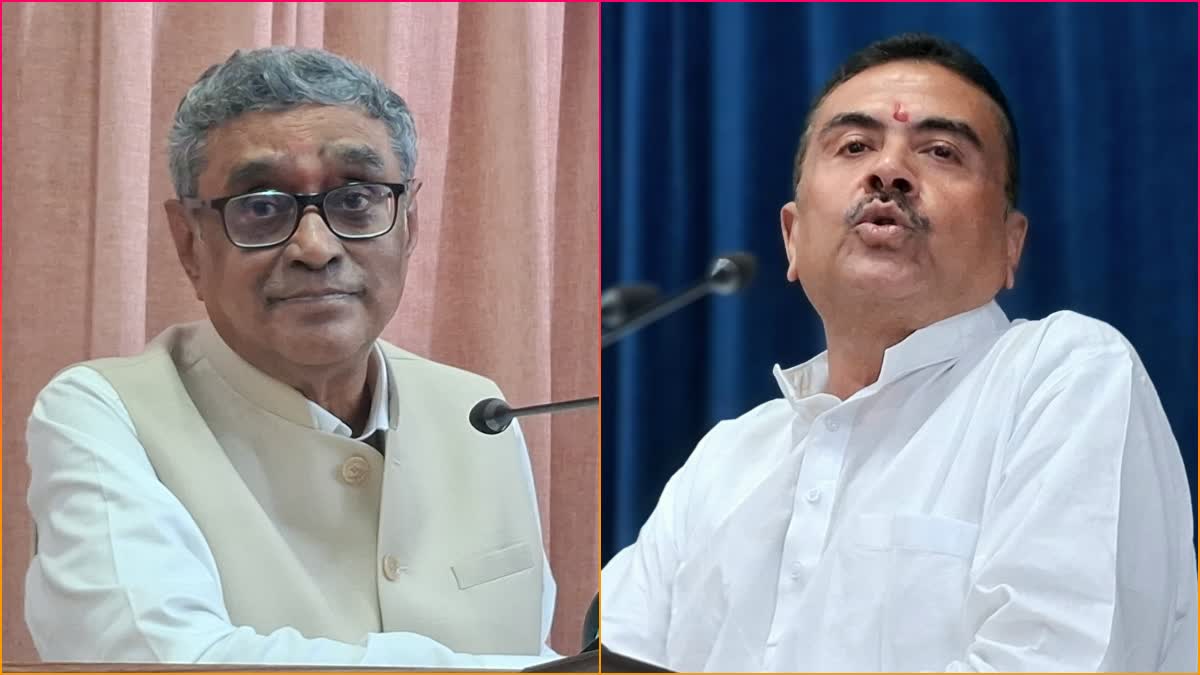

The West Bengal Budget 2026, presented by Finance Minister Swapan Dasgupta in the Legislative Assembly on Monday, unveiled a wide-ranging set of measures aimed at boosting employee welfare, creating jobs, encouraging entrepreneurship, and restructuring the state’s administrative framework. The budget, the first full-fledged one under the BJP-led government, reflects a multi-pronged strategy to address unemployment, improve governance, and deliver on key electoral promises.
In a landmark announcement, the state government declared a 20 per cent increase in Dearness Allowance (DA) for government and semi-government employees, raising the total DA from 18 per cent to 38 per cent. Pensioners will also receive a corresponding 20 per cent hike in Dearness Relief (DR). The revised rates will come into effect from October 1, 2026.
The move fulfills a key promise made in the BJP’s ‘Sankalpa Patra’ to bring DA for state employees at par with central government levels. However, a gap of 20 per cent still remains, as central government employees currently receive 58 per cent DA.
Chief Minister Suvendu Adhikari stated that the government is committed to bridging this gap. “We have kept our promises. Despite the heavy debt burden, we will gradually bring DA at par with the Centre,” he said.
Massive recruitment drive: 1 lakh jobs announced
The budget also announced a major employment push, with plans to fill one lakh vacancies across various state government departments. Of these, 33 per cent of the posts will be reserved for women, offering approximately 33,000 job opportunities.
Additionally, 10 per cent of the vacancies will be reserved for Agniveers, wherever applicable. The Education Department will recruit 50,000 teachers and staff, while 20,000 positions will be filled in the Police Department to strengthen security infrastructure.
In a relief for job aspirants, the government has extended the existing five-year relaxation in the upper age limit for recruitment by another two years.
Salary hikes across key sectors
The budget provides financial relief to several categories of workers. Anganwadi and ASHA workers, along with para-teachers, will receive a monthly salary increase of Rs 5,000. Mid-day meal cooks will get an additional Rs 1,000, while civic volunteers, home guards, Green Police personnel, and NVM workers will see a Rs 2,000 hike.
To promote self-employment and reduce reliance on government jobs, the state has introduced the ‘Udyam Credit Card’ scheme. Under this initiative, around two lakh youths will receive financial assistance of ₹10 lakh each to start businesses.
The package includes Rs 5 lakh as a government grant and Rs 5 lakh as an interest-free loan with flexible repayment terms. An allocation of Rs 200 crore has been made to launch the scheme.
Experts believe this initiative will significantly boost small and medium enterprises, startups, and local businesses, generating employment opportunities across the state.
Five new districts, administrative expansion
In a major administrative reform, the government announced plans to create five new districts—Kolkata, Basirhat, Sundarban, Jangipur, and Arambagh.
The budget also proposes new police districts, subdivisions, and municipalities to improve governance and service delivery. A new police district will be set up in Contai (Kanthi), and a new subdivision will be created in Gopiballavpur.
Additionally, new municipalities have been proposed in Shibmandir, Gazole, Chanchal, Belda, Bagnan, Jaigaon, Kolaghat, Kamarpukur, and Tungidighi, reflecting rapid urbanization in these regions.
The budget highlights the government’s focus on decentralization, administrative efficiency, and economic development. Observers note that the creation of new districts and municipalities could significantly impact governance and political dynamics in the state.
With a mix of welfare measures, employment generation, and structural reforms, the West Bengal Budget 2026 signals a comprehensive approach toward addressing both immediate and long-term challenges facing the state.