


US Military Actions Impact Indian-Crewed Vessels Amid Contradictory Statements
The CSR Journal Magazine

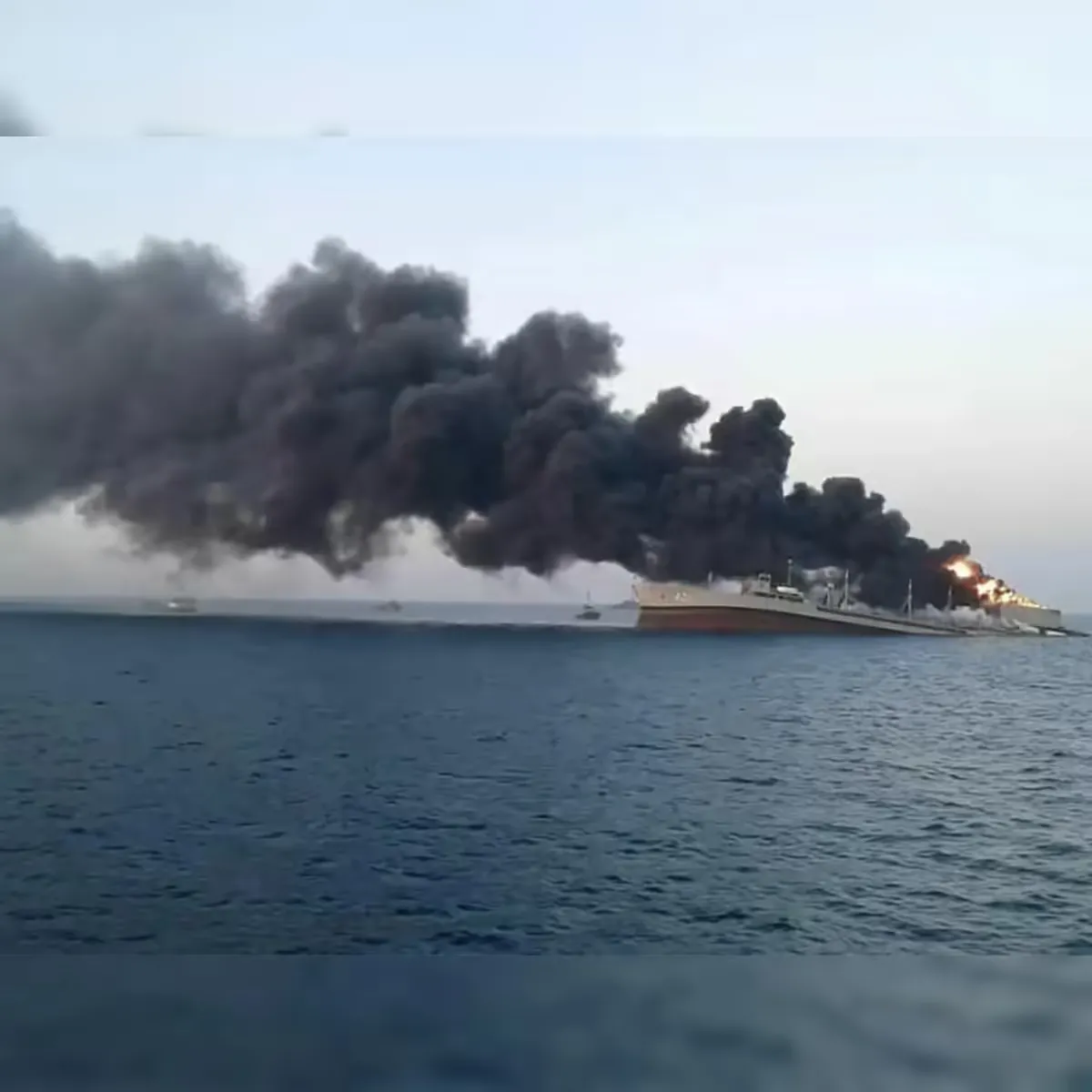
The US Armed Forces’ Central Command (Centcom) has confirmed that it conducted military strikes against three tankers operated by Indian crews in the Gulf of Oman. This military action reportedly resulted in the deaths of at least three Indian sailors on one of the vessels, MT Settebello. Centcom stated that the strikes were carried out using Hellfire missiles over a span of four days, striking the MT Jalveer, MT Settebello, and MT Marivex.

In its communication, Centcom acknowledged that these vessels were in violation of the US blockade aimed at restricting Iran’s oil trade. The military command has released combat footage demonstrating missile launches against the MT Jalveer and reiterated that the blockade would be enforced without bias against ships from any country.

In total, 65 crew members from the affected vessels were reportedly rescued and brought to safety. This series of incidents marks a significant escalation in the maritime tensions surrounding the region.

President Trump Disputes Centcom’s Account

In stark contrast to Centcom’s statements, President Donald Trump has attributed the attacks on the Indian-crewed ships to Iranian drone activity. In a post shared on the social media platform Truth Social, Trump condemned the alleged drone assault, claiming it was “TOTALLY UNACCEPTABLE.” His remarks have led to confusion regarding the official narrative of the events, particularly as they diverge from the military’s account of actions taken by US forces.

Trump’s commentary also comes in the wake of heightened diplomatic activity between India and the United States. Following the incidents, the Indian government expressed its concerns by summoning US Charge d’Affaires Jason Meeks for discussions, especially after another vessel carrying Indian crew members was attacked near Oman’s coastline.

The discrepancy between Trump’s comments and Centcom’s official position raises questions about clarity and coherence in the narratives provided by the US administration and its military. The situation illustrates the complexities India faces amidst escalating tensions in maritime security.

Impact on Indian Seafarers and Maritime Security

With the ongoing military actions and diplomatic responses, Indian officials have expressed significant concern regarding the safety of their nationals. Official estimates indicate that approximately 622 Indian seafarers are operating aboard 13 India-flagged vessels in regions adjacent to the Strait of Hormuz. Moreover, nearly 18,000 Indian nationals are engaged on a variety of foreign-flagged merchant ships throughout the Gulf region.

The Directorate General of Shipping (DGS) in India has issued fresh advisories to mariners concerning the emerging security threats posed by the recent US attacks. This advisory aligns with India’s broader efforts to ensure the safety of its maritime workforce amidst a deteriorating security landscape.

As the geopolitical landscape continues to evolve, Indian seafarers find themselves caught in a precarious situation, navigating through waters increasingly characterised by military conflict. The uncertainty surrounding US operations and its implications for Indian nationals remains a primary concern for the Indian government.

Long or Short, get news the way you like. No ads. No redirections. Download Newspin and Stay Alert, The CSR Journal Mobile app, for fast, crisp, clean updates!

App Store –  https://apps.apple.com/in/app/newspin/id6746449540 

Google Play Store – https://play.google.com/store/apps/details?id=com.inventifweb.newspin&pcampaignid=web_share

Latest News

Popular Videos
