


Trump Signs 14-Point US-Iran Accord at G7 Summit in France
The CSR Journal Magazine

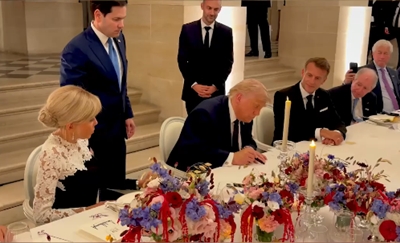
The United States and Iran have signed a 14-point Memorandum of Understanding aimed at extending the ceasefire between the two countries and laying the groundwork for a comprehensive agreement to end months of hostilities. The deal, signed by US President Donald Trump while attending the G7 Summit in Évian-les-Bains, France, has officially come into effect, according to a White House official.

The agreement, which also seeks to reopen the strategically important Strait of Hormuz and prevent Iran from acquiring nuclear weapons, establishes a 60-day framework for negotiating a final settlement. It also outlines plans for a proposed $300 billion reconstruction and economic development fund for Iran, although the United States will not be required to contribute financially.

Agreement Calls for End to Hostilities

The first provision of the memorandum commits the United States, Iran and their allies to an immediate and permanent end to military operations across all fronts, including Lebanon.

The document states that neither side will initiate military action or threaten the other and commits both countries to respecting the sovereignty and territorial integrity of Lebanon.

Tehran has repeatedly insisted that the ceasefire should include Lebanon, while Washington has expressed concern that Israeli military operations against Hezbollah could undermine the broader understanding with Iran.

Iranian officials have warned that continued Israeli operations in Lebanon would amount to a violation of the agreement.

It remains unclear how Israel will respond to the provision.

Mutual Respect and 60-Day Negotiation Timeline

The agreement also commits both countries to respecting each other’s sovereignty and refraining from interference in internal affairs.

Under the third point of the memorandum, the two countries will seek to conclude a final agreement within a maximum of 60 days, although the timeline may be extended by mutual consent.

According to the White House, President Trump signed the document during a dinner held after the G7 Summit at the Palace of Versailles. Iranian President Masoud Pezeshkian has also signed the agreement.

Earlier indications had suggested that a formal signing ceremony would be held in Geneva later this week, though it remains unclear whether those plans will proceed.

Strait of Hormuz to Reopen

Under the agreement, Iran has pledged to facilitate the safe passage of commercial vessels through the Strait of Hormuz without imposing charges.

Shipping traffic is expected to resume immediately, although technical work, including de-mining operations and the removal of military obstacles, will continue.

The memorandum also provides for broader cooperation involving Oman and other Gulf countries to establish a long-term framework for managing the vital waterway.

The closure of the Strait of Hormuz during the conflict had triggered sharp increases in global oil prices, making its reopening a major objective for Washington.

Blockade Removal and Troop Redeployment

The United States has committed to gradually removing its naval blockade and easing restrictions affecting Iranian ports.

According to the agreement, the process is expected to be completed within 30 days, with maritime traffic restored in stages.

Within a month of a final settlement, American military forces are also expected to return to their pre-conflict posture and deployment levels.

Reconstruction Fund and Sanctions Relief

One of the key provisions of the memorandum is the creation of a reconstruction and economic development framework worth at least $300 billion.

The mechanism for the fund is expected to be finalised within 60 days after a permanent agreement is reached. However, US officials have stressed that Washington will not be required to provide any direct financial contribution.

The memorandum also envisages the eventual removal of US sanctions against Iran, including restrictions imposed through United Nations Security Council resolutions and unilateral American measures.

However, the timing and sequencing of sanctions relief are yet to be determined and will form part of subsequent negotiations.

Nuclear Commitments and Frozen Assets

Iran has agreed not to acquire or develop nuclear weapons and both sides have committed to finding a mutually acceptable mechanism to address Tehran’s stockpile of enriched uranium.

At a minimum, the material will be downblended under the supervision of the International Atomic Energy Agency, according to the document.

The agreement also provides for the release of Iranian funds that remain frozen or restricted, although the procedures for doing so will be worked out during future talks.

US officials indicated that some assets could be released gradually to reward compliance with various provisions of the memorandum.

Monitoring Mechanism and UN Endorsement

The final sections of the memorandum establish a mechanism to oversee implementation and monitor compliance with both the interim arrangement and any future agreement.

Once implementation begins, the two sides will launch negotiations on a permanent settlement.

The document also states that any final agreement will be endorsed through a binding resolution of the United Nations Security Council.

Although many operational details remain unresolved, the memorandum marks the first formal framework agreed upon by Washington and Tehran since hostilities erupted four months ago and opens the door to broader negotiations aimed at achieving a lasting settlement.

Long or Short, get news the way you like. No ads. No redirections. Download Newspin and Stay Alert, The CSR Journal Mobile app, for fast, crisp, clean updates!

App Store –  https://apps.apple.com/in/app/newspin/id6746449540 

Google Play Store – https://play.google.com/store/apps/details?id=com.inventifweb.newspin&pcampaignid=web_share

Latest News

Popular Videos
