


The New Architects of Growth: How Women Engineers are Shaping India’s Future
The CSR Journal Magazine

Women’s representation in India’s technology sector is rising, reaching 31% to 32% in 2025-2026, with significant growth in AI, data analytics, and cybersecurity roles. Substantially contributing to this, Tata Power Renewable Energy Limited (TPREL) is highlighting 19 women professionals holding technical roles at its 300 MW Solar Project in Koppal, Karnataka, as part of its ‘Sun Sheroes’ campaign launched in March 2026. The campaign showcases the journey of these women to demonstrate that technical expertise and leadership in sustainable energy are gender-neutral.

TPREL, a subsidiary of The Tata Power Company Limited, is one of India’s foremost players in the renewable energy sector and is dedicated to transforming the energy landscape of India and contributing to a greener, more sustainable future.

Tata Power is actively diversifying its generation portfolio by employing women engineers in traditionally male-dominated roles, including plant operations, maintenance, and critical control room functions. Tata Power achieved a 14.6% gender diversity ratio by 2022 and has set a goal to increase this to 18% by FY27, focusing on recruiting 30% early-career women.

‘Sun Sheroes’ project

The ‘Sun Sheroes’ project is situated in the Koppal district of Karnataka, where 19 women are actively working on-site, managing teams and solving engineering challenges. These 19 women account for nearly 37% of the workforce at this specific site. The women are involved in technical, on-site roles, including handling 24×7 operations, engineering, and maintenance, often in roles historically dominated by men. The initiative highlights TPREL’s commitment to fostering a more inclusive and gender-balanced workforce in the renewable energy sector.

On a sun-baked construction site in Koppal, Karnataka, a woman engineer in a hard hat pores over solar panel layouts as cranes hoist gleaming modules into place—part of Tata Power Renewables’ 300 MW SECI project where 19 women hold technical roles, comprising 37% of the on-site workforce. Hundreds of kilometres away in Odisha, at Tata Power’s Power Distribution Training Centre (PDTC), women engineers lead real-time grid operations and control room management, ensuring reliable supply amid the state’s industrial expansion.

In Tamil Nadu, at the company’s cutting-edge solar cell and module manufacturing facility—which ramped to 2.8 GW cells and 2.9 GW modules in nine months—women form a significant portion of the frontline workforce, debugging production lines and optimizing yields for high-efficiency panels fuelling India’s rooftop solar surge. What has changed is who occupies these once male bastions: women engineers at Tata Power are increasingly leading frontline operations, maintenance, and R&D, driving the sector’s inclusivity as highlighted in the company’s December 2025 investor presentation.

Gender Gap in Engineering in India

The landscape of engineering in India is undergoing a significant transformation, with the long-standing perception of it being a male-dominated, field-intensive profession rapidly shifting towards a more inclusive and diverse environment. While women have been entering engineering colleges in greater numbers—comprising roughly 28% to 43% of STEM enrolments in recent years—the transition into core technical roles is actively closing due to targeted initiatives and changing industry perceptions.

For years, engineering in India carried a certain image and perception. It was associated with long hours on the field, difficult terrain, and a culture that was not always welcoming. While women entered engineering colleges in growing numbers, their transition into core technical roles was slower. The gap was due to limited access, opportunity and more often perception. That gap is now beginning to close.

Female participation in Infrastructure and Construction

In infrastructure and construction, companies such as Larsen & Toubro have seen increasing participation of women engineers on project sites, not just in design roles but in execution and site management. These are environments that demand both technical knowledge and the ability to navigate unpredictable conditions. The presence of women in such roles reflects a gradual shift in how the sector views talent.

Larsen & Toubro (L&T) has been at the forefront of this shift, actively increasing the participation of women engineers in project execution, site management, and heavy equipment operation. As of 2024–2025, women engineers at L&T are moving beyond design roles into crucial site-based positions, such as project management for metro rail, bullet train corridors, and high-rise construction.

The Mahindra Group has significantly increased the representation of women on its manufacturing shop floors by implementing a multi-pronged approach that combines technology, ergonomic workplace redesign, and supportive policy frameworks. What was once considered physically restrictive is now being re-evaluated through the lens of technology and process improvements.

What makes this shift particularly significant is the timing. India is going through multiple transitions at once. The push toward clean energy, the rise of digital systems, the expansion of infrastructure, and the growth of advanced manufacturing are all happening together. Each of these sectors requires engineers who can adapt, learn quickly, and work across disciplines.

Women in Energy Sector

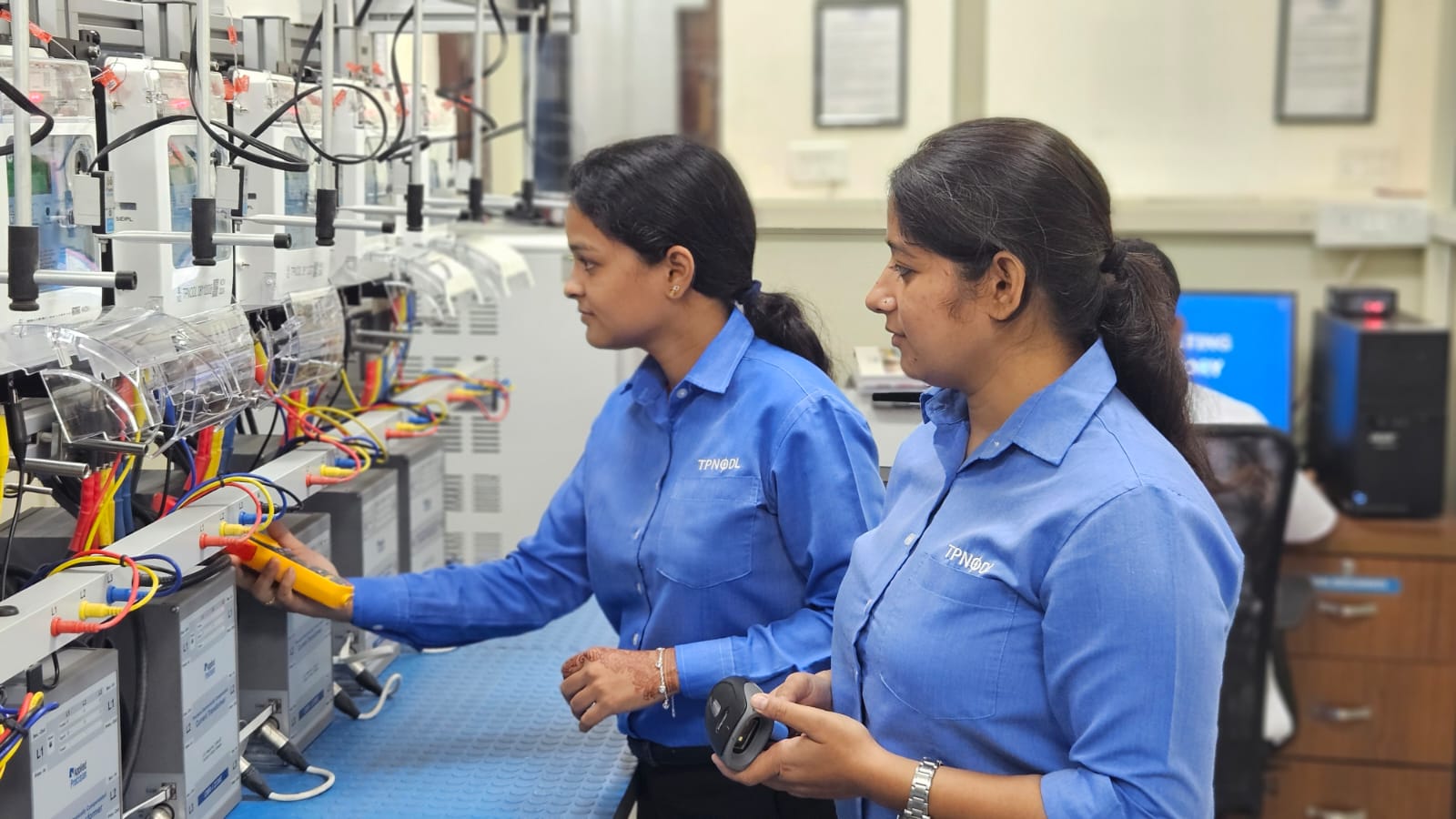
The energy sector tells a similar story, though one shaped by its own complexities. Companies like Tata Power have been expanding the role of women across generation, renewables, and distribution. In renewable energy projects, women engineers are involved in design, monitoring, and operations. In distribution networks, they are part of teams managing control rooms and ensuring grid stability. Women are given opportunity at the places where centre of the system functions, not peripheral roles.

What is particularly encouraging is the increasing participation of women in field and operational roles, areas that have traditionally seen limited representation. Over 80% of the workforce at the 4GW Solar Cell & Solar Module manufacturing facility in Tirunelveli consists of women, demonstrating a strong presence in production and technical roles. With close to 80% women workforce in its Tamil Nadu operations, Tata Power is leading the way in building a more inclusive and diverse energy sector.

In Odisha, Tata Power has established a Power Distribution Training Centre (PDTC)—also referred to as a Power Distribution Technology Centre—in Bhubaneswar, which operates as a high-tech digital hub for monitoring and managing electricity distribution across the state. The centre is managed by over 50 skilled homegrown, qualified engineers, with a significant number of women professionals playing key roles in real-time grid operations, control room management, and SCADA-integrated substation monitoring.

Beyond distribution, Tata Power is also strengthening gender diversity across its generation portfolio, with women engineers and professionals actively contributing to plant operations, maintenance, and critical control room functions areas traditionally dominated by men. Their involvement across these functions reflects a broader organisational commitment to enabling women to take on responsibilities across the full spectrum of energy operations.

STEM Education Plays a Key Role

Education has played a role in this shift. More women in India are choosing engineering, particularly in electrical, electronics, and computer science. India boasts one of the world’s highest proportions of female STEM graduates at 43%. This has created a steady pipeline of talent entering the workforce. However, retention and progression remain key challenges. Entry-level participation has improved, but representation at senior technical and leadership levels still needs attention.

Companies are responding in different ways. Some are investing in training and mentorship. Others are redesigning roles and workplaces to make them more inclusive. There is also a growing recognition that diversity is not just a social goal, but something that improves how teams think and solve problems.

A similar transformation is visible in manufacturing, where automation and digital systems are reducing the physical intensity of many roles, making them more accessible. In infrastructure, project management is becoming more technology-enabled, changing how sites are run and monitored.

What emerges from all of this is not a single story, but many parallel ones. A woman engineer working on a solar project in Karnataka. Another managing a metro rail system in Delhi. Someone else designing automotive systems in Pune or writing algorithms in Hyderabad. Each of them is part of a larger shift that is redefining what engineering looks like in India.

There are still challenges such as cultural perceptions that take time to change. That is where Tata Power and other big giants play role of making the presence of women in engineering as a norm. India’s growth story, across sectors, is being built on engineering capability and most importantly with equal participation of women engineers.

Long or Short, get news the way you like. No ads. No redirections. Download Newspin and Stay Alert, The CSR Journal Mobile app, for fast, crisp, clean updates!

App Store –  https://apps.apple.com/in/app/newspin/id6746449540

Google Play Store – https://play.google.com/store/apps/details?id=com.inventifweb.newspin&pcampaignid=web_share

Latest News

Popular Videos
