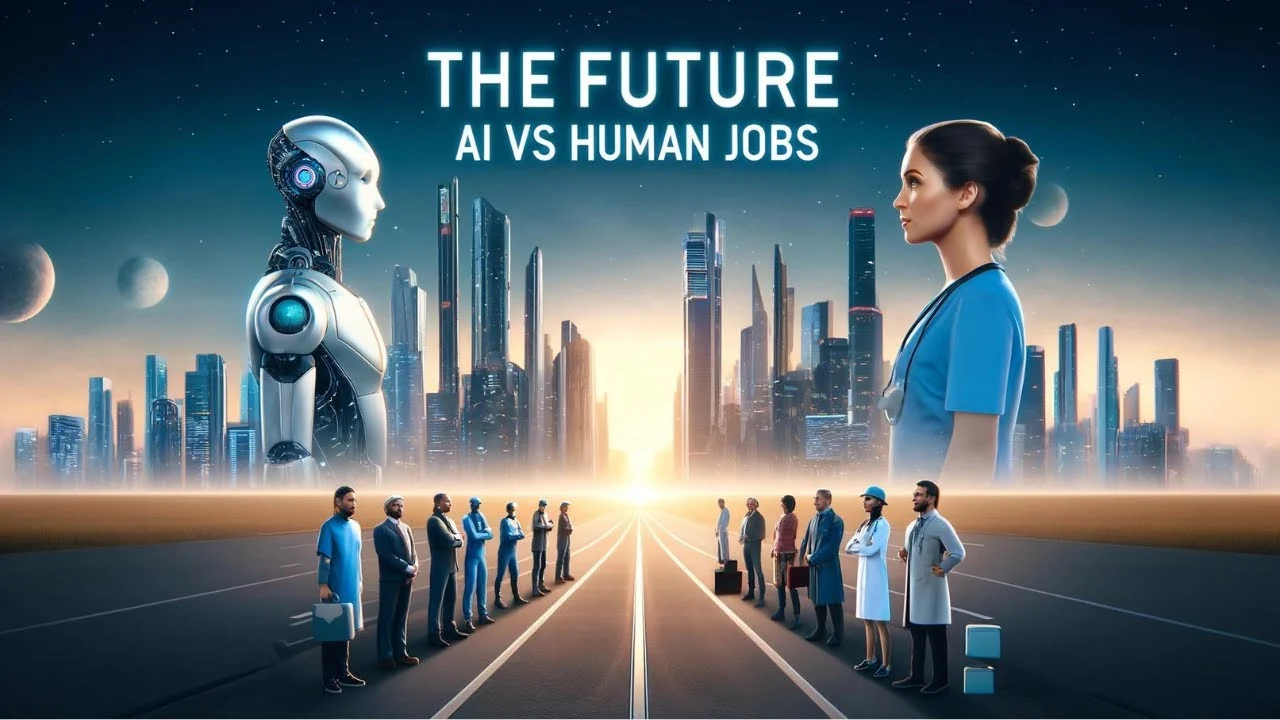
Artificial Intelligence is no longer a futuristic concept—it is already reshaping India’s workforce at an unprecedented pace. According to multiple industry estimates, nearly 30–35% of tasks across Indian industries could be automated by 2030, and the transition is accelerating in 2026. As companies increasingly adopt AI tools developed by OpenAI and Google, the nature of employment is shifting from manual execution to intelligent oversight.
India, home to over 500 million workers, is uniquely positioned in this transformation. On one hand, AI adoption is expected to contribute $450–$500 billion to India’s GDP by 2027. On the other, it is estimated that 10–12 million jobs could be disrupted in the same period, particularly those involving repetitive and rule-based tasks. Sectors like IT services, BPO, banking, and retail are already seeing significant changes in hiring patterns.
Roles such as data entry, back-office processing, and basic customer support are among the most vulnerable. Studies suggest that up to 70% of routine data processing tasks can already be handled by AI systems. Similarly, AI-powered chatbots are capable of resolving 60–80% of customer queries without human intervention, reducing the need for large support teams. Entry-level content writing and junior programming roles are also being reshaped, as AI tools can now generate articles, marketing copy, and even functional code in seconds—cutting production time by as much as 40–60%.
However, while some jobs are declining, others are growing rapidly. Demand for AI and machine learning specialists in India has increased by over 75% in the last three years, and this trend is expected to continue. Healthcare remains a strong sector, with India projected to need an additional 2 million healthcare professionals by 2030. Skilled trades, creative industries, and leadership roles are also proving resilient, as they rely heavily on human judgment, adaptability, and emotional intelligence—areas where AI still falls short.
The real transformation lies in the rise of “AI-augmented” jobs. Research indicates that professionals who use AI tools can improve productivity by up to 40%, making them significantly more valuable to employers. This shift is already visible across industries: marketers are using AI to increase campaign efficiency, developers are accelerating coding workflows, and entrepreneurs are reducing operational costs by automating repetitive processes.
Technologies from OpenAI are enabling businesses to automate communication, generate high-quality content, and build scalable applications with smaller teams. At the same time, Google is embedding AI into search, cloud computing, and enterprise tools, making advanced capabilities accessible to millions of users. Together, these innovations are lowering the barrier to entry for businesses while raising the expectations for workers.
To stay competitive in this evolving landscape, professionals in India must focus on adaptability and continuous learning. Reports suggest that over 50% of employees will need reskilling by 2028 to remain relevant in their roles. Skills such as AI literacy, critical thinking, creativity, and emotional intelligence are becoming essential, as they complement AI rather than compete with it.
Looking ahead, several industries are set to benefit significantly from AI-driven growth. AI and data science, cybersecurity, renewable energy, healthcare, and EdTech are expected to generate millions of new opportunities. In fact, India’s AI sector alone could create over 1 million new jobs by 2030, offsetting many of the losses caused by automation.
AI will not simply eliminate jobs—it will redefine them. While certain roles may decline, new opportunities will continue to emerge for those willing to adapt. The professionals who succeed in the next five years will not be those who resist AI, but those who learn to work alongside it effectively.
In India’s rapidly evolving economy, job security is no longer about holding onto a single skill—it’s about evolving with technology. Because in the age of AI, the real advantage belongs to those who can learn faster than the machines they use.