


Taiwan Reports Surge in China Military Activity Near Territorial Waters
The CSR Journal Magazine

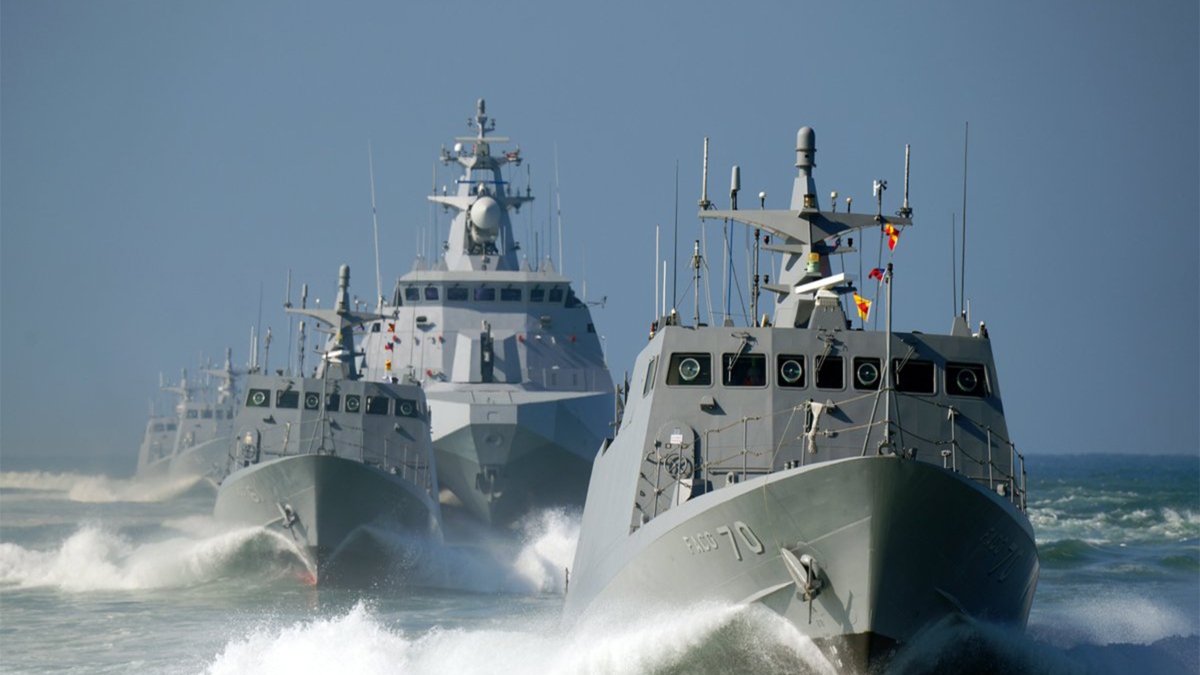
On May 8, 2026, Taiwan’s Ministry of National Defense (MND) reported the detection of 12 sorties of Chinese military aircraft, along with six naval vessels and two official ships operating near its territorial waters. These activities were recorded up until 6 am local time. Among the aircraft, 10 reportedly crossed the median line, entering Taiwan’s Air Defence Identification Zone (ADIZ) in the northern, southwestern, and eastern regions.

The MND shared these findings in a post on X, confirming the presence of the People’s Liberation Army (PLA) aircraft and vessels. The ministry stated that the Republic of China (ROC) Armed Forces were actively monitoring the situation and had formulated a response to these provocations.

Earlier, on May 7, Taiwan noted a larger scale of military engagement from China, detecting 22 sorties of PLA aircraft, six naval vessels, and one official ship in proximity to its waters. In this earlier instance, 18 of the 22 aircraft crossed the median line, entering various areas of Taiwan’s ADIZ.

Historical Context of the Cross-Strait Relations

The ongoing tensions between Taiwan and China are deeply rooted in historical and political context. China asserts that Taiwan is an integral part of its territory, a claim that is built on historical narratives dating back to the Qing Dynasty’s annexation of the island in 1683. Despite this, Taiwan operates as a separate entity, boasting its own government, military, and economic systems.

Following the First Sino-Japanese War in 1895, Taiwan was ceded to Japan, remaining a Japanese colony for half a century. Post World War II, the island was returned to Chinese governance; however, the sovereignty transfer was informal, leading to ongoing disputes. In 1949, the conclusion of the Chinese Civil War resulted in two separate governments: the People’s Republic of China (PRC) on the mainland and the Republic of China (ROC) in Taiwan, resulting in dual claims over sovereignty.

Despite functioning as a de facto independent state, Taiwan has refrained from declaring formal independence to avoid military conflict with the PRC. This complex situation continues to challenge the principles of international law, particularly regarding sovereignty and self-determination. The perspectives of both sides remain contentious, contributing to the intricate dynamics in the region.

International Implications of the Current Situation

The ongoing military movements around Taiwan have raised concerns both regionally and internationally, reflecting the fragile nature of cross-strait relations. The presence of Chinese military forces close to Taiwan’s borders is seen as a direct challenge to Taiwan’s autonomy and has implications for the broader security environment in the Asia-Pacific region.

International observers note that Taiwan’s status is a significant point of contention in global geopolitics, testing international norms around non-interference and sovereignty. Various nations have stated their support for Taiwan amid these escalating tensions, but a variety of diplomatic considerations complicate the situation.

With military activities ramping up, the role of Taiwan as a crossroads of geopolitical interests remains pivotal. The actions of the ROC Armed Forces and their responses to Chinese activities will likely continue to be closely watched by both regional and global powers invested in stability and security in the region.

Long or Short, get news the way you like. No ads. No redirections. Download Newspin and Stay Alert, The CSR Journal Mobile app, for fast, crisp, clean updates!

App Store –  https://apps.apple.com/in/app/newspin/id6746449540 

Google Play Store – https://play.google.com/store/apps/details?id=com.inventifweb.newspin&pcampaignid=web_share

Latest News

Popular Videos
