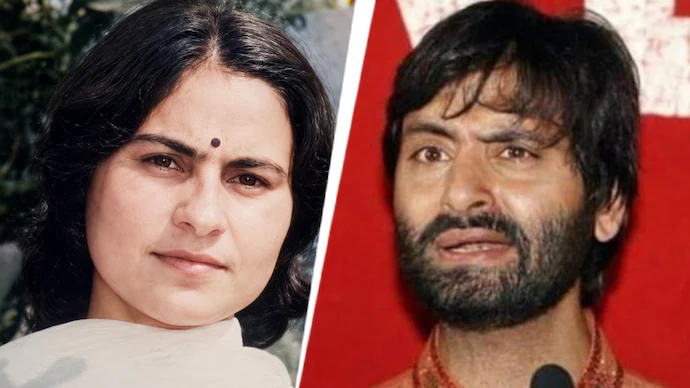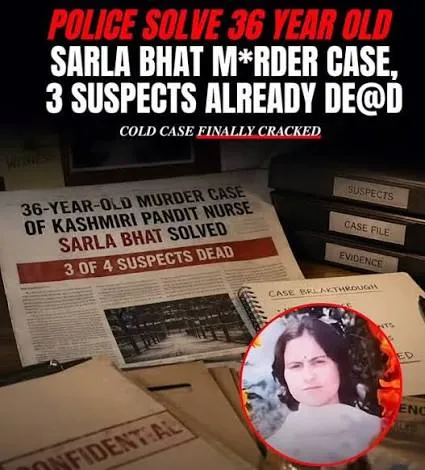

The State Investigation Agency (SIA) in Kashmir is preparing to submit a comprehensive 737-page chargesheet in a special court in Srinagar concerning the abduction, rape, and murder of Kashmiri Pandit nurse Sarla Bhat. This development follows nearly thirty-five years after the heinous crime took place, which has remained unresolved for decades. The chargesheet names Mohammad Yasin Malik, the Chief Commander of the Jammu and Kashmir Liberation Front (JKLF), among others accused of orchestrating the crime.
In addition to Malik, the document implicates Khurshid Ahmad Chalkoo, Abdul Hamid Sheikh, Mohammad Yousuf Sofi (alias Idrees), and Ghulam Mohammad Taploo. While the latter three have died, Yasin Malik is currently under judicial custody for separate charges. The SIA has initiated legal measures against Chalkoo, who is believed to have fled to Pakistan-occupied Jammu & Kashmir.
The case, which was reassigned to the SIA on March 18, 2024, by the Director General of Police (DGP) of J&K, marks a significant shift in the investigation process. The chargesheet is the result of an exhaustive process involving oral accounts, documents, forensic analyses, and electronic evidence, meticulously compiled by the agency over the years.
Historical Context of the Crime
The murder of Sarla Bhat on April 18, 1990, remains one of the most brutal acts committed during the initial phase of terrorism in Jammu and Kashmir. Abducted near the Sher-i-Kashmir Institute of Medical Sciences (SKIMS), she was subjected to torture before being shot dead at Omer Colony, Malbagh, in Srinagar. The crime exemplifies a dark chapter in Kashmiri history where fear and intimidation stifled the voices of potential witnesses.
For decades, the case lingered without resolution, hindered by the prevailing atmosphere of violence and terror in the region. Terrorist organisations suppressed disclosure through threats, thus allowing numerous atrocities, including Bhat’s murder, to remain unaddressed. However, her case symbolises the relentless pursuit of justice and serves as a testament to the enduring memory of victims amidst chaos.
Upon its transfer to SIA Kashmir, the case underwent a thorough re-investigation, employing scientific methods to uncover the truth. Despite the considerable passage of time, investigators managed to reconstruct the events through testimonies of protected witnesses, forensic evidence, and medical documentation.