


S Jaishankar Emphasises Need to Address Unilateral Sanctions at BRICS Meeting
The CSR Journal Magazine

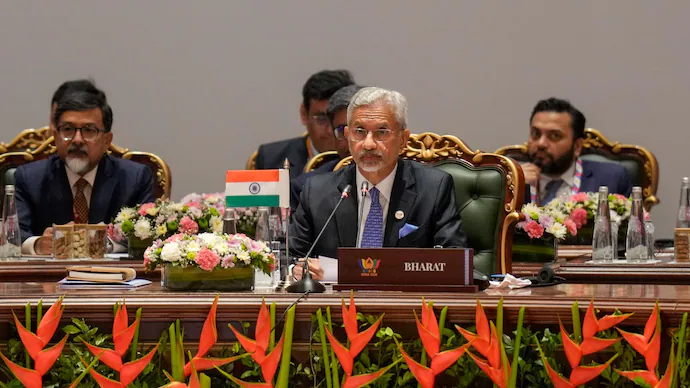
At the recent BRICS meeting, Indian External Affairs Minister S. Jaishankar highlighted the importance of addressing unilateral coercive measures that contradict international law. He asserted that such actions undermine global cooperation and exacerbate existing tensions among nations. Jaishankar’s remarks underscored the necessity for a collective approach to resolving conflicts and promoting mutual respect among member nations.

Jaishankar’s statement reflects India’s long-standing position against unilateral sanctions that affect developing nations. He argued that these measures not only impact the targeted economies but also have far-reaching implications for global trade and diplomacy. The Minister noted that such practices can hinder the progress of efforts aimed at fostering international peace and security.

Furthermore, Jaishankar called for an evaluation of the legitimacy of such sanctions within the framework of international law. He urged BRICS members to unite in discussions addressing the adverse effects of these measures, advocating for a more equitable system of governance that respects the sovereignty of all nations.

Dialogue on International Cooperation

During the BRICS meeting, leaders engaged in discussions around enhancing international cooperation in various spheres, including economic development, climate change, and security. Jaishankar reinforced the idea that collaboration among member countries is essential for addressing multifaceted global challenges. By working together, he posited, BRICS nations could create sustainable solutions beneficial for all parties involved.

The meeting also provided a platform to exchange views on current geopolitical dynamics, with emphasis on shared strategies to combat issues such as terrorism and economic inequality. Jaishankar highlighted how collaborative efforts could lead to a more stable global environment, fostering trust and reliability among nations.

Furthermore, Jaishankar encouraged members to utilise their collective strength to bridge gaps in global governance structures. He mentioned that BRICS has the potential to play a significant role in reforming multilateral institutions to better reflect the interests of developing countries.

Wrap-Up of BRICS Summit Discussions

The BRICS summit concluded with a renewed commitment to mutual cooperation and respect for international law among its members. Jaishankar’s advocacy for addressing unilateral coercive measures is expected to be a key point in future discussions among member nations. With increasing geopolitical complexities, the need for dialogue pertaining to these issues continues to be relevant.

As the meeting wrapped up, Jaishankar expressed optimism about the future of BRICS, emphasising the significant role of the bloc in the evolving international landscape. The commitment to addressing sanctions and fostering cooperation is anticipated to be pivotal in shaping the future trajectories of member countries.

Overall, the discussions put forth by S. Jaishankar at the BRICS meeting align with India’s broader foreign policy goals, reflecting a desire for a balanced approach to international relations. Moving forward, the outcomes of this gathering may influence how BRICS nations navigate challenges and opportunities on the global stage.

Long or Short, get news the way you like. No ads. No redirections. Download Newspin and Stay Alert, The CSR Journal Mobile app, for fast, crisp, clean updates!

App Store –  https://apps.apple.com/in/app/newspin/id6746449540 

Google Play Store – https://play.google.com/store/apps/details?id=com.inventifweb.newspin&pcampaignid=web_share

Latest News

Popular Videos
