


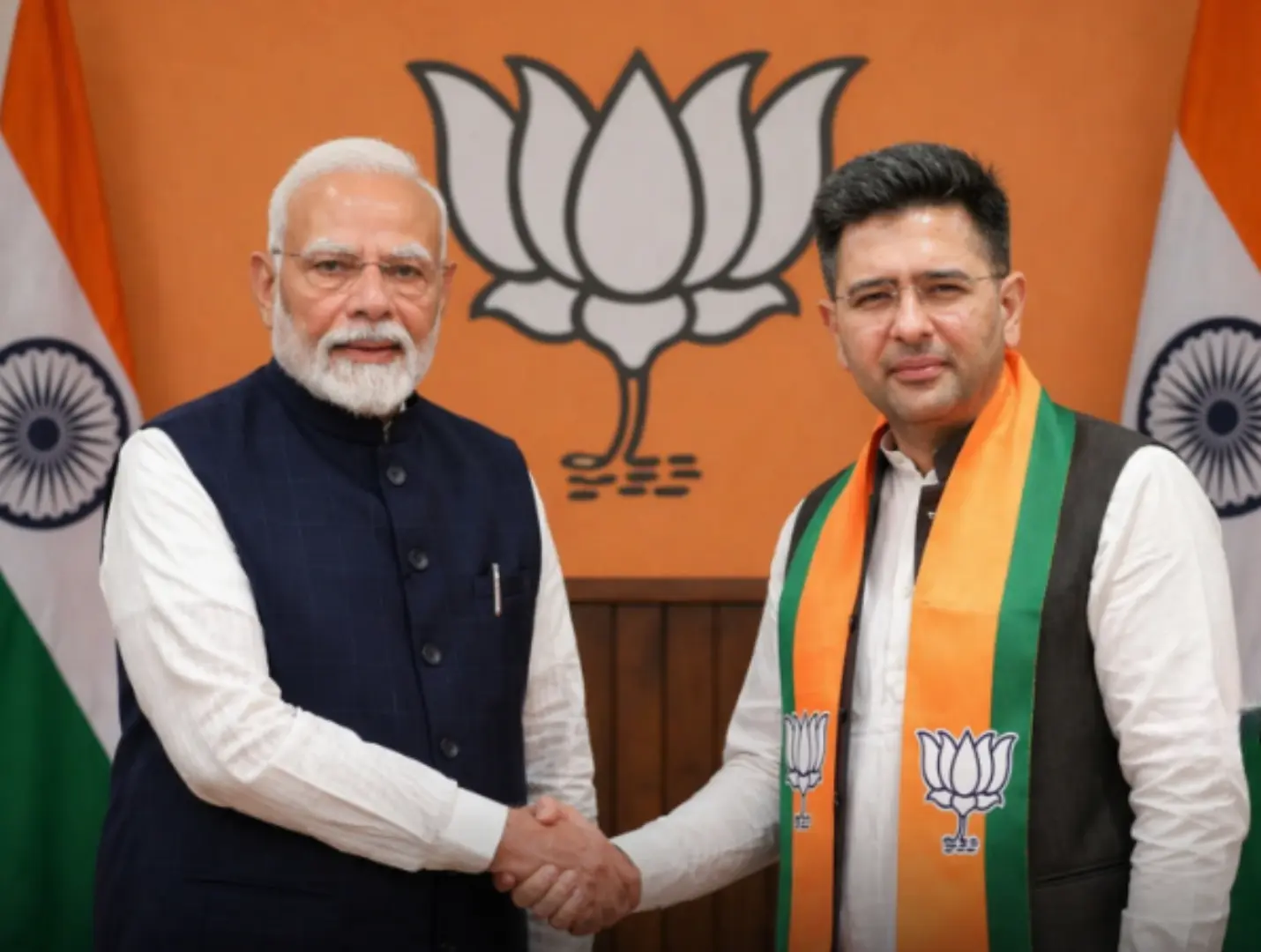

In a political landscape already crowded with ideological U-turns and convenient loyalties, defection of Raghav Chadha from the Aam Aadmi Party (AAP) to the Bharatiya Janata Party (BJP) is not just another headline—it is a revealing moment of political clarity. Clarity in the thinness of those principles, rather than in the principles themselves.
Chadha has cultivated an image as part of AAP’s new-generation leadership:
As a member of the AAP’s new generation of leaders, Chadha has developed a reputation for being articulate, policy-focused, and in opposition to the established, transactional politics that the party purports to oppose. A switch to the BJP has immediately damaged that meticulously constructed narrative. It has prompted the direct question: was the anti-establishment position truly motivated by conviction or was it just a business tactic? or merely a career strategy?
Defections in Indian politics are nothing new, but not all defections are not same or similar. When a leader migrates between ideologically adjacent parties, the public shrugs. But AAP and BJP are not adjacent—they represent sharply different political brands. AAP has leaned heavily on governance reform and anti-corruption messaging, while BJP operates as a broad, dominant national force with a distinct ideological base and centralized leadership culture. Crossing that divide without a compelling, transparent rationale would look less like evolution and more like expediency.
For Chadha personally, the damage is swift. In an era where political memory is archived online, past speeches don’t disappear—they resurface. Every critique he has made of BJP would be replayed, reframed, and weaponized as evidence of inconsistency. The risk isn’t just criticism from opponents; it’s erosion of trust among supporters who bought into his earlier positioning. Once credibility is seen as flexible, it rarely snaps back into place.
View this post on Instagram