


India Makes Significant Investments in Semiconductor Manufacturing
The CSR Journal Magazine

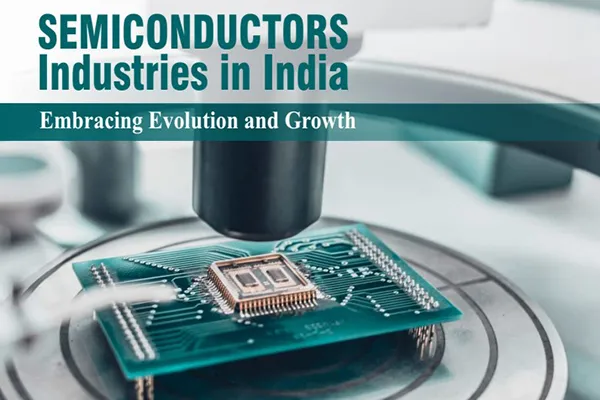
India is making considerable strides in establishing semiconductor manufacturing facilities crucial for the production of microchips used in various applications, including smartphones, automobiles, and military aircraft. The nation has traditionally depended on imports to meet its semiconductor needs, but this dependency is under review. On May 15, 2026, Rajasthan inaugurated its first semiconductor manufacturing plant, Sahasra Semiconductors, located in Bhiwadi, marking a notable development in the country’s semiconductor ambitions.

Just three days later, Tata Electronics formalised a significant partnership with ASML, the renowned Dutch company that produces the leading chip fabrication machinery in the world. This collaboration will lead to the establishment of India’s inaugural full-scale commercial semiconductor fabrication facility in Dholera, Gujarat. Prime Minister Narendra Modi’s recent trip to the Netherlands was pivotal in finalising this landmark agreement, indicating the weight of these initiatives on India’s future economic strategy.

These announcements are not merely routine; they signify a monumental shift in India’s approach to semiconductor manufacturing, with the government taking substantial steps towards self-reliance in this critical sector.

Financial Implications of Semiconductor Imports

The financial burden of semiconductor imports on India is substantial. In the fiscal year 2022–23, the country spent an estimated $19.9 billion on imported semiconductors. Projections suggest this figure will escalate to $30.3 billion by 2024–25. The principal supplier of these chips is China, which exports semiconductors valued at over $11.8 billion annually. Additionally, Hong Kong and Taiwan contribute significantly, with imports from these regions accounting for nearly 68 per cent of India’s total semiconductor purchases.

Interestingly, Taiwan has observed an impressive growth in its exports to India, increasing from $1.4 billion in 2022–23 to $3.5 billion in 2024–25. The United States has similarly increased its share, with exports rising from $281 million to over $1 billion during the same period, indicating a shift in India’s import dynamics and reliance on various international sources for semiconductor supply.

This overwhelming reliance on foreign chips presents both economic challenges and potential national security risks. Any disruption in supply chains could significantly hinder India’s technological capabilities and economic stability.

Historical Context and Future Strategies

India’s current semiconductor predicament did not occur without reason. Historically, the country showed promise in this sector, establishing the Semiconductor Complex Limited in Mohali in 1976. However, a catastrophic fire in 1989 destroyed the facility, leading to a long period of regression while other nations advanced in semiconductor technology. This event marked a critical turning point, embedding a sense of vulnerability in India’s semiconductor landscape.

In the wake of decades spent primarily relying on imports, India is actively pursuing the development of its semiconductor industry. Significant projects are underway in Rajasthan and Gujarat as part of the India Semiconductor Mission, which has been bolstered by enhanced government support. Over the past twelve years, the country’s electronics production has expanded sixfold, reaching nearly Rs 13 lakh crore, evidencing growth in this vital sector.

In the Union Budget for 2026–27, Finance Minister Nirmala Sitharaman announced the launch of India Semiconductor Mission 2.0, which began with an initial budget of Rs 1,000 crore. Due to a robust response from the industry, investment commitments were double the projected target. Consequently, the government is considering raising the total financial allocation to Rs 40,000 crore, showcasing its commitment to fostering an independent semiconductor ecosystem.

Long or Short, get news the way you like. No ads. No redirections. Download Newspin and Stay Alert, The CSR Journal Mobile app, for fast, crisp, clean updates!

App Store –  https://apps.apple.com/in/app/newspin/id6746449540 

Google Play Store – https://play.google.com/store/apps/details?id=com.inventifweb.newspin&pcampaignid=web_share

Latest News

Popular Videos
