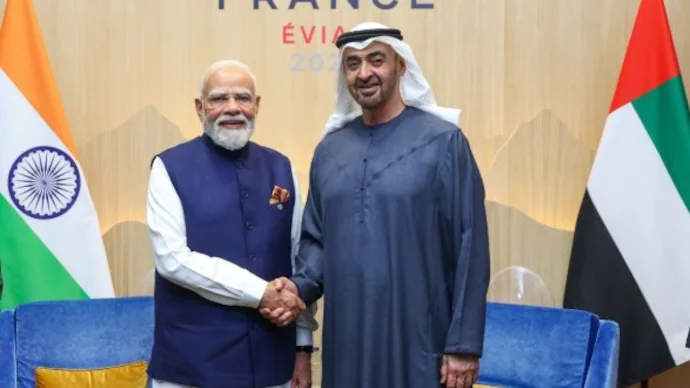

Prime Minister Narendra Modi extended an invitation to Sheikh Mohamed bin Zayed Al Nahyan, the President of the United Arab Emirates, to join the BRICS Summit that India is scheduled to host later this year. This invitation occurred during a meeting in Evian, France, which took place on Tuesday, 17 June 2026. The gathering was notable as it marked the third engagement between the two leaders in 2026, underlining the robust nature of the India-UAE Comprehensive Strategic Partnership.
Discussion on Bilateral Cooperation
During the meeting, Prime Minister Modi and President bin Zayed delved into the advancements in various sectors, including technology, trade, investment, energy, and defence. They built upon the previous discussions stemming from Sheikh Mohamed bin Zayed’s visit to India in January and Prime Minister Modi’s subsequent visit to the UAE in May. The interactions highlighted both nations’ commitment to strengthening their collaborative efforts across multiple domains.
The leaders also emphasised the significance of ongoing dialogue as well as the need for diplomatic engagement in order to foster mutual understanding. The meeting reflected a shared vision for enhancing the strategic engagement that both countries have established over time. This includes exploring new avenues for cooperative initiatives, thereby reinforcing their partnership.
In their discussions, both leaders reviewed the progress that has been made since their last meetings. They assessed the impact of previous agreements and other cooperative frameworks that have guided the bilateral relationship. The leaders articulated their desire to continue working together effectively to realise the potential benefits these sectors hold for both nations.
Regional and Global Developments Discussed
Modi and bin Zayed exchanged perspectives on various regional and global issues that are of mutual concern. During this dialogue, Prime Minister Modi underscored the importance of adhering to principles of dialogue and diplomacy, reiterating the need for respect for international law, sovereignty, and territorial integrity. This was particularly highlighted in context of promoting enduring peace, security, and stability in the West Asia region.
Both leaders provided insights into the evolving geopolitical landscape, recognising the interconnectedness of regional stability and international dynamics. They agreed that continued cooperation is vital in addressing the challenges and opportunities that arise. The discussions served to align their strategic outlook in a rapidly changing global environment, further solidifying their partnership.
Additionally, the leaders highlighted the necessity for ensuring safe navigation, as well as unimpeded trade through critical maritime routes, particularly the Strait of Hormuz. This area is not only pivotal for regional dynamics but also essential for global energy supplies and trade. They jointly reaffirmed the commitment to support measures that promote safe and efficient navigation, thereby facilitating international trade and commerce.