


Pakistan Issues Warning to India Over Indus Waters Dispute
The CSR Journal Magazine

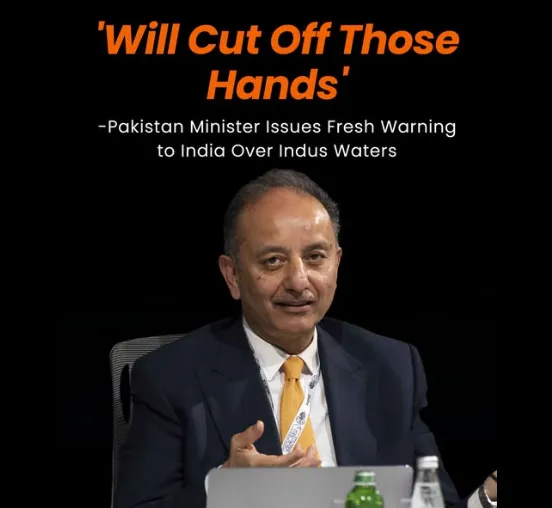
In light of the ongoing water conflict with India, Pakistan’s Climate Change Minister Musadik Malik has made confrontational remarks, asserting that Islamabad will “cut off those hands” that attempt to claim its share under the Indus Waters Treaty. This warning reflects the heightened tensions that have emerged following India’s decision to place the treaty in abeyance after a terrorist attack in Pahalgam in April 2025.

During a joint press conference, Malik’s comments echoed the sentiments of Information Minister Attaullah Tarar, who insisted that the treaty remains a legally binding agreement that cannot be unilaterally suspended, revoked, or altered. Tarar stated that Pakistan’s stance regarding the treaty has received backing from the international community.

Malik’s comments seemed to suggest a critical perception of India’s control over shared water resources, indicating potential repercussions should Pakistan’s water rights be threatened. He labelled the actions of India’s leadership as an attempt to control water supply destined for Pakistan.

Legal Aspects of the Indus Waters Treaty

Information Minister Tarar reiterated that Pakistan’s rights under the Indus Waters Treaty are protected by international law. He asserted that the treaty remains active and has not faced international acceptance of India’s recent moves to suspend it. “Our people have a right to water through a legally enforceable treaty,” he declared, reinforcing Pakistan’s commitment to its negotiated water rights.

As evidence of this commitment, Pakistan plans to hold its first international seminar on the Indus Waters Treaty in Islamabad. The event will feature legal experts and foreign delegates, focusing on Pakistan’s legal rights and the technical details of the agreement, emphasising the significance of the treaty in current geopolitical circumstances.

The seminar is viewed as an opportunity for Pakistan to articulate its position more effectively in the international community. Tarar has indicated that discussions will centre on both legal and technical aspects pertaining to the treaty.

Deepening Dispute and International Context

The Indus Waters Treaty, negotiated under World Bank auspices in 1960, governs the distribution of the Indus river system’s waters between India and Pakistan. The treaty designates India control over the eastern rivers—Ravi, Beas, and Sutlej—while granting Pakistan the majority of water from the western rivers—Indus, Jhelum, and Chenab. Despite surviving multiple conflicts and longstanding tensions, the agreement faces renewed scrutiny following India’s decision to suspend it.

This suspension was reportedly prompted by a surge in tensions after the aforementioned Pahalgam attack, which New Delhi attributed to Pakistan-backed terrorists. India has insisted that the treaty remains on hold until Pakistan ceases allegedly supporting cross-border terrorism, a claim that Islamabad refutes.

Amidst escalating rhetoric from both countries, Pakistan’s Defence Minister Khawaja Asif has also issued warnings concerning military action if water security is compromised. He stated that any threat to water security would prompt Pakistan to react decisively. Meanwhile, India has sought to justify its stance by arguing that the current treaty does not reflect contemporary realities, calling it outdated.

Long or Short, get news the way you like. No ads. No redirections. Download Newspin and Stay Alert, The CSR Journal Mobile app, for fast, crisp, clean updates!

App Store –  https://apps.apple.com/in/app/newspin/id6746449540 

Google Play Store – https://play.google.com/store/apps/details?id=com.inventifweb.newspin&pcampaignid=web_share

Latest News

Popular Videos
