


Nitin Gadkari Challenges Critics Over Ethanol-Blended Petrol’s Impact
The CSR Journal Magazine

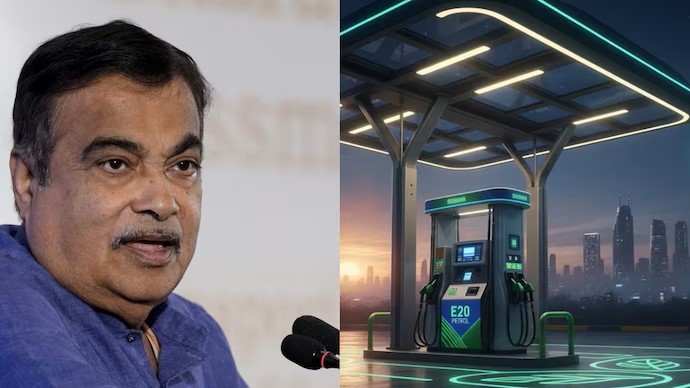
Union Minister Nitin Gadkari has issued a challenge to critics of ethanol-blended petrol, specifically E20 fuel, to cite any vehicle that has reportedly sustained damage due to its use. His comments were made during the Viksit Bharat Conclave on Tuesday, where he dismissed prevailing concerns as an unfounded narrative. This comes at a time when discussions surrounding India’s ethanol blending programme have intensified, with issues such as reduced fuel efficiency and the compatibility of older vehicle models being highlighted.

The Indian government has successfully blended 20 per cent ethanol with petrol, aiming to cut down on crude oil imports, decrease carbon emissions, and bolster domestic agricultural production. Gadkari stated during the event that there are no documented cases of vehicles facing problems arising from the utilization of E20 petrol, further urging critics to name a single car that experienced such issues.

He accused detractors of disseminating misinformation about ethanol-blended fuels, alleging that these narratives are backed by paid campaigns aimed at undermining the rollout of this alternative fuel.

Understanding the E20 Controversy

The government’s ethanol blending initiative focuses on integrating ethanol—derived from various crops such as sugarcane, maize, and rice—into petrol supplies. Proponents argue that the policy diminishes reliance on imported crude oil, reduces emissions, and offers farmers an additional revenue stream. Conversely, critics have voiced apprehensions regarding diminished fuel economy and the potential incompatibility of older vehicles with higher ethanol blends, which they claim were not engineered for such fuel types.

The discourse surrounding E20 fuel has gained traction recently, particularly regarding vehicle performance and the prospect of decreased mileage. Unlike nations like Brazil, where consumers can select among different ethanol-petrol mixtures at service stations, Indian consumers only have access to E20 fuel as the standard offering across the country.

This situation has intensified debates, as concerns over vehicle performance and mileage associated with E20 fuel have garnered increased media attention and public discourse. The lack of consumer choice in fuel blending has also become a point of contention in discussions about the country’s fuel policies.

Gadkari Defends Ethanol Strategy

During his remarks, Gadkari emphasised the economic implications of India’s reliance on fossil fuels, which he described as a considerable burden. He unveiled statistics claiming that India expends approximately Rs 22 lakh crore on fuel imports every year, positioning the promotion of alternative fuels as an urgent economic and strategic requirement for the nation.

In response to accusations suggesting that his advocacy for ethanol is driven by family-owned business interests, Gadkari clarified that his family’s enterprises are not dependent on ethanol production. He did acknowledge involvement in sugar production but disclaimed any impact of personal business interests on governmental policy decisions.

Moreover, he outlined the potential benefits of ethanol production for farmers, noting a considerable increase in demand and pricing for corn following policy changes that permit its use in ethanol manufacturing. He stated that corn prices surged from Rs 1,200 to Rs 2,800 per quintal, resulting in an estimated additional income of Rs 45,000 crore for farmers in Uttar Pradesh and Bihar.

Future Direction of Ethanol Policy

The Indian government is currently focusing on advancing the E20 initiative, despite ongoing debates regarding its effects on vehicle operation and overall efficiency. Speculation about a potential transition to E25 petrol has emerged, but government sources indicate that no decisions have been made to increase ethanol blending beyond the existing 20 per cent ratio.

Officials have clarified that any advancement towards E25 petrol will be predicated on comprehensive scientific research and consultations with relevant stakeholders. With recent discussions highlighting issues related to fuel mileage and the compatibility of certain older vehicles with higher ethanol blends, the spotlight on ethanol-blended fuels is likely to remain prominent in public discourse.

Long or Short, get news the way you like. No ads. No redirections. Download Newspin and Stay Alert, The CSR Journal Mobile app, for fast, crisp, clean updates!

App Store –  https://apps.apple.com/in/app/newspin/id6746449540 

Google Play Store – https://play.google.com/store/apps/details?id=com.inventifweb.newspin&pcampaignid=web_share

Latest News

Popular Videos
