


New Rules from June 1: What LPG Users, Taxpayers and UPI Users Need to Know
The CSR Journal Magazine

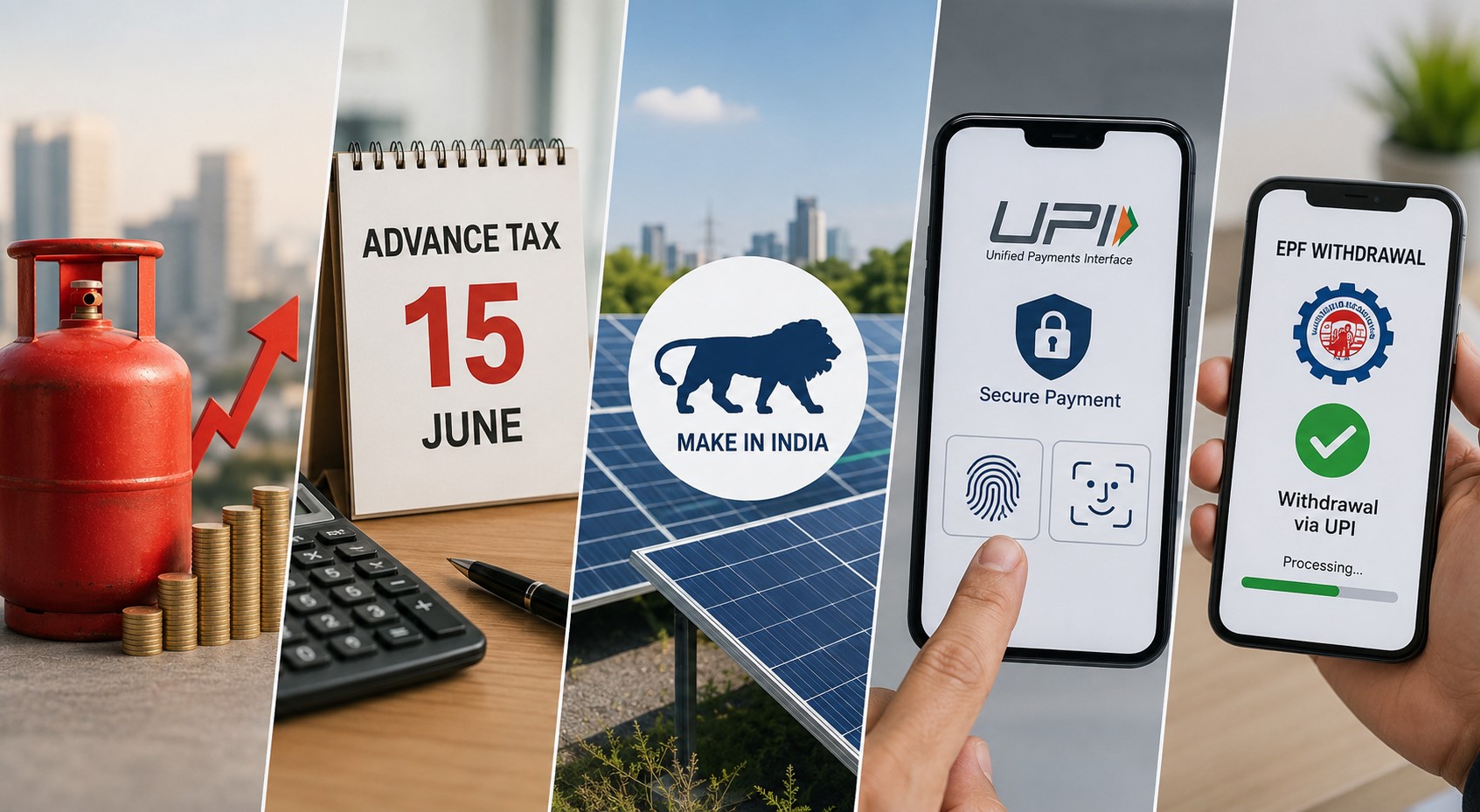
June has brought about a rise in the prices of commercial LPG cylinders, impacting sectors that rely heavily on this fuel. Oil marketing companies announced the price revision effective from June 1. In Delhi, the cost of a 19-kg commercial LPG cylinder has increased by Rs 42, making the new price Rs 3,113.50. Similarly, in Kolkata, the price has surged by Rs 53.50, reaching Rs 3,255.50.

Additionally, the price of a 5-kg Free Trade LPG (FTL) cylinder has been raised by Rs 11, now costing Rs 821.50 in Delhi. This uptick in costs reflects ongoing trends in fuel pricing. However, there is a silver lining for domestic consumers as the prices for household LPG cylinders remain unchanged.

Advance Tax Payment Deadline Approaches

Another significant aspect of June is its relevance for taxpayers in India. Individuals and businesses expected to have an annual tax liability exceeding Rs 10,000 must pay the first instalment of advance tax by June 15. This amount constitutes 15 per cent of the total estimated tax liability for the financial year, making timely payment essential for compliance.

Tax professionals advise that missing the deadline can lead to penalties, including interest charges of 1 per cent per month as stipulated in the Income Tax Act. Therefore, it is crucial for taxpayers to prepare in advance and ensure their payments are made on time to avoid unnecessary financial strain.

The advance tax payment is a key requirement that aids in the financial planning of both individuals and businesses. Awareness of this deadline may assist them in managing their finances more effectively.

New Regulations for Solar Energy Projects

The solar energy sector is also witnessing significant regulations starting from June 1. All government-supported, subsidised, and net-metering solar projects must now utilise solar modules and cells that are domestically approved under the Approved List of Models and Manufacturers (ALMM). This initiative is aimed at bolstering local manufacturing capabilities.

The government emphasises reducing reliance on imported solar equipment, which aligns with its broader vision of supporting ‘Make in India’. Industry specialists express optimism regarding increased domestic production due to this policy, although some manufacturers have voiced concerns about potential cost increases and supply challenges in the near term.

Overall, this move marks a significant shift in the regulatory landscape of the solar energy sector, enhancing local manufacturing while simultaneously addressing sustainability concerns.

Enhanced Security Measures for UPI Transactions

Digital payment users in India may encounter additional verification processes for certain UPI transactions effective June 1. For higher-value payments, beyond the usual UPI PIN, extra layers of authentication may be required. Depending on the payment application and transaction type, users could need to verify their payments using biometric security methods such as fingerprint authentication or facial recognition.

The primary aim of these new measures is to strengthen the security of digital transactions, thereby minimising the risks associated with unauthorised transactions and online fraud. While everyday transactions are expected to remain largely unaffected, individuals conducting larger payments may have to navigate new security checks.

As digital payments grow increasingly popular, these security enhancements are likely to be welcomed by many users who prioritise the safety of their financial transactions.

Future Developments in EPF Withdrawal Process

Many subscribers of the Employees’ Provident Fund (EPF) are currently awaiting the introduction of a UPI-based withdrawal facility. Although the service is still undergoing testing, it is anticipated to allow subscribers to make provident fund withdrawals directly through UPI, thereby streamlining the process.

As of now, the service has yet to be officially implemented across India, and EPF members must continue utilising the existing withdrawal methods until further notice. Once operational, this facility is expected to substantially enhance the convenience of accessing provident fund savings.

With these numerous changes now in effect, consumers are advised to stay informed to navigate the new financial landscape effectively and make informed decisions in the month ahead.

Long or Short, get news the way you like. No ads. No redirections. Download Newspin and Stay Alert, The CSR Journal Mobile app, for fast, crisp, clean updates!

App Store –  https://apps.apple.com/in/app/newspin/id6746449540 

Google Play Store – https://play.google.com/store/apps/details?id=com.inventifweb.newspin&pcampaignid=web_share

Latest News

Popular Videos
