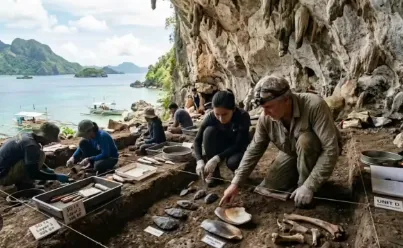

Recent archaeological findings have unveiled significant insights into the seafaring capabilities of early humans in the Philippines. Researchers uncovered evidence suggesting that these populations engaged in maritime activities as far back as 40,000 years ago. This discovery challenges previous notions about the technological and navigational skills of ancient societies. The findings originated from a series of underwater excavations that revealed artefacts consistent with maritime culture.

Significance of the Findings
The analysis of the discovered artefacts suggests a complex network of trade and communication among early human groups across the vast oceanic landscape. This evidence indicates that these communities were not only adept at crafting basic nautical instruments but also had established routes for travel and trade. The implications of these findings are profound, as they offer a glimpse into the social structures and economic systems of early human societies.
In addition, the archaeological team responsible for these discoveries is now expanding their research to investigate further areas along the Philippine archipelago. The aim is to establish a more comprehensive understanding of the extent of these ancient maritime networks. Each site explored contributes additional context to the role of ocean travel in the movement of people and resources during prehistoric times.
Moreover, this new evidence provides a basis for re-evaluating early human migration patterns. Scholars have long debated the routes taken by early Homo sapiens as they dispersed across various regions. The established maritime networks could suggest that ocean travel played a pivotal role in human expansion into the Pacific Islands, revealing a greater degree of sophistication in navigation than previously acknowledged.

Research Methodology
The research involved a combination of underwater archaeology and advanced dating techniques to accurately establish the timeline of human activity in the area. Archaeologists used carbon dating to assess organic materials found at the sites, linking them to human presence approximately 40,000 years ago. This methodological approach presents a reliable foundation for the claims of an extensive maritime culture, underscoring the advancement of early human technologies.
Additionally, the examination of artefacts such as fishhooks, pottery, and remnants of boat construction supports the hypothesis of a thriving oceanic community. The artefacts were meticulously analysed to understand their functions and the skills required to produce them. This meticulous research contributes to a broader comprehension of lifeways in the distant past.
The research team also emphasised the importance of collaboration with local communities in the Philippines. Engaging with local fishermen and historians has proven invaluable in gathering oral traditions and insights that complement the archaeological evidence. Such partnerships enrich the understanding of the historical significance of these findings.