


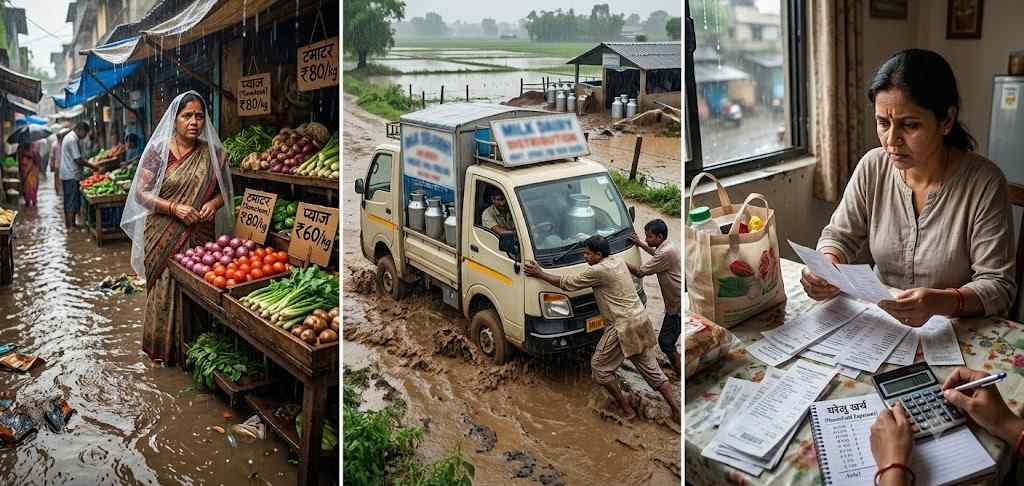

How Monsoon Impacts Vegetable Prices, Milk Supply and Household Budgets

The CSR Journal Magazine

The monsoon season significantly influences not just weather conditions but also the monthly grocery expenses for many families. An inconsistent or weak monsoon can escalate prices for essential items such as vegetables, milk, pulses, and edible oils. This occurs largely due to reduced agricultural output, challenges in transportation, and increased production costs.

While India has witnessed improved resilience over the years, with advancements in irrigation and food stock management, the variability in rainfall remains a crucial factor affecting food supply. Both under- and over-abundant rainfall can have detrimental impacts on crop yields, thereby influencing what consumers ultimately find on their plates.

When rainfall does not meet the expected levels, crops suffer from insufficient water supply, leading to lower harvests and tighter market availability. Conversely, excessive rainfall can lead to flooding, damaging crops and hindering transport from farms to markets. In both scenarios, this disruption often results in price hikes for essential grocery items.

Vegetables and Their Price Fluctuations

Vegetables tend to be the first grocery items to see price increases when weather conditions shift. Their highly perishable nature, along with a dependence on efficient transport and timely harvesting, makes green produce particularly vulnerable. Heavy rains can inundate fields and postpone deliveries, while a lack of rain can diminish production yields.

This scenario is especially notable for staple vegetables such as tomatoes, onions, and a variety of leafy greens. The combination of flooding and drought conditions means that these staple items can experience rapid price surges, often within just a few days. As a result, families may find themselves spending significantly more on their daily grocery runs.

Given that vegetable prices are susceptible to immediate changes, other food items may not see as rapid a response to weather variations, but they still face long-term implications as supply chains adjust to the changing conditions.

Impact on Milk and Other Essentials

Unlike vegetables, milk production is less directly affected by rainfall itself, but the dairy industry relies heavily on a stable supply of fodder. In situations of inadequate rainfall, the availability of green fodder decreases, raising the costs of feed and potentially leading to lower milk production alongside higher operational costs for dairy farmers.

The financial pressures faced by dairy producers are frequently transmitted to consumers, resulting in increased retail prices for milk. This trend adds another layer to the rising household expenses as families find themselves paying more for a staple item that forms a substantial part of their diet.

Overall, the relationship between food prices and rainfall is complex. Food inflation can lead to higher costs across numerous essential items, which may compel families to re-evaluate their budgets. Rural households, in particular, may encounter compounded challenges as reductions in farm income can occur concurrently with these price increases.

Long-Term Implications of the Monsoon

In recent years, India has managed to bolster its food reserves and enhance irrigation systems, along with improving supply chain efficiencies. Nevertheless, the monsoon remains a significant driver of food inflation, complicating the economic landscape for households across the country.

Whether experiencing too little or too much rainfall, the resultant disruptions to agriculture and transportation can adversely affect food supplies. For many families, the impact of the monsoon transcends mere weather forecasts; it influences financial planning and budgeting, making it a critical issue that involves both agriculture and household economics.

The ongoing challenge posed by monsoon variability necessitates continuous assessment and adaptation by both farmers and consumers alike, ensuring everyone is better equipped to navigate the financial implications of changing weather patterns.

Long or Short, get news the way you like. No ads. No redirections. Download Newspin and Stay Alert, The CSR Journal Mobile app, for fast, crisp, clean updates!

App Store –  https://apps.apple.com/in/app/newspin/id6746449540 

Google Play Store – https://play.google.com/store/apps/details?id=com.inventifweb.newspin&pcampaignid=web_share

Latest News

Popular Videos