


Money and Crime Dominate Tamil Nadu and West Bengal Elections
The CSR Journal Magazine

Recent analyses reveal that money and crime significantly influence the ongoing elections in Tamil Nadu and West Bengal. Out of the 386 Assembly constituencies across both states in the first phase, 201 have three or more candidates with a criminal record. This alarming statistic underscores ongoing concerns regarding the suitability of candidates presented to voters.

Investigations by the Association for Democratic Reforms (ADR) have examined 5,467 candidate affidavits filed with the Election Commission of India. The data indicates a troubling trend: 1,290 candidates declared assets exceeding Rs 1 crore, while 1,067 reported having criminal cases against them. This raises questions about whether voters are choosing among candidates they prefer or whether they are limited to those the parties can afford to nominate.

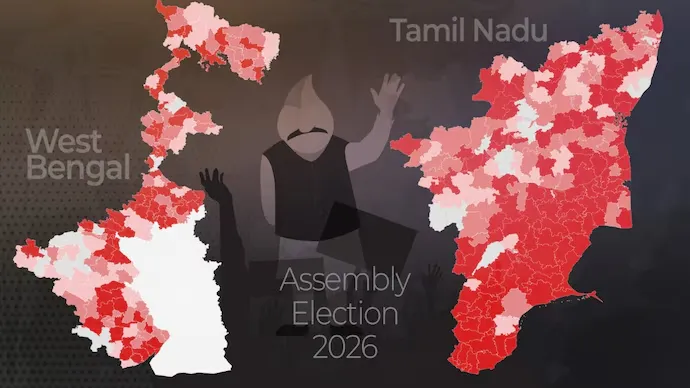
In Tamil Nadu, 135 out of 234 seats are classified as “Red Alert,” a designation reserved for constituencies with multiple candidates facing criminal allegations. Similarly, in West Bengal’s first phase, 66 of 152 seats fall under the same category, reflecting a concerning pattern in both states.

Wealth Among Candidates

Financial backgrounds of candidates present a striking parallel in both regions. In Tamil Nadu, the AIADMK coalition introduced 221 candidates, with an average declared wealth of Rs 44.2 crore, while the DMK-led Secular Progressive Alliance recorded an average of Rs 20.4 crore. By contrast, independent candidates averaged assets of Rs 50 lakh.

Notably, the average asset figure for Tamil Nadu is heavily influenced by one particular candidate in Lalgudi, who reported assets totalling Rs 5,863 crore—surpassing the combined declarations of the next nine wealthiest contenders. The median asset values are more stable, standing at Rs 7.4 crore for the AIADMK alliance and Rs 7.1 crore for the SPA, illustrating that both alliances maintain considerable wealth.

The situation in West Bengal diverges regarding criminal allegations. According to the ADR’s classifications, 63 per cent of the Bharatiya Janata Party’s candidates in the first phase face serious criminal charges, compared to approximately 32 per cent for the Trinamool Congress and 37 per cent for the Left Front alliances. The Indian National Congress reports a significantly lower rate of 22 per cent among its candidates.

Gender Representation Among Candidates

Both Tamil Nadu and West Bengal display a relatively similar representation of female candidates in the current elections. Of the 4,023 candidates in Tamil Nadu, 443 are women, accounting for 11 per cent of the total. In West Bengal Phase I, 167 out of 1,478 candidates are women, comprising approximately 11.3 per cent.

However, the Naam Tamilar Katchi party in Tamil Nadu distinguishes itself by nominating 116 women across its 234 candidates, representing nearly half of its slate, while other major alliances fall significantly short. The AIADMK-led National Democratic Alliance fielded only 13.6 per cent women, and the DMK-led SPA, 10.7 per cent.

The data on gender equality suggests ongoing challenges in achieving more diverse candidate representation within both states. Enhanced female participation could address broader societal issues and promote more comprehensive governance.

Final Considerations and Historical Context

The data reviewed pertains exclusively to Phase I of West Bengal’s elections, which encompasses 152 out of 294 constituencies. As subsequent phases unfold, the landscape may shift regarding candidates with criminal records. It is essential to note that candidate affidavits are mandated by law, which allows for public transparency concerning candidates’ backgrounds.

Historical patterns indicate that wealthy candidates enjoy significantly greater success rates compared to their less affluent counterparts. Crorepatis tend to win between five to eight times more frequently than those without substantial assets, while candidates with reported criminal cases secure victories at nearly double the rate of their clean counterparts.

Ultimately, the revelations regarding candidates in Tamil Nadu and West Bengal highlight the complexities of political representation in India, particularly regarding wealth, criminality, and gender equity in elections.

Long or Short, get news the way you like. No ads. No redirections. Download Newspin and Stay Alert, The CSR Journal Mobile app, for fast, crisp, clean updates!

App Store –  https://apps.apple.com/in/app/newspin/id6746449540 

Google Play Store – https://play.google.com/store/apps/details?id=com.inventifweb.newspin&pcampaignid=web_share

Latest News

Popular Videos
