


Keir Starmer Resigns As India-UK Trade Agreement Approaches Launch
The CSR Journal Magazine

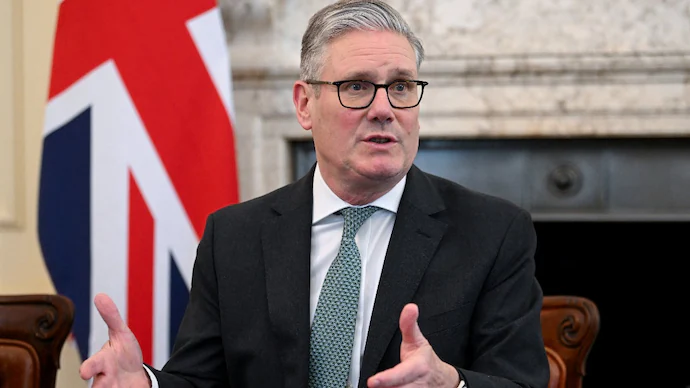
Keir Starmer, a human rights barrister, had been elected as Britain’s Prime Minister in July 2024 with overwhelming support. His administration prioritised the India-UK free trade agreement, which was seen as pivotal for strengthening bilateral relations. Just days prior to his resignation announcement on the steps of 10 Downing Street on Monday morning, Starmer had met with Prime Minister Narendra Modi during the G7 Summit in France. The two leaders agreed on July 15 as the official date for the trade agreement to come into effect.

The anticipated Comprehensive Economic and Trade Agreement was expected to substantially enhance the £48 billion trading relationship between the two nations. Starmer’s resignation introduces uncertainty as Britain prepares to transition to a new leadership at a critical juncture for international trade.

Starmer had previously expressed optimism regarding the agreement’s prospects. During a visit to Mumbai in October, he remarked that the deal was not merely symbolic but a “launchpad for growth,” especially with India projected to become the third-largest economy globally by 2028.

Connector of Labour and Indian Community

Throughout his tenure, Starmer worked to reconnect the Labour Party with British Indians, a demographic that felt distanced during Jeremy Corbyn’s leadership, particularly over his perceived anti-India position on Kashmir. Starmer’s approach was integral to Labour’s revised strategy, reflecting in their 2024 election manifesto which emphasised a “new strategic partnership with India.” This included commitments to enhance cooperation in fields such as security, education, technology, and climate change.

One of his significant statements was made during a campaign visit to the Shree Swaminarayan Temple in Kingsbury, where he affirmed that there was “absolutely no place for Hinduphobia in Britain.” He reiterated this sentiment during Diwali celebrations at 10 Downing Street, demonstrating his commitment to fostering inclusive relations.

Starmer’s biographical background also contributed to his political narrative. Recognised as a distinguished legal professional, he was knighted by Queen Elizabeth II for his service to law and criminal justice prior to entering politics. His journey began in 2015, when he was elected as a Labour MP for Holborn and St Pancras, subsequently becoming the shadow Brexit secretary under Corbyn.

Challenges Leading to Resignation

Despite initial successes, Starmer faced significant challenges during his leadership, resulting from a series of policy missteps and perceived misjudgements. He had previously assured party members of his intention to fight off any threats to his leadership. However, as his parliamentary colleagues voiced doubts regarding his capability to lead effectively into the next general election, he chose to resign.

In a heartfelt resignation speech, Starmer addressed his party, acknowledging the need for new leadership. He stated, “The question my party is asking now is whether I am best placed to lead us into the next general election. I have heard the answer of my parliamentary party to that question and I accept that answer with good grace.” His departure comes at a time when the trade deal with India he had strongly supported is on the verge of being activated.

The changing political landscape adds layers of complexity to the future of the India-UK trade relationship. As the country approaches a time of potential transition, the next steps in both domestic politics and international trade remain crucial for Britain’s position on the global stage.

Long or Short, get news the way you like. No ads. No redirections. Download Newspin and Stay Alert, The CSR Journal Mobile app, for fast, crisp, clean updates!

App Store –  https://apps.apple.com/in/app/newspin/id6746449540 

Google Play Store – https://play.google.com/store/apps/details?id=com.inventifweb.newspin&pcampaignid=web_share

Latest News

Popular Videos
