



ISRO Team Visits Japan to Assess Chandrayaan-5 Launch Site Preparation

The CSR Journal Magazine

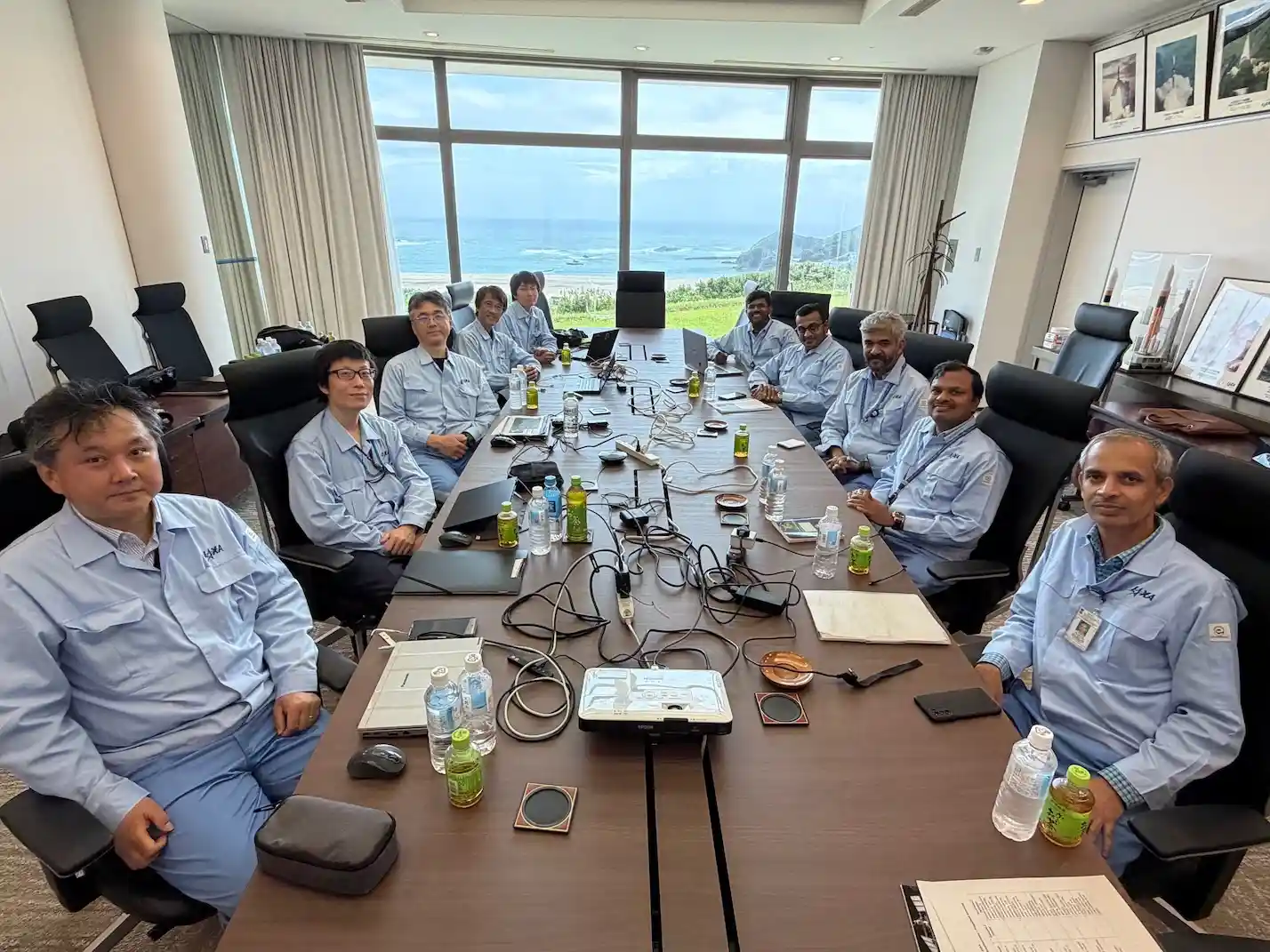
Members of the Indian Space Research Organisation (ISRO) have recently undertaken a significant visit to Japan’s Tanegashima Space Centre. This trip represents an important advancement in the collaborative efforts between India and Japan in the field of space exploration. During their stay, ISRO team members meticulously examined the launch facilities and contributed to preparations for the upcoming Lunar Polar Exploration (LUPEX) mission, known in India as Chandrayaan-5.

The primary focus of the visit was to review the integration processes for the mission’s equipment. Photos shared on social media depicted experts from both ISRO and the Japan Aerospace Exploration Agency (JAXA) engaged in discussions and collaborating over technical aspects of the project. Their interactions at the centre’s entrance, accompanied by the flags of both nations, illustrated a strengthened partnership in space endeavors.

Launch Preparations and Technical Meetings

During the visit, ISRO officials assessed various systems and equipment at the Tanegashima site, where the mission is set to launch using Japan’s H3 rocket. The team conducted inspections at designated areas where both the Indian lander and the Japanese rover will be securely loaded onto the rocket prior to the launch. These thorough pre-launch activities are critical for ensuring that the spacecraft can depart successfully on its journey to the Moon.

This visit is not the first collaborative initiative between the two agencies. Over the past year, several technical meetings have been convened, focusing on the finalisation of designs and strategic planning. As both organisations advance their respective hardware testing, progress has been noticeable, particularly with India’s lander, which has completed various engine tests, while Japan continues developing its rover.

The presence of ISRO and JAXA experts at the Tanegashima Space Centre signifies the ongoing dedication to the mission. The collaboration aims not only to prepare for the impending launch but also to ensure that both teams are in sync regarding their responsibilities and contributions to the project.

Exploring Lunar Resources at the Moon’s South Pole

The Chandrayaan-5 mission is poised to provide profound insights into the presence of water on the Moon, specifically at its South Pole, where areas are persistently ensconced in darkness and likely harbour considerable ice reserves. Understanding the quantity and composition of this water is crucial, as well as assessing its potential for utilisation in future lunar missions.

The Indian lander is tasked with delivering the Japanese rover safely to the lunar surface. The rover, weighing approximately 350 kg, is designed to navigate the terrain, drill into the Moon’s surface to depths nearly reaching five feet, and collect valuable samples for analysis. Its instruments will be complemented by technologies from NASA and the European Space Agency (ESA), adding a wealth of data to the mission’s findings.

Project planners expect the mission to last a minimum of three-and-a-half months once it reaches the Moon, with the potential to extend its operations for up to a year. This initiative builds upon the success of Chandrayaan-3, which achieved a soft landing near the southern lunar region in 2023. By continuing to refine landing technologies, Japan aims to enhance capabilities for future lunar exploration.

Future Outlook of India-Japan Space Cooperation

Chandrayaan-5 exemplifies the growing cooperation between India and Japan in advancing space research and exploration. The mission is scheduled to launch no earlier than 2028, with preparations at the Tanegashima Space Centre ongoing. This partnership reflects a significant commitment to jointly addressing the challenges of space travel, particularly concerning the discovery and utilisation of lunar resources.

Experts convey that the identification of usable water on the Moon could transform future space missions, potentially allowing astronauts to convert lunar ice into potable water, oxygen, or even rocket fuel. Such advancements would feasibly facilitate longer, more cost-effective stays on the Moon. As preparations for Chandrayaan-5 continue, the collaborative efforts signal an exciting chapter in international space exploration.

Long or Short, get news the way you like. No ads. No redirections. Download Newspin and Stay Alert, The CSR Journal Mobile app, for fast, crisp, clean updates!

App Store –  https://apps.apple.com/in/app/newspin/id6746449540 

Google Play Store – https://play.google.com/store/apps/details?id=com.inventifweb.newspin&pcampaignid=web_share

Latest News

Popular Videos