


India Faces 40 Per Cent Rain Deficit While Ladakh Enjoys 96 Per Cent Excess Rainfall
The CSR Journal Magazine

India is currently grappling with a significant rainfall deficit of 40 per cent as the southwest monsoon struggles to establish its presence across various states. The latest data from the India Meteorological Department (IMD) illustrates that the country’s overall rainfall from June 4 to June 17 only reached 39.7 mm, compared to the normal average of 65.9 mm for the same period.

This deficit has created challenges for states including Maharashtra, Gujarat, Jharkhand, and Chhattisgarh, where rainfall shortages range from 60 per cent to nearly 100 per cent. Many regions are waiting for substantial rain, as the monsoon’s advance has stalled over central and western India, intensifying concerns for agricultural and water resources.

The weather patterns have also affected the overall agricultural landscape, as farmers in various states express concern about the consequences of insufficient rain. Experts are monitoring the situation closely, highlighting the importance of timely precipitation for maintaining crop health and productivity.

Exceptional Rainfall in Ladakh

Despite the widespread deficit, the Union Territory of Ladakh has reported an astonishing 96 per cent increase in rainfall during the same timeframe. The IMD recorded that Ladakh received 4.3 mm of rain, surpassing the normal of 2.2 mm. This unusual occurrence distinguishes Ladakh from the rest of the country, marking a notable contrast in weather patterns.

The meteorological phenomena in Ladakh can be attributed to specific weather systems. Unlike many parts of India that primarily rely on the southwest monsoon for rain, Ladakh’s climate is influenced by a combination of western disturbances and local geographical features. These factors have contributed to the region receiving nearly double its expected rainfall.

While 4.3 mm may seem modest in comparison to the downpours seen in more humid regions, it is a significant amount for Ladakh, which typically experiences arid conditions. The rainfall has provided a reprieve, albeit minor, for the local climate and ecosystem.

Concerns Over Weather Changes

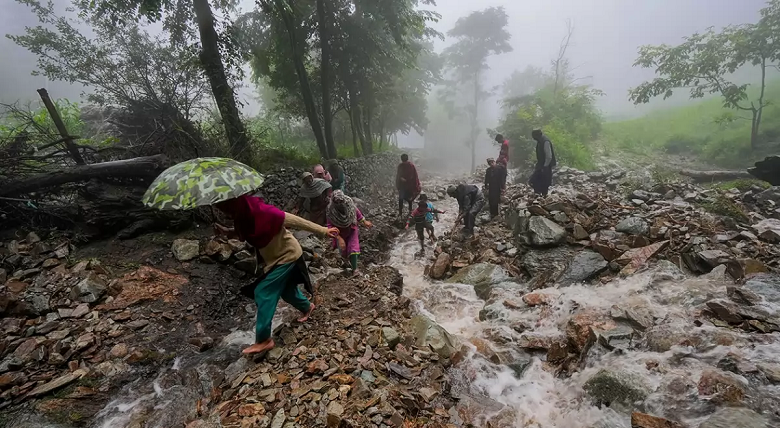
Amid this remarkable rainfall, scientists are expressing alarm over changing weather patterns in the Himalayan region. With increasing precipitation frequency, traditional weather norms are being disrupted, raising the likelihood of natural disasters such as flash floods, landslides, and glacial lake outburst floods. Experts are adamant that these emerging patterns could pose risks to the vulnerable mountainous terrain.

Much of India continues to await a resurgence of monsoon activity. The IMD forecasts that rainfall conditions may gradually improve after June 20 as moisture influx from the Arabian Sea increases. Until then, Ladakh stands out as an anomaly, showcasing significantly above-normal rainfall amid broader national challenges.

The situation underscores the complexity and variability of monsoon dynamics across India. As Ladakh experiences weather unlike much of the country, the disparity raises questions about future climate patterns and the sustainability of regional ecosystems in the face of global climate change.

Long or Short, get news the way you like. No ads. No redirections. Download Newspin and Stay Alert, The CSR Journal Mobile app, for fast, crisp, clean updates!

App Store –  https://apps.apple.com/in/app/newspin/id6746449540 

Google Play Store – https://play.google.com/store/apps/details?id=com.inventifweb.newspin&pcampaignid=web_share

Latest News

Popular Videos
