


India Among 17 Economies Facing 10% US Tariff Under Forced Labour Rules
The CSR Journal Magazine

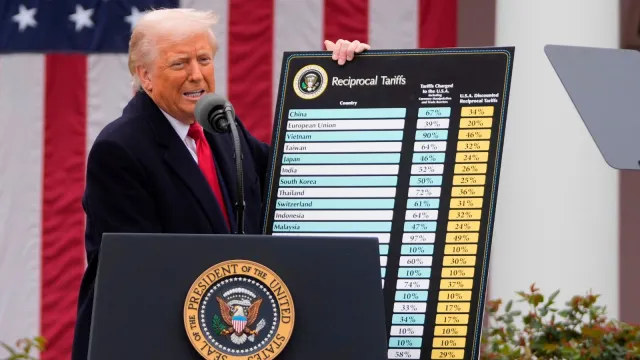
The United States has announced fresh tariffs under Section 301 of the Trade Act of 1974 on imports from 60 economies over what it described as inadequate measures to prevent goods produced with forced labour from entering their markets. India has been placed in the lower 10 per cent tariff category.

According to officials, India was initially expected to face a 12.5 per cent tariff but secured the lower rate following discussions with the United States on labour practices. The new duties will come into effect on Friday.

India Placed in Lower Tariff Slab

The Office of the United States Trade Representative (USTR) announced two tariff slabs of 10 per cent and 12.5 per cent as part of the Section 301 action directed by President Donald Trump.

India is among 17 economies placed in the 10 per cent category, alongside the United Kingdom, Canada, Indonesia, Mexico, Bangladesh, Pakistan, Malaysia, Sri Lanka and several others.

Officials told ANI that New Delhi had originally been considered for the higher 12.5 per cent tariff but was moved to the lower slab after constructive engagement with Washington on labour-related measures.

USTR Cites Forced Labour Concerns

In a statement, the USTR said the action was taken against economies that had failed to prohibit or effectively enforce restrictions on imports of goods produced using forced labour.

It said a 10 per cent tariff would apply to economies that either prohibit imports of forced labour goods, have committed to doing so through reciprocal trade agreements, or have introduced partial measures to prevent such imports.

The USTR added that a tariff of 10 per cent or 12.5 per cent, net of the Most-Favoured-Nation (MFN) rate, would apply to certain products from the European Union, Taiwan, Japan, South Korea and Switzerland, while all other investigated economies would face the 12.5 per cent rate.

Trump Administration Defends Move

US Trade Representative Jamieson Greer said the latest action reflected the Trump administration’s efforts to strengthen enforcement against forced labour in global supply chains.

“President Trump recognises that decades of moral suasion have not eradicated forced labor from global supply chains. The United States has had a forced labor import ban for nearly a century, and rigorously enforces it; it’s well past time for our trading partners to do the same,” Greer said.

He also welcomed governments that had taken steps to strengthen their own enforcement mechanisms.

“I am encouraged by the trading partners who have moved quickly to adopt forced labor import prohibitions, and look forward to ensuring their effective enforcement,” he added.

Investigation Began Earlier This Year

The latest tariffs follow investigations launched by the USTR in March under Section 301(b) of the Trade Act of 1974 into the practices of 60 economies concerning the enforcement of bans on goods produced through forced labour.

According to the USTR, the review included consultations with more than 45 governments, public hearings and an examination of over 1,600 written submissions before the final decision was announced.

The move marks the latest step in President Trump’s renewed trade agenda since returning to office and comes after the US Supreme Court earlier this year ruled that several tariffs imposed under emergency powers were unlawful, prompting the administration to rely on alternative legal mechanisms to pursue its trade policy objectives.

Long or Short, get news the way you like. No ads. No redirections. Download Newspin and Stay Alert, The CSR Journal Mobile app, for fast, crisp, clean updates!

App Store –  https://apps.apple.com/in/app/newspin/id6746449540 

Google Play Store – https://play.google.com/store/apps/details?id=com.inventifweb.newspin&pcampaignid=web_share

Latest News

Popular Videos
