


Haryana, Rajasthan Sign MoU to Implement Upper Yamuna Water-Sharing Agreement
The CSR Journal Magazine

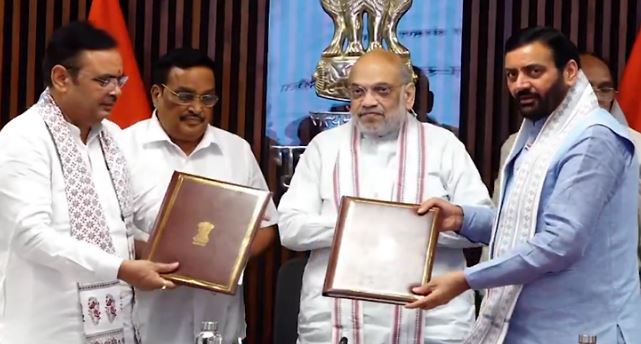
The states of Haryana and Rajasthan have officially signed a memorandum of understanding (MoU) to implement the Upper Yamuna water-sharing agreement established in 1994. This agreement aims to allocate water resources more effectively among the states that rely on the river system. The signing took place in a ceremony attended by various officials from both states, emphasizing their commitment to collaborative water management.

The MoU outlines specific terms regarding the sharing of water from the Upper Yamuna, ensuring that both states adhere to the provisions set forth in the original 1994 pact. The signatories have expressed confidence that this agreement will facilitate a more equitable distribution of water resources, thereby addressing the long-standing needs of both regions.

Officials noted that the agreement is crucial for sustainable development in both states. By formalising the water distribution strategies, the MoU is expected to curtail disputes over water resources and foster cooperation. Experts have highlighted that effective water management is essential in light of growing population pressures and climate variability in the region.

Impact on Agriculture and Local Economies

The MoU is anticipated to have a significant impact on agriculture, given that both Haryana and Rajasthan depend heavily on the Yamuna River for irrigation. The collaboration aims to improve water availability for farming, which has been historically affected by droughts and water scarcity. Enhanced water sharing will likely empower farmers to optimise crop yields, thus supporting local economies.

Furthermore, with assured water access, farmers may shift to less water-intensive crops or adopt modern agricultural practices. This transition could lead to greater agricultural resilience and food security. The local administrations have pledged to support farmers in adapting to these new strategies, ultimately benefiting both states economically.

Local economic activities, including small industries reliant on agriculture, are also expected to experience a boost from the improved water-sharing framework. By promoting agricultural stability, the MoU could contribute to a more reliable supply chain for various regional products.

Future Directions and Collaborative Efforts

Looking ahead, Haryana and Rajasthan are set to establish mechanisms for regular monitoring and evaluation of the water-sharing agreement. This will involve ongoing collaboration between water management agencies from both states, allowing for timely adjustments based on real-time data about water availability and usage.

The introduction of joint initiatives for water conservation is also on the agenda. By pooling resources and expertise, both states aim to enhance the sustainability of their water resources. Initiatives such as rainwater harvesting, watershed management, and community awareness programmes are likely to be part of these efforts.

Officials have expressed hopes that the MoU will serve not only to benefit Haryana and Rajasthan but could also act as a model for other water-sharing arrangements in India. The learning from this collaboration may offer valuable insights for managing inter-state water disputes throughout the country, highlighting the role of cooperative governance in addressing shared resource challenges.

Long or Short, get news the way you like. No ads. No redirections. Download Newspin and Stay Alert, The CSR Journal Mobile app, for fast, crisp, clean updates!

App Store –  https://apps.apple.com/in/app/newspin/id6746449540 

Google Play Store – https://play.google.com/store/apps/details?id=com.inventifweb.newspin&pcampaignid=web_share

Latest News

Popular Videos
