


Google Proposes Release of 32 Million Mosquitoes in Florida and California
The CSR Journal Magazine

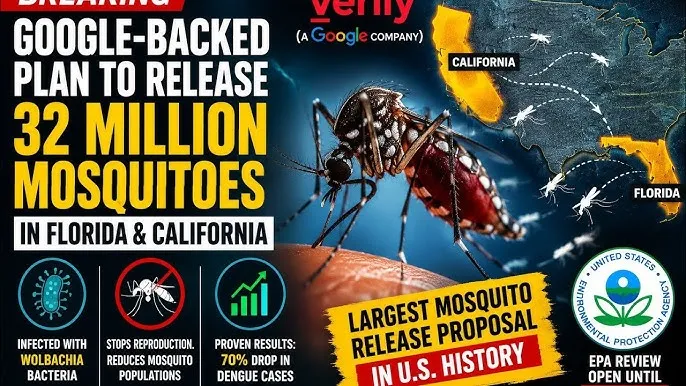
Google-backed researchers are aiming to obtain authorisation to release up to 32 million specially treated mosquitoes across parts of Florida and California. This initiative could represent the largest mosquito control experiment ever conducted in the United States. The proposal is currently undergoing evaluation by the US Environmental Protection Agency (EPA), and the public has until 5 June to submit their comments before a decision is made.

The aim of releasing millions of mosquitoes may seem counterintuitive at first. However, scientists emphasise that this method is intended to reduce mosquito populations rather than increase them. The project revolves around infecting male mosquitoes with Wolbachia, a naturally occurring bacterium that has shown promise in controlling mosquito populations.

Wolbachia, a bacterium commonly found in various insects, is harmless to humans and animals and does not infect them. When male mosquitoes infected with Wolbachia mate with wild female mosquitoes, the resulting eggs are unable to hatch. This reduces the number of mosquitoes over time, ultimately leading to a significant decline in overall populations.

Understanding Wolbachia

Wolbachia is a prevalent bacterium that occurs naturally in a range of insects, including butterflies and beetles. This bacterium poses no threat to human health. By releasing only male mosquitoes, which do not bite, the project focuses on mating as the sole method of reproductive disruption. The initiative is part of Google’s Debug Project, which concentrates on ecological technology and disease control.

The current strategy has already yielded notable successes. In trials conducted in California’s Central Valley, mosquito populations were reportedly reduced by over 95% in certain locations, while in others, local populations nearly vanished entirely. The method has also been tested in Singapore, where significant reductions in dengue cases have been documented, with a reported drop of about 70% in treated neighbourhoods.

This success has garnered international interest, particularly as dengue cases have risen globally due to factors such as urbanisation and climate change.

Global Impact and Future Prospects

The mosquito control strategy employed by Google follows a six-step process, which involves infecting male mosquitoes with Wolbachia and later breeding them in large numbers. Non-biting males are then separated from female mosquitoes before their release into the wild. This cycle aims to gradually diminish, or in some cases eliminate, populations of disease-carrying mosquitoes.

Over one billion Wolbachia-infected mosquitoes have already been released in various locations around the world, and the proposed operations in Florida and California would mark the largest release in the US to date. This innovative technology seeks to provide an alternative to chemical sprays, which can adversely affect beneficial insect species and become less effective as mosquito populations develop resistance.

As mosquito-borne diseases, such as dengue and Zika, continue to threaten public health globally, researchers are exploring various biological solutions. The potential approval of Google’s ambitious mosquito release plan could significantly influence one of the most innovative strategies for disease control to date.

Long or Short, get news the way you like. No ads. No redirections. Download Newspin and Stay Alert, The CSR Journal Mobile app, for fast, crisp, clean updates!

App Store –  https://apps.apple.com/in/app/newspin/id6746449540 

Google Play Store – https://play.google.com/store/apps/details?id=com.inventifweb.newspin&pcampaignid=web_share

Latest News

Popular Videos
