


Google Launches Gemini 3.5 Flash and Antigravity 2.0
The CSR Journal Magazine

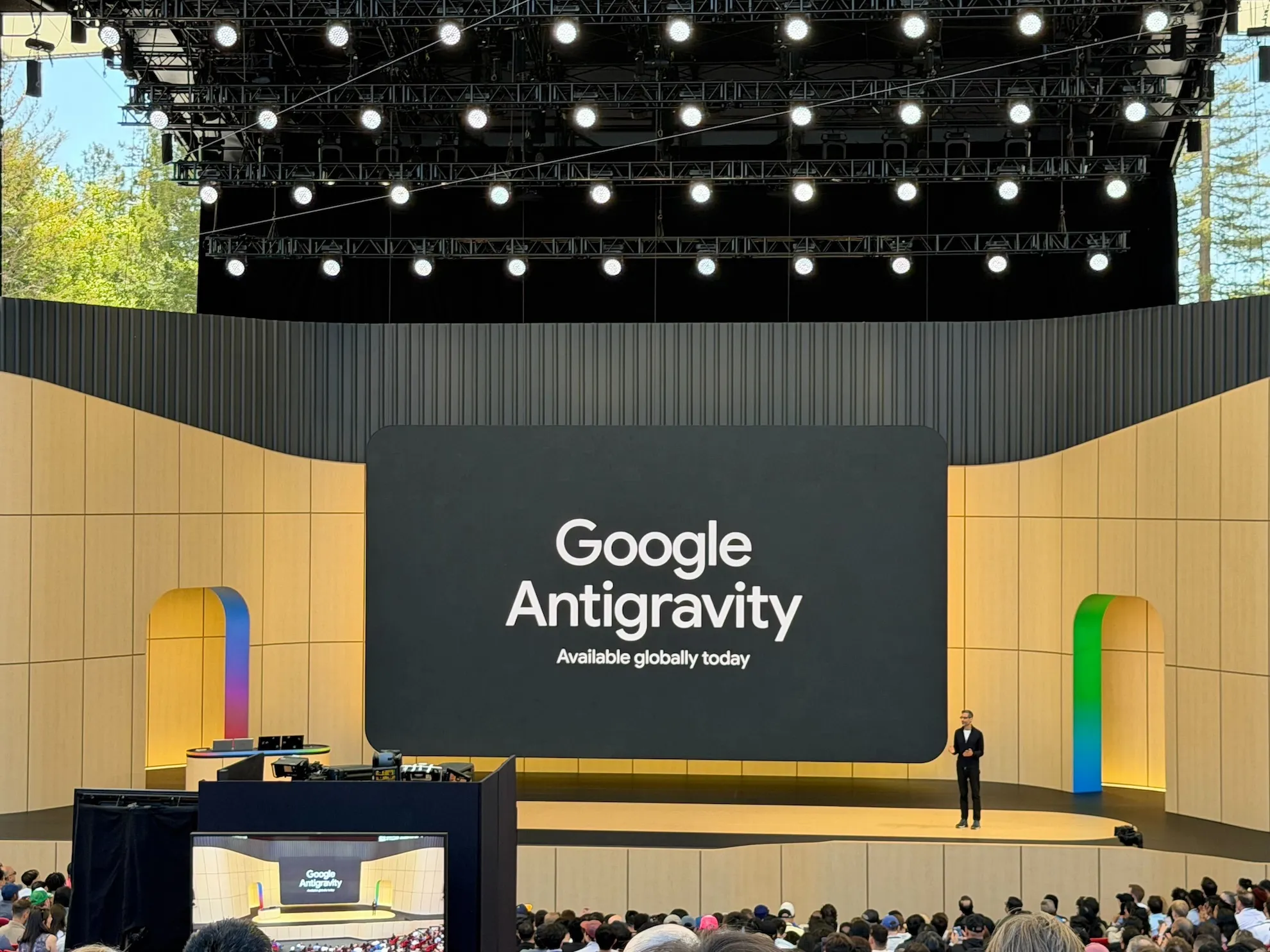
Google has utilised its annual developer event, Google IO 2026, to emphasise its commitment to artificial intelligence in software creation. The event featured the introduction of the Gemini 3.5 models alongside the upgraded platform, Antigravity 2.0. This new tool, according to the company, was capable of constructing the core components of a functional operating system in merely 12 hours.

The announcement came during a presentation led by Varun Mohan. He characterised Antigravity 2.0 as an “unabashedly agent-first” platform that aims to assist developers by employing teams of autonomous AI agents. The live demonstration illustrated the platform’s capabilities, as it was tasked with the ambitious project of creating an entirely new operating system from the ground up.

As per Google’s claims, the system initiated 93 distinct sub-agents to tackle this challenge, generating approximately 2.6 billion tokens in the process. This remarkable feat was completed in around 12 hours, and the company noted that the entire operation required less than $1,000 worth of tokens, signifying a notable advancement in efficiency for large-scale AI programming projects.

Live Demonstration Highlights AI Capabilities

The live demonstration took a dramatic turn when Google attempted to run the classic game Doom on the AI-generated operating system. The initial attempt was unsuccessful due to the absence of necessary keyboard drivers. Mohan then instructed Antigravity to generate the missing drivers in real time. Remarkably, moments later, the game became playable after the AI wrote the required code on stage.

This presentation underscored Google’s increasing emphasis on the concept of “agentic AI”—a framework in which multiple AI systems operate independently to accomplish larger and more complex tasks. Rather than functioning solely as a basic chatbot, these agents can distribute responsibilities across various workflows simultaneously.

Google explained that one agent could focus on building a website, another could create brand assets, while yet another could manage product planning, all functioning at the same time. This streamlined approach is aimed at enhancing productivity in software development.

Release of Gemini 3.5 Flash and Future Plans

In addition to the Antigravity 2.0 announcement, Sundar Pichai introduced Gemini 3.5 Flash, touting its increased speed and capabilities compared to the earlier Gemini 3.1 generation. Google has designed this new model to cater specifically to advanced AI agents, longer tasks, and more intricate development projects.

Pichai noted that Gemini 3.5 Flash can generate output tokens at nearly four times the speed of other leading AI models, while also performing better across most benchmarks. Furthermore, it operates at around half the cost of its competitors. The company has declared Gemini 3.5 Flash the default model from today onwards, with plans to reveal Gemini 3.5 Pro shortly.

Koray Kavukcuoglu, Google’s DeepMind CTO, remarked that this model excels in managing autonomous agents capable of working continuously on coding and research endeavours without human oversight. Google anticipates that such enhancements will enable developers to automate extensive software tasks that currently necessitate entire engineering teams.

Long or Short, get news the way you like. No ads. No redirections. Download Newspin and Stay Alert, The CSR Journal Mobile app, for fast, crisp, clean updates!

App Store –  https://apps.apple.com/in/app/newspin/id6746449540 

Google Play Store – https://play.google.com/store/apps/details?id=com.inventifweb.newspin&pcampaignid=web_share

Latest News

Popular Videos
