


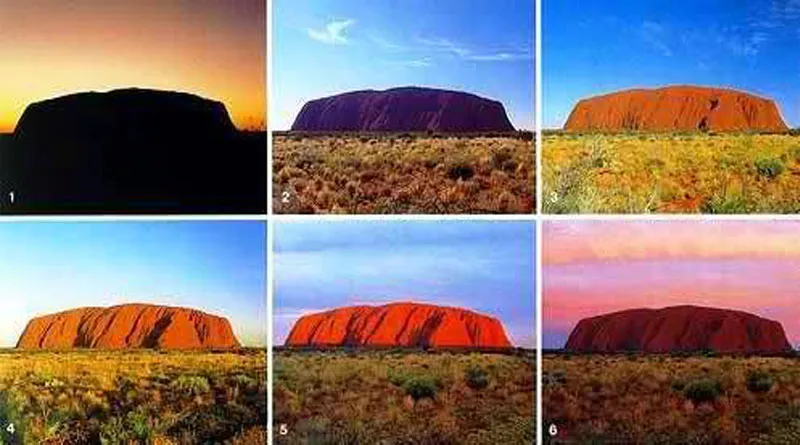
Giant Rock in Australia Demonstrates Colour Change Throughout the Day
The CSR Journal Magazine

Uluru, also known as Ayers Rock, is a monumental rock formation located in the Northern Territory of Australia. Famous for its shifting colours, this remarkable natural structure appears to transform from soft pink and bright orange to deep red and vibrant purple as daylight progresses. Contrary to common belief, the rock itself does not alter its colour; instead, this stunning visual effect results from the interaction of sunlight with the iron-rich sandstone that comprises Uluru.

The optical illusion is created as sunlight hits the rock at varying angles over the course of the day. The iron content within the sandstone has oxidised over millions of years, imparting the region’s characteristic reddish hue. This interaction with sunlight provides the rock with an ever-changing appearance, drawing numerous visitors to experience this natural wonder.

As the sun rises, the changing light creates a display of colours. At sunrise, visitors can observe soft pink hues, which transition to bright orange during the morning. In the afternoon, deeper rust-red tones dominate the scene, and as dusk approaches, the colours shift to shades of crimson and purple. Although the rock itself remains constant, the dynamic interplay of light results in a captivating transformation.

Cultural Significance of Uluru

Beyond its visual appeal, Uluru is recognised for its deep cultural and spiritual significance. It is a UNESCO World Heritage Site and serves as an essential landmark for the Anangu people, the Traditional Owners of the land. This monolith is linked to various stories, traditions, and sacred sites significant to the Anangu culture, representing a rich tapestry of history and identity.

The Anangu have a profound connection to Uluru, which is reflected in their cultural narratives and practices. Several sacred sites surrounding the rock add layers of meaning and importance, reinforcing the relationship between the landscape and the Indigenous people. Preservation of these traditions is essential, as they embody the history and beliefs held by the Anangu in relation to their land.

Issues of land management and conservation have come to the forefront, as discussions regarding tourism and cultural respect continue. The balance between showcasing this natural marvel and honouring its significance to the Anangu is an ongoing consideration for stakeholders involved in the management of the site.

Experiencing the Colour Changes of Uluru

For those looking to witness the captivating colour changes of Uluru, sunrise and sunset are recognised as the optimal times to observe this phenomenon. Parks Australia has established designated viewing areas where visitors can gather to appreciate the gradual transformation of the rock’s appearance as the sun ascends and descends in the sky.

In addition to the daily changes in colour, weather conditions such as rain can create a unique display. Following rainfall, parts of the rock may appear silver, black, or dark burgundy, as water flows across its surface. This additional spectacle underscores the diverse beauty of Uluru, enhancing the visitor experience.

As one of Australia’s most iconic landmarks, Uluru remains a site of natural beauty and cultural significance. It continues to attract tourists and scholars alike, eager to explore the connection between the land and the people who have inhabited it for thousands of years.

Long or Short, get news the way you like. No ads. No redirections. Download Newspin and Stay Alert, The CSR Journal Mobile app, for fast, crisp, clean updates!

App Store –  https://apps.apple.com/in/app/newspin/id6746449540 

Google Play Store – https://play.google.com/store/apps/details?id=com.inventifweb.newspin&pcampaignid=web_share

Latest News

Popular Videos
