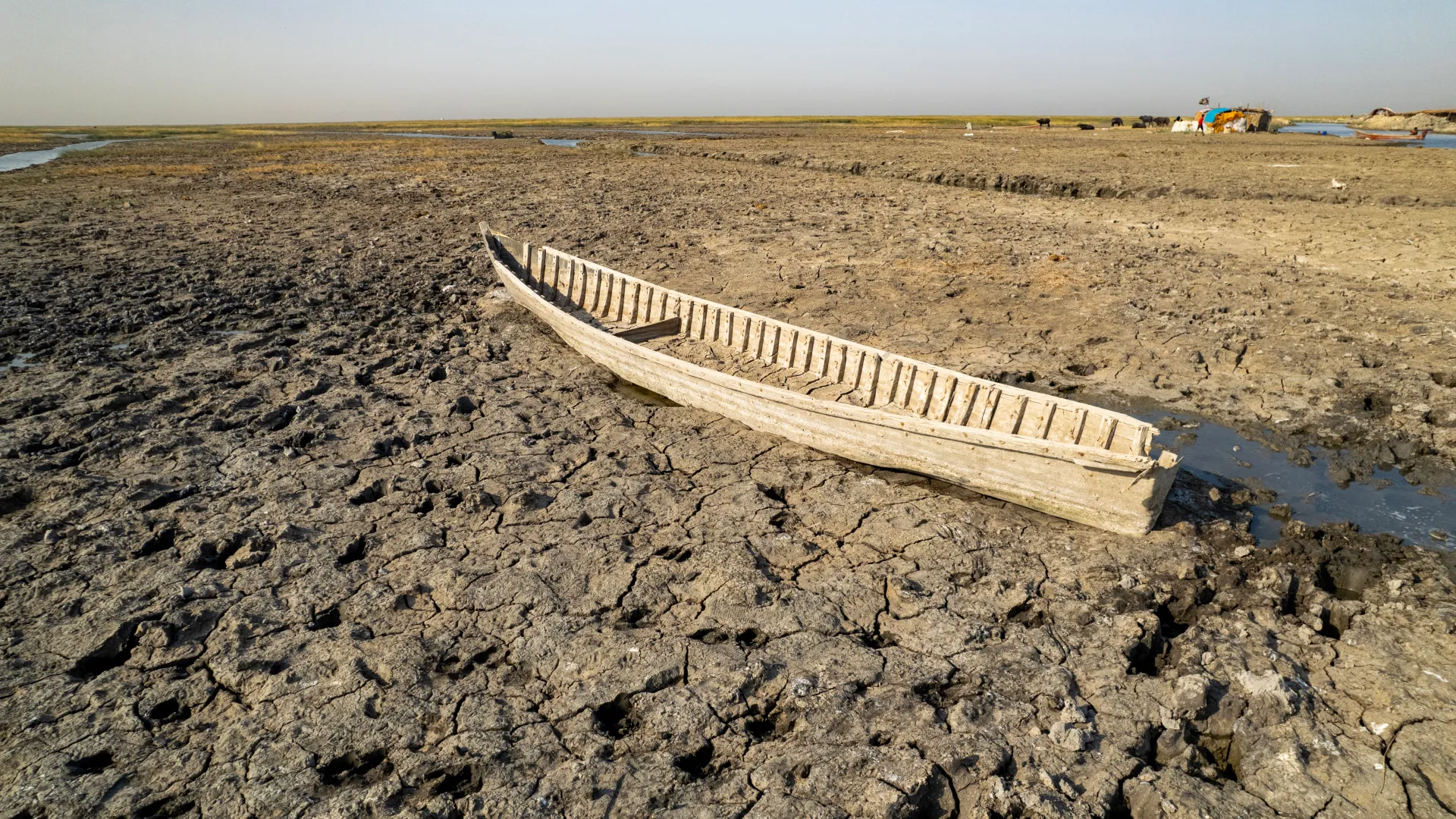
The Euphrates River, one of the most historically significant rivers, is undergoing severe reduction in water levels. An alarming emergency diplomatic agreement, the Framework Agreement on the Financial Mechanism for Water Cooperation Projects—often referred to as the Oil for Water agreement—was signed by Iraq and Turkey in November 2025 to address this crisis. This action underscores the seriousness of the situation.
According to data from NASA’s Gravity Recovery and Climate Experiment (GRACE) satellites, which have monitored water levels for over twenty years, Iraq experienced its driest year since 1933 in 2025. The water levels in both the Tigris and Euphrates rivers have observed a drop of up to 27 per cent. Such statistics, derived from extensive satellite measurements, highlight the critical state of these river basins.
Between 2003 and 2010, the English-speaking research indicated a depletion of approximately 144 cubic kilometres of freshwater from the combined river basins, marking it as the second-most rapid groundwater depletion globally, surpassed only by India. This loss equates to nearly the total volume of the Dead Sea, highlighting the severity of the crisis.
Factors Contributing to the Drought
Multiple factors are contributing to the drying of the Euphrates River. Over the past century, temperatures in northeastern Syria have increased by one degree Celsius, coupled with a reduction in monthly rainfall by 18 millimetres. The rise in temperatures accelerates the evaporation of water, while diminishing rainfall fails to replenish the river flow adequately.
The construction of large dams by Turkey has further exacerbated the situation, drastically reducing the natural flow of the river into Syria and Iraq. Reports indicate that the flow rates of the Euphrates have fallen over 50 per cent since the year 2000. Previously, the annual flow at the Syrian-Turkish border was about 30 billion cubic metres from 1930 to 1973, but this volume decreased to around 25 billion cubic metres following dam constructions from 1974 to 2010.
The geopolitical implications of water usage have also come into play. In 2021, Syria accused Turkey of intentionally limiting the river’s flow. Furthermore, the Iraqi Ministry of Water Resources has issued warnings that the Euphrates could potentially run dry by the year 2040, which is alarmingly close.
The situation has captured the attention of both scientists and theologians, as some believers draw parallels between the current circumstances and prophetic texts from the Book of Revelation. Specifically, Revelation 16:12 describes a scenario where an angel dries up the Euphrates, purportedly to prepare for a final battle at Armageddon.
While many scholars interpret this passage symbolically, for numerous individuals witnessing satellite imagery of the dwindling river, the metaphor resonates with contemporary events. Despite these interpretations, scientists firmly assert that the causes for the Euphrates’ decline stem from human-induced factors and climate change, rather than esoteric predictions.
The implications of the declining water levels extend beyond prophecy and religion, with worsening water quality and availability already leading to increased rates of hunger and illness across Iraq. This humanitarian crisis illustrates the pressing need for sustainable water management and international cooperation to secure the future of this vital resource.
Long or Short, get news the way you like. No ads. No redirections. Download Newspin and Stay Alert, The CSR Journal Mobile app, for fast, crisp, clean updates!