


Election Commission Appoints Additional Observers for West Bengal After Supreme Court Ruling
The CSR Journal Magazine

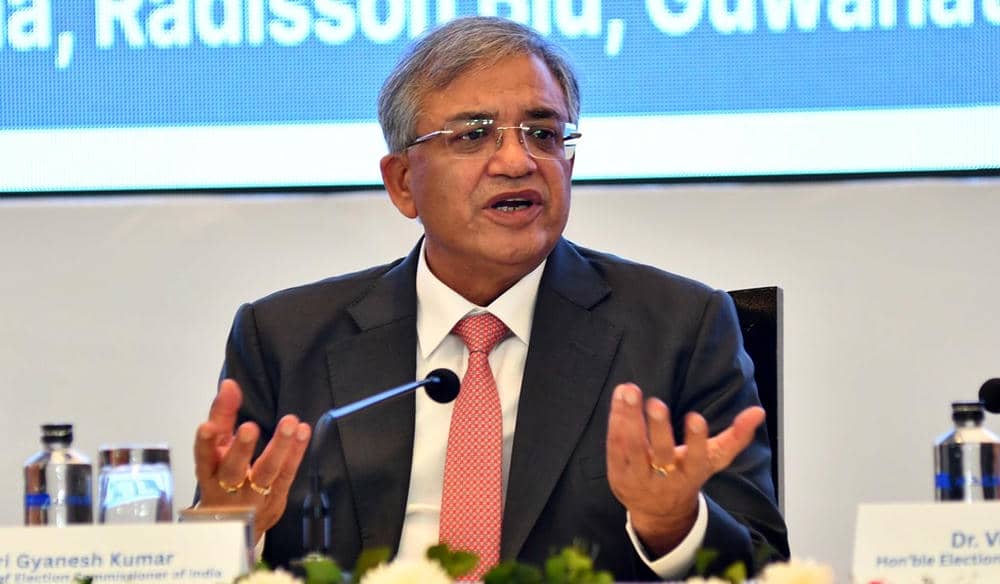
The Election Commission of India has moved forward with the appointment of additional counting observers in West Bengal, aided by a recent Supreme Court ruling. This decision underscores the Commission’s authority to select its observers from central government and Public Sector Undertaking (PSU) employees for vote counting in the state. The directive was endorsed during a hearing on May 2, 2026, where a two-judge bench confirmed the legitimacy of the Commission’s choices regarding election oversight personnel.

Details of Additional Observer Deployment

On the same day that the Supreme Court issued its ruling, the Election Commission announced the deployment of 165 counting observers and 77 police observers across West Bengal. These observers are tasked with ensuring that the vote counting process is conducted in a secure and transparent manner. Their appointment is made under Article 324 of the Constitution of India, as well as Section 20B of the Representation of the People Act, 1951.

In the 165 Assembly constituencies that feature multiple counting halls, these additional counting observers will provide support to the regular observers. This arrangement is designed to enhance the integrity of the counting process, particularly in maintaining a peaceful and fear-free environment. Meanwhile, the police observers will focus on overseeing law and order around the designated counting centres, ensuring that security measures align with the Election Commission’s instructions.

It’s important to note that while police observers have a critical role in monitoring external conditions, they are prohibited from entering the counting halls on the actual counting day. This restriction aims to preserve the sanctity and confidentiality of the counting process.

Challenges Raised by Political Parties

The Trinamool Congress (TMC), a prominent political party in West Bengal, had approached the Supreme Court just prior to the ruling. They sought the inclusion of state government nominees as counting supervisors, raising concerns about the appointment of central government employees. The TMC alleged that such appointments could lead to undue influence from the ruling party at the Centre, thereby compromising the fairness of the vote counting process.

During the court proceedings, Justices PS Narasimha and Joymalya Bagchi made it clear that the Election Commission retains the prerogative to select its own officers. The bench highlighted that whether the employees are from the central or state government is irrelevant, as they operate under the Commission’s governance in performing their duties. This ruling affirms the Election Commission’s autonomy in managing election-related activities.

Following the Supreme Court’s observations, there were no additional directives necessary beyond the confirmation that the Election Commission would enforce its circular regarding the appointment of observers in its entirety. The case highlights the ongoing discussions surrounding electoral governance and the balance between state and central authority in India’s electoral framework.

Long or Short, get news the way you like. No ads. No redirections. Download Newspin and Stay Alert, The CSR Journal Mobile app, for fast, crisp, clean updates!

App Store –  https://apps.apple.com/in/app/newspin/id6746449540 

Google Play Store – https://play.google.com/store/apps/details?id=com.inventifweb.newspin&pcampaignid=web_share

Latest News

Popular Videos
